Ford Capri Special Editions: The Complete Guide to Every Limited Run
Every Ford Capri special edition explained by a classic Ford restoration specialist. Brooklands, Tickford, Laser, JPS, Injection Special, RS3100 and more.
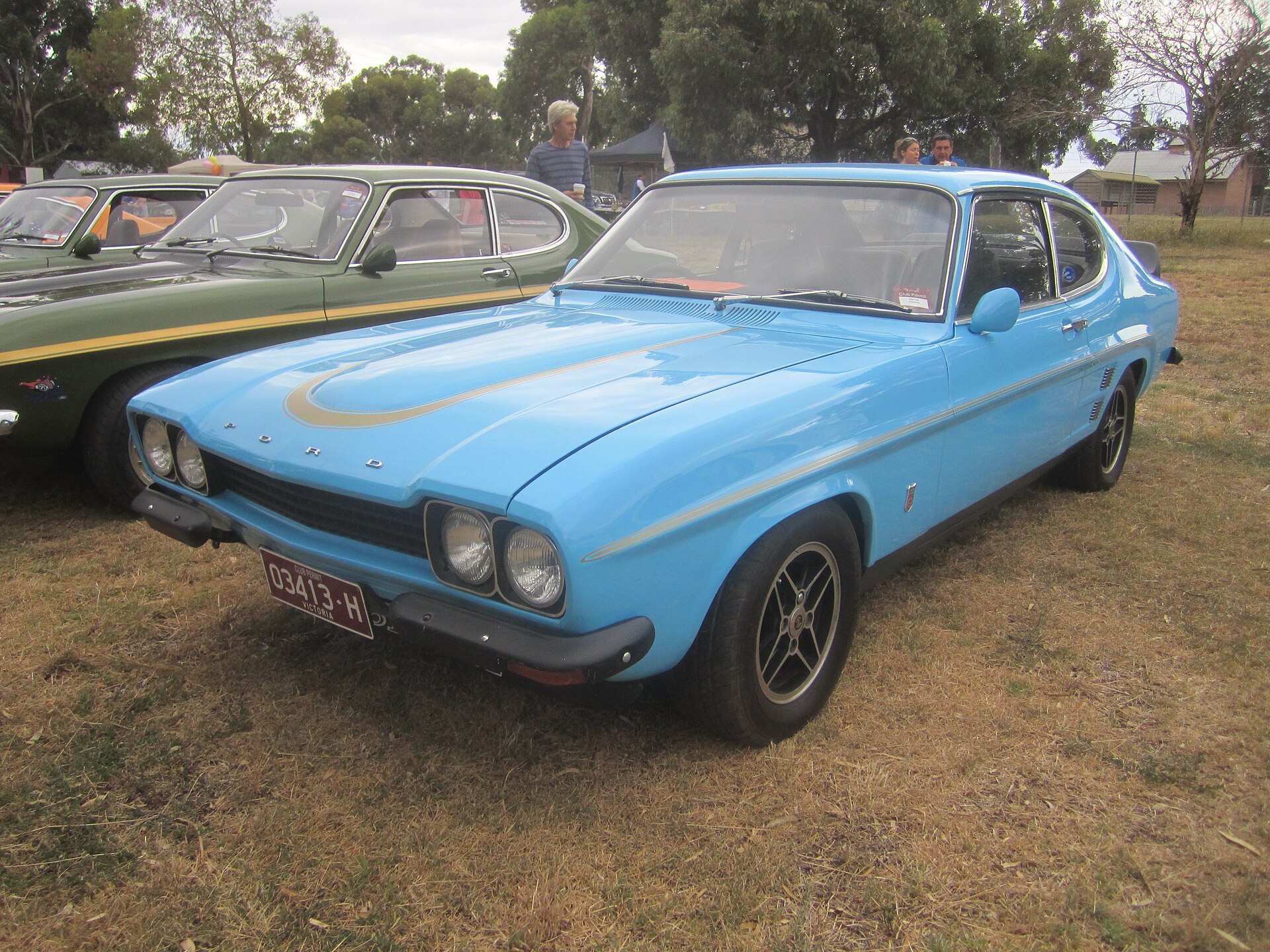
Ford built the Capri for seventeen years, and for most of that time the basic recipe didn’t change much. Front engine, rear-wheel drive, two doors, fastback. What kept it selling was the special editions — limited runs, badged-up trims, dealer specials and the occasional homologation rarity. Some are now worth six-figure money. Others can still be picked up for the price of a tired Mondeo. As a classic Ford restoration specialist working out of a workshop near Milton Keynes, I get asked about these cars constantly — what’s real, what’s a clone, what’s worth chasing. This is the guide I wish I could hand to every prospective buyer who turns up on my forecourt.
Why Ford Got So Good at Special Editions
The Capri launched in 1969 and stayed in production until 1986. By the late seventies the car was already old, and Ford’s product planners had a problem: how do you keep an ageing fastback selling against newer, fresher competition? Their answer was the same answer they applied to the Escort, the Cortina and the Fiesta — special editions. Cosmetic packages, badged-up trims, limited-run colour schemes and the occasional genuine performance variant. The Capri got more of this treatment than any other Ford of the era, and the result is a model history that’s genuinely confusing to navigate. There are well over twenty named variants depending on how you count, plus a handful of dealer specials and aftermarket conversions that have since taken on lives of their own.
How to Spot a Genuine Special Edition (And Avoid the Fakes)
I’m putting this section first deliberately, because it matters more than any spec sheet. The Capri scene has been re-shelled, re-badged, re-painted and re-trimmed for forty years. A determined builder with a parts catalogue and a welder can turn a 1.6 Laser into something that looks remarkably like a 280 Brooklands. The only way to know what you’ve actually got is to verify the paperwork against the car.
The four documents that matter:
- The VIN plate. On a Capri it lives on the bulkhead in the engine bay. It carries the chassis number, the build code and the paint code. The chassis number tells you which factory built the car (Halewood in the UK, Cologne in Germany) and whether the spec matches what the seller claims.
- The build plate (Cologne cars). Late Mk3 Capris built at Cologne carry a small plate riveted to the inner wing or scuttle with the build number stamped on it. A genuine Brooklands has a build number between 1 and 1,038. If the plate’s missing, ask why.
- The original logbook. The V5 from new will list the original colour and trim. If it’s been through fewer than three or four owners and matches the car, that’s a good sign. A car on its tenth keeper with no early-life paperwork is a much harder sell as a genuine special edition.
- The Capri Club International register. Unlike British marques (Austin, MG, Triumph and the rest, whose records are held by BMIHT at Gaydon), Ford UK has never run an equivalent paid Heritage Certificate scheme. Provenance work on a Capri leans on the original V5 logbook history, the VIN and build plate cross-checked against the model claimed, and the Capri Club International register — which maintains chassis-by-chassis records for every documented special edition. The free Ford Heritage Vault is worth a look for period brochures and option lists, though it doesn’t certify individual cars. If a seller is asking strong money for a “rare” Capri and can’t show paperwork from any of these sources, that’s a flag.
Beyond paperwork: look for the small details. Tickfords had specific badging on the boot lid and a unique exhaust note. Brooklands had bespoke 15-inch seven-spoke RS alloys (a scaled-up version of the Injection Special’s 13-inch seven-spoke wheel) that nobody else got. Brooklands also had full leather Recaros; Injection Specials had half-leather Recaros with a specific stitching pattern. Period photographs, even just from a previous owner’s phone, can confirm whether the car was that colour and spec from new. When in doubt, walk away. The Capri market is full of cars that “had the kit fitted at the dealer” or “started life as a 2.0 and was upgraded” — these are not special editions, no matter what the badge on the boot says.
The Early Specials (Mk1 Era, 1969 to 1973)
The Mk1 is where the Capri made its name, and the early performance specials are now the most valuable cars Ford UK ever built in any size.
Capri RS2600 (1970 to 1974)
The RS2600 was built at Cologne for homologation into European Group 2 touring car racing. The road car carried a fuel-injected 2.6-litre Cologne V6 (Kugelfischer mechanical injection, Weslake-developed) producing 150 PS, with lightweight panels, plexiglass side windows on the lightweight version, and a four-speed gearbox. Around 3,500 were built. They were never officially sold in the UK; values vary widely on documentation — recent auction results range from around £40,000 for tidy driver cars up to £150,000 for fully-authenticated examples, with the lightweight homologation cars pushing higher again.
What to check: matching numbers between chassis, engine and gearbox. Rust in the front chassis legs, the boot floor and the inner wings. The lightweight panels are unobtainable, so any damage to them is a real problem. Original German paperwork is essential — there are German Capris that have been “upgraded” to RS2600 spec, and the only way to be sure is the build plate and Ford Cologne paperwork. Bonhams Cars auction results for the past five years are the cleanest reference point for RS2600 prices — every authenticated sale is documented with the chassis and engine numbers.

Capri RS3100 (1973 to 1974)
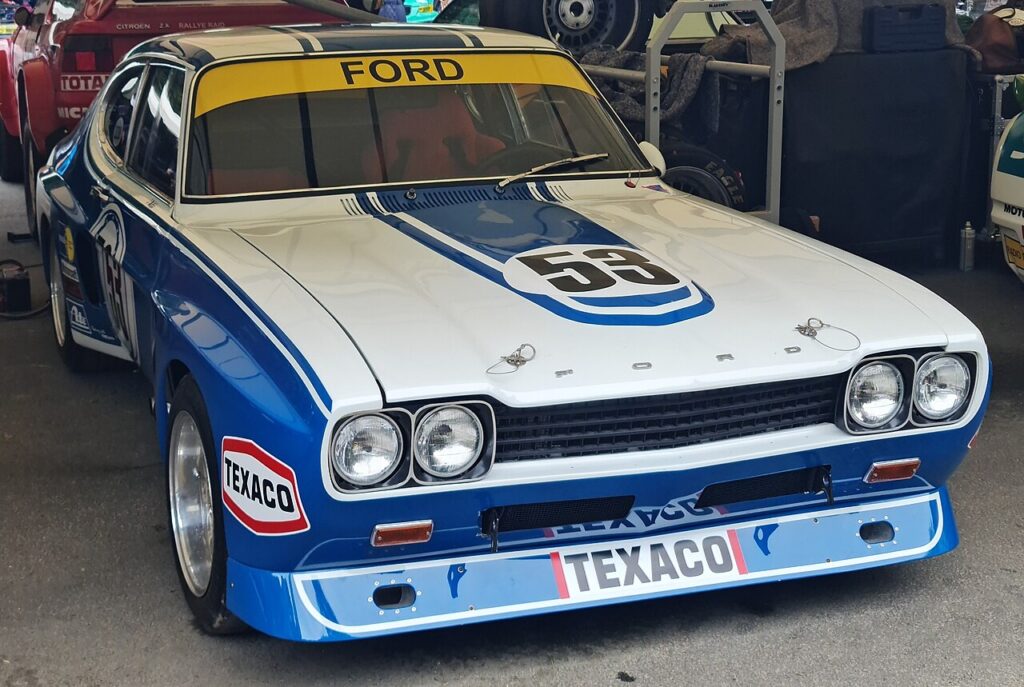
The UK answer to the RS2600 and the rarer of the two. Approximately 250 cars were built at Halewood as homologation specials for the Cologne Capri’s 1974 Group 2 European Touring Car Championship campaign. The road cars used an enlarged 3.1-litre version of the Essex V6 producing 148 bhp through a twin-choke Weber 38 DGAS, with a unique front spoiler, ducktail rear spoiler and four-spoke RS alloys. Standard factory colours included Sebring Red, Modena Green, Diamond White and Stardust Silver (plus a handful of less common shades — Daytona Yellow, Olympic Blue and Marine Blue all appear on documented cars).
Values have moved sharply on the back of confirmed auction results. Recent UK sales 2022–25 have ranged from around £45,000 for tidy driver-grade cars to a 2022 CCA top result of £74,250 for a documented car. The very best fully-authenticated RS3100s with full history push above £100,000. With only 248 built and many lost to rust or rallying, the survivor count is small enough that every genuine RS3100 is essentially a known car. If you’re offered an “RS3100” cheap, it almost certainly isn’t one.
What to check: chassis number must start with the RS sequence. The engine number must correspond. The rear ducktail spoiler was unique — replicas exist but they don’t fit quite right. Most importantly, RS3100s have been faked from standard 3000GTs for forty years. Verified Capri Club International registry paperwork tied to that specific chassis is non-negotiable on any car at this money.

The 3000E and 3000GT (1970 to 1974)
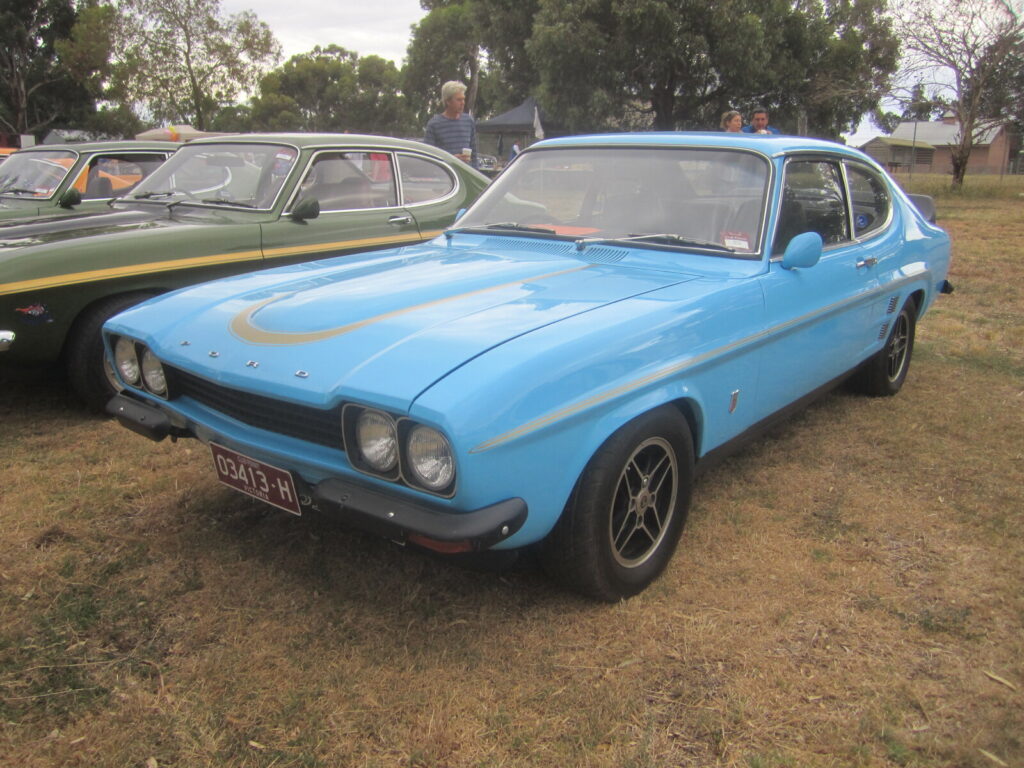
Below the homologation specials sat the regular performance Capris. The 3000GT used the 3-litre Essex V6 in a more civilian state of tune, with the GXL trim package adding wider arches, twin headlamps and sport interior. The 3000E was the executive trim above it. Neither is officially a special edition, but the GT and GXL packages are now where the volume Mk1 collector money sits. Project cars start around £8,000, presentable cars £18,000 to £25,000, concours examples £30,000 plus. Most of what you see at shows is a 3000GT — they were the bread and butter of the sporting Mk1 range.
The Mk2 Era (1974 to 1978)
The Mk2 is the forgotten Capri. Boxier, more practical with its hatchback, but never quite as desirable as the Mk1 or the later Mk3. There were fewer headline specials and the cars have generally been valued lower as a result. That’s slowly changing. One trim point worth knowing while you’re here: from the Mk2 onwards the plush Ghia badge took over from the Mk1’s GXL as the Capri’s top luxury trim — extra instruments, upgraded seats and the full toy count — though, like the GXL before it, it’s a trim level rather than a limited-run special edition.
Capri JPS (1975)
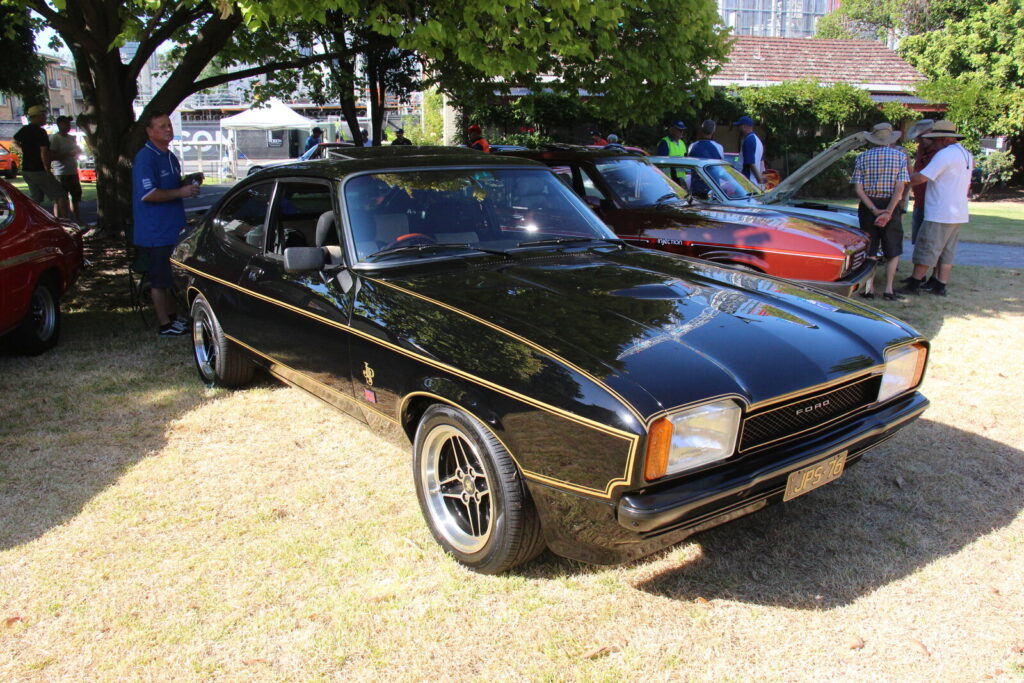
The John Player Special was a UK-only limited run launched at the Geneva Motor Show in March 1975, finished in black or white with gold pinstriping echoing the JPS Lotus Formula 1 livery. Around 2,003 were built across 1.6, 2.0 and 3.0 mechanicals (black is the better-remembered and more common of the two; white JPS cars are scarcer — exact split varies by source). Gold velvet seats inside, gold-finish wheels, and dedicated JPS badging. They’re now the rarest of the Mk2 specials and values have climbed from £4,000 a decade ago to £12,000 to £20,000 today for a clean example.
What to check: the gold detailing is almost always faded, repainted or missing entirely. Original cars have specific pinstripe placement which is hard to fake correctly. The velvet interior wears badly, and replacement trim is unobtainable. A JPS with its full original livery and interior is genuinely rare; most cars on the market have been part-restored at some point.
.jpg)
Capri S Models (Mk2)
The Capri S replaced the Mk1’s GT badge as the sporting trim. Twin Webers (on some markets), uprated suspension, sports seats and the right body trim. The 3.0S Mk2 in particular is now coming up as a collector’s choice — under-valued, properly quick, and increasingly rare in good condition.
The Mk3 Golden Era (1978 to 1986)
This is the main meat of the post. The Mk3 ran for eight years, and Ford UK launched a special edition almost every year of its life to keep showroom traffic flowing. Most of the famous Capris come from this era — and most of what you’ll see at shows is a Mk3 derivative.
Capri 3.0S (1978 to 1981)
The opening salvo of the Mk3 era. The 3.0S used the Essex V6 in 138 bhp tune with sports seats, alloy wheels and trim upgrades. Replaced in 1981 by the fuel-injected 2.8 Injection when Ford UK switched to the Cologne V6. The 3.0S sits in a slightly awkward spot — it’s not a homologation rarity, it’s not a final-year farewell, but it is the last carburettor V6 Capri and increasingly collectable for that reason. £10,000 to £18,000 buys a good one.
Capri 2.8 Injection (1981 to 1986)
Not technically a special edition — it was a regular production model — but it deserves a mention because everything that followed in the Mk3 range was built on this base. The 2.8 Injection introduced the Cologne 2.8-litre V6 with Bosch K-Jetronic fuel injection, producing 160 bhp. Pepper-pot alloys, Recaro seats, and the body kit that defined the late Mk3 look. The 2.8i is the foundation, and a tidy original 2.8i is one of the better-value classic Fords you can buy today. £8,000 to £18,000 covers most of the market.
Capri Turbo “Werksturbo” (1981 to 1982)
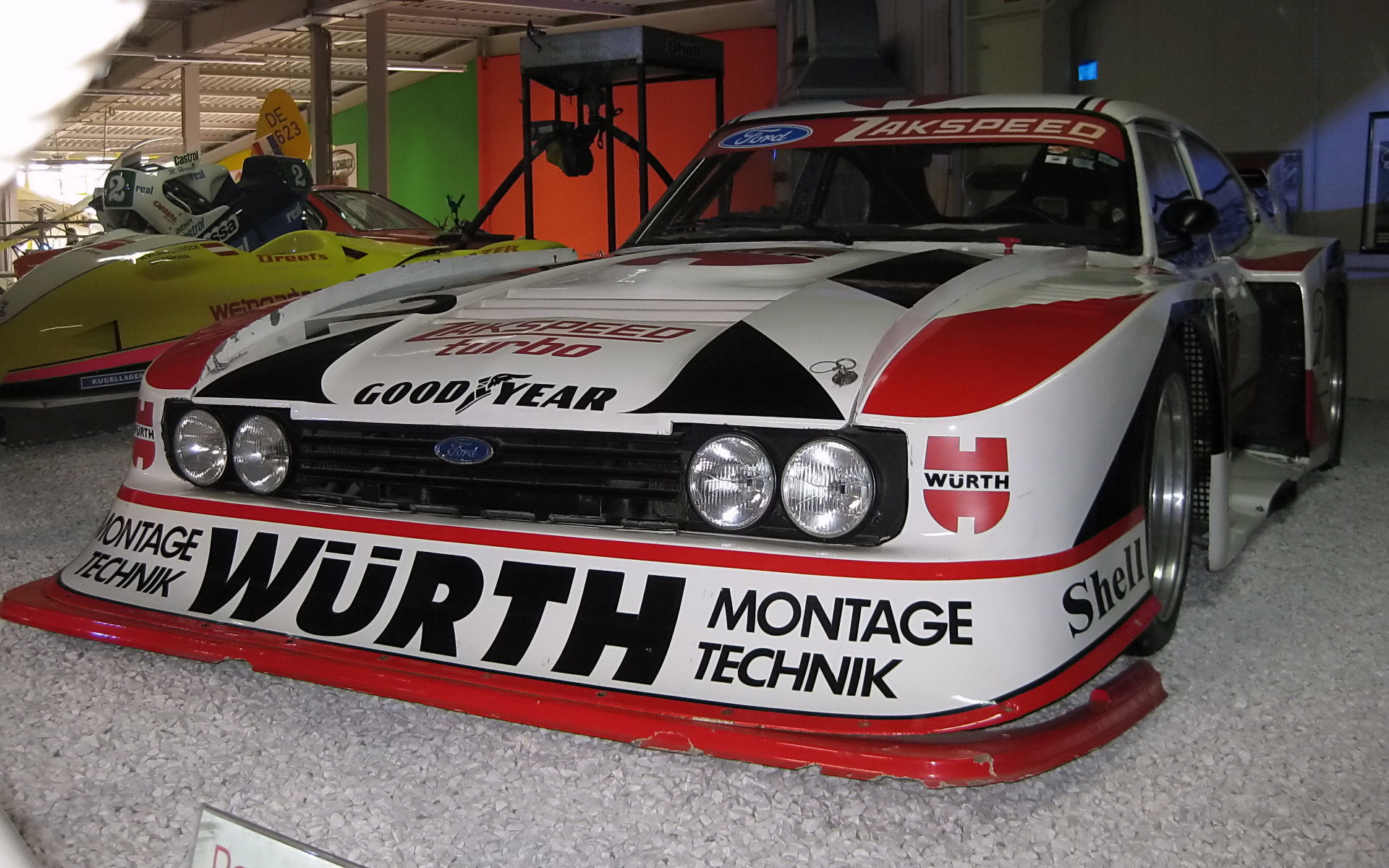
The turbo Capri almost nobody in Britain has seen — and the only turbocharged Capri Ford itself sanctioned as a production special. It was left-hand drive only and sold exclusively through Ford Germany’s RS dealer network between July 1981 and September 1982. Based on the 3.0S, the “Werksturbo” (literally “works turbo”) took the 2.8-litre Cologne V6, added a single Garrett T4 turbocharger and produced 188 PS, wrapped in widened Series X bodywork, Ford Motorsport spoilers and deep 7.5J four-spoke RS alloys on Pirelli P7s. The wide-arch look was lifted straight from Zakspeed’s Group 5 race cars.
.jpg)
Ford intended to build around 200, but numbered transmission tunnels suggest only about 155 were actually completed — which makes the Werksturbo rarer than the Tickford that followed it. Where the Tickford was a British coachbuilt luxury-turbo experiment, the Werksturbo was Ford Cologne’s own factory-blessed turbo road Capri. Because they’re left-hand drive and stayed on the Continent, they almost never surface in the UK; when one does, expect serious money and very little to compare it against. It was never UK-sold — but then, neither was the RS2600.
Capri Tickford Turbo (1983 to 1984)
The unicorn. Built by Tickford Engineering in Bedworth (Tickford was Aston Martin Tickford until 1984, when the engineering arm split from Aston Martin Lagonda), the Tickford Capri took the 2.8 Injection and gave it a turbocharger, a body kit by Simon Saunders, leather Wilton trim and Aston Martin-grade finishing. Around 85 were built before the project was killed by Ford’s product planning department. Original list price was over £14,000 — more than a Jaguar XJ-S of the era — and the cars sold slowly when new.
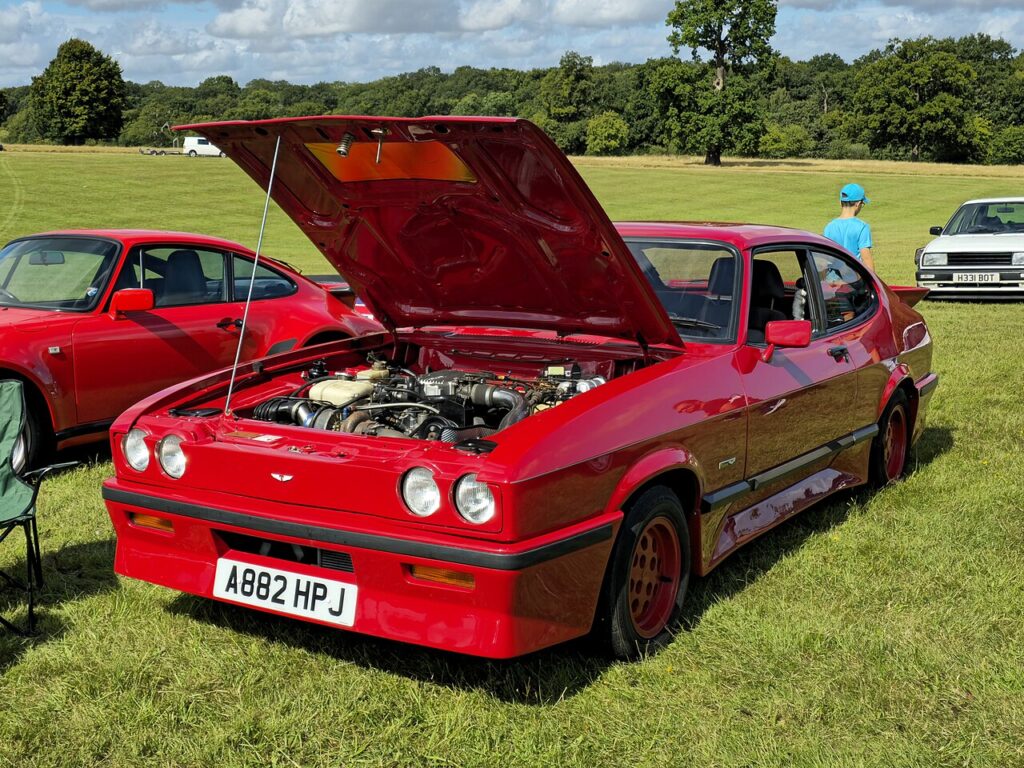

Today, Tickford Capris are the rarest of the Mk3 specials and worth £40,000 to £80,000 depending on condition and provenance. The Tickford body kit is unique and unobtainable. The interior leather is bespoke. The turbocharger installation is specific to the Tickford and requires specialist knowledge to maintain. If you find one for sale, the price will be high and the work to restore it correctly will be even higher.
Capri Calypso (1981 to 1982)
A dealer-driven special launched to clear stock. Based on the 1.6 Laser mechanicals, with two-tone paint, colour-coded bumpers and special seat trim. Around 1,500 built. Now an affordable entry point to a “named” Capri — £4,000 to £8,000 for a tidy car.
Capri Cabaret (1982 to 1983)
Sister model to the Calypso, also dealer-led, with different two-tone schemes (typically dark over light) and specific badging. Mechanically a 1.6 or 2.0 Laser. Production approximately 4,000 cars (Cabaret I, March 1982), with a further 2,000 of the follow-on Cabaret II (December 1982). Same value bracket as the Calypso. Both are good first-classic-Ford cars because the running costs are modest and the maintenance is straightforward.
Capri Cameo (1981 to 1982)
From the same stock-clearing era, the Cameo (launched August 1981, around 1,500 built on 1.3 and 1.6 Pinto mechanicals) was the odd one out — a “special” that added no luxury at all. It was a decontented L-trim car, stripped of the centre console and side mouldings to hit a budget price, sold on looks rather than equipment. So many were scrapped, rusted or converted to 2.0 and V6 spec that a surviving original Cameo is now scarcer than the far more numerous 2.8i. There’s no real value premium — it’s here for completeness — but verify the spec against the Capri Club International register before paying over the odds for one.
Capri Laser (1984 to 1986)
The Laser was the final standard trim level for the Mk3, replacing the LS and GL trims. Available in 1.6 and 2.0 forms, with laser-stripe graphics on the bonnet and flanks, alloy wheels and tinted glass. It’s the swansong base trim — the most affordable Capri in the late range, and the car most likely to be the cheap entry point into the model today.
Values are still soft. £3,000 to £7,000 for a tidy 1.6 Laser, slightly more for a 2.0. They rust like every other Capri and the bodywork costs to put right are identical to a Brooklands, which is why people end up putting £10,000 of restoration into a £5,000 car. If you want to drive a Capri without the collector premium, the Laser is the obvious choice. If you want it as an investment, look elsewhere.
Capri Injection Special (1985)
The Injection Special was launched in 1985 as a run-out edition while Ford finalised the 280 Brooklands. Around 500 were built, based on the 2.8 Injection mechanicals, with half-leather Recaro seats (cloth-centred leather “Strobe” Recaros — distinct from the Brooklands’ full-leather Recaros), colour-coded bumpers and specific badging. Documented launch colours included Lacquer Red, Strato Silver and Crystal Green — verify the exact original colour for any specific car against the Capri Club International registry before respraying.
Today, the Injection Special sits in an interesting spot — it’s rarer than the Brooklands by some margin but lacks the Brooklands’ iconic colour and final-year status. Values reflect that: £8,000 to £15,000 for a tidy car, with the best examples touching £18,000. If you want the leather Recaros and the late-Mk3 spec without paying full Brooklands money, the Injection Special is worth a look.
Capri 280 Brooklands (1987)
The final Capri. 1,038 built at Cologne in late 1986 and registered through 1987. All Brooklands Green metallic. All full-leather Recaro interior in Raven grey with red piping. All the same body kit, 15-inch seven-spoke RS alloys, and Brooklands badging. UK only, with the Continental market getting the Capri 280 in a wider choice of colours and trims.
I’ve restored one. The 1986 Brooklands case study covers the full build, and I’ve written a dedicated guide on what makes the Brooklands special and what to watch for. The short version: it’s the most desirable Capri, values are climbing, and the bodywork hides as much rust as any other Mk3. £8,000 to £14,000 for a project, £15,000 to £22,000 usable, £25,000 to £35,000-plus for a properly restored car — see my dedicated Ford Capri values guide for the 2026 condition-grade bracketing across every model in this post.
Capris That Weren’t Really Ford Specials But Matter
The Capri scene also has a long tradition of dealer-built and aftermarket specials. None of these are official Ford products, but several have become collectible in their own right, and the lines between “factory special” and “period conversion” matter when you’re buying.
- Turbo Technics Capri. Newcastle-based Turbo Technics fitted turbo conversions to Mk3 Capris in the early eighties, with Ford UK’s blessing. Around 130 cars are believed to have been converted. The conversion is well-engineered and a genuine Turbo Technics car carries a small premium over a standard 2.8i. Paperwork is everything — a “Turbo Technics-style” Capri is just a Capri with a turbo fitted.
- X-Pack and Series X Capris. Ford’s Rallye Sport dealer network offered the X-Pack body and engine upgrades through specialist dealers. A genuine X-Pack 3.0 Capri with full paperwork is a serious collector’s car. Most cars described as “X-Pack” are simply Mk1s or early Mk2s with aftermarket arches and wheels.
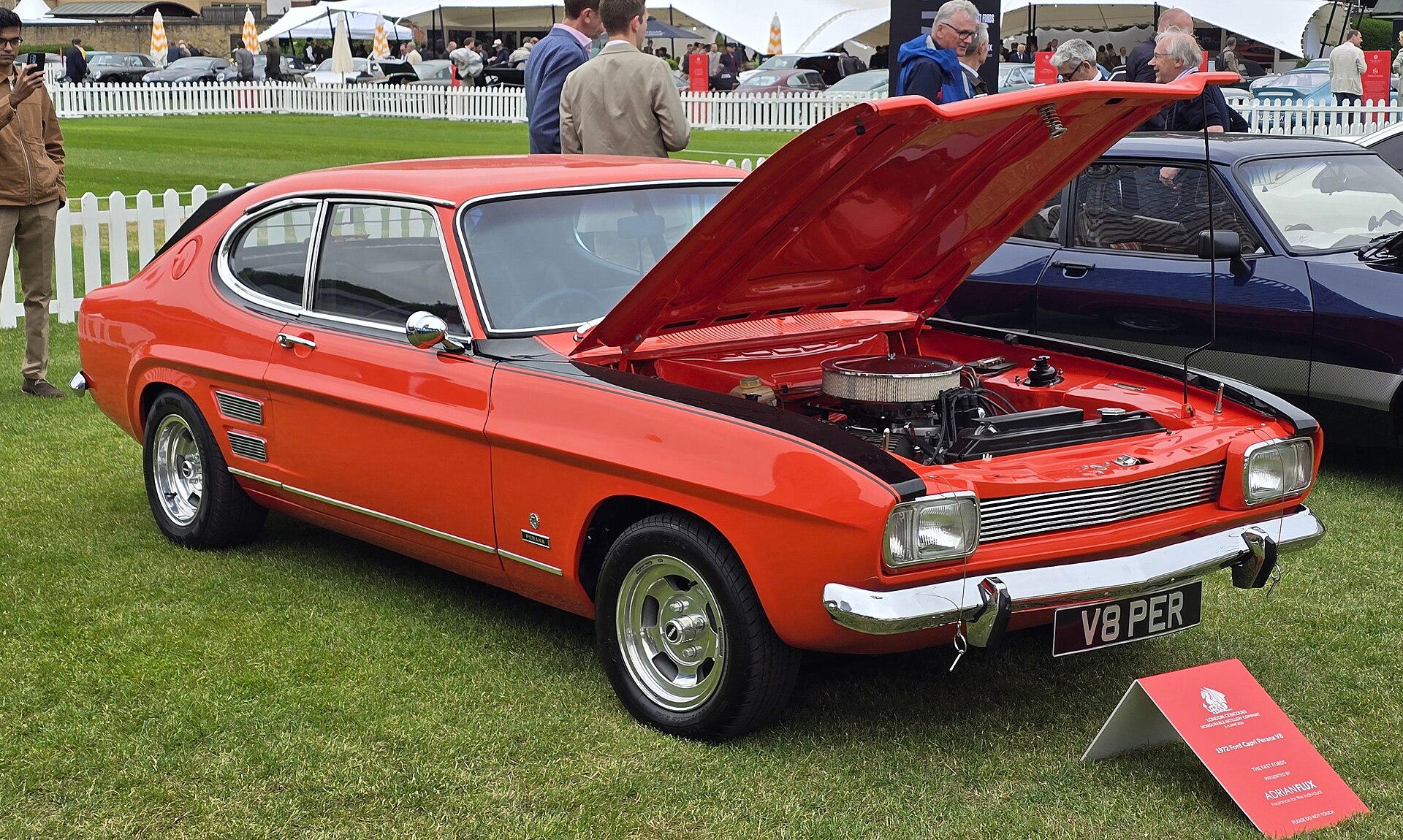
- Capri Perana V8 (South Africa, 1970 to 1972). Built by Basil Green Motors and sold new through Ford South Africa’s dealer network with factory approval, the Perana V8 shoehorned a 5.0-litre Windsor V8 (around 280 bhp) into the Mk1 shell — a genuine homologation special for South African saloon racing, and devastatingly quick for its day. Estimates put production between 400 and 500. Not a Ford UK car, but exactly the same “not from Dagenham, but absolutely matters” category as the Turbo Technics — and a car the Capri world genuinely reveres. A documented one is serious money now, the best into six figures; verify the Basil Green (BG) build records before believing any V8 Capri claiming Perana provenance.
- RS3100 lookalikes. The visual recipe of the RS3100 — the spoiler, the wheels, the Sebring Red paint — is much easier to replicate than the actual car. There are more “RS3100” Capris on the road than were ever built. None of them are genuine.

Buy a converted Capri for what it is — a modified Capri — and pay the right money. Don’t pay special-edition money for a car that isn’t one.
The Cosworth That Never Was
A “Capri Cosworth” comes up in every forum thread about late-Mk3 specials — the dream being a Mk3 fitted with the YB turbocharged sixteen-valve engine that later went into the Sierra Cosworth. Beyond enthusiast folklore, there’s no documented Ford prototype to support the idea (Cosworth’s actual Capri involvement was the GAA race engine in the RS3100 and the Zakspeed Group 5 BDA). The Capri was already too old by then to justify the development cost and Ford’s performance ambitions moved to the Sierra. The Cosworth Capri remains a “what if”. Aftermarket YB swaps exist, but they’re not Ford history.
Values Today, Ranked Lowest to Highest
Approximate market values for a presentable, usable example (not concours, not a project) in early 2026:
- Capri Laser 1.6: £3,000 to £7,000
- Capri Calypso / Cabaret: £4,000 to £8,000
- Capri Laser 2.0: £5,000 to £9,000
- Capri 2.8 Injection: £8,000 to £15,000
- Capri JPS Mk2: £12,000 to £20,000
- Capri 3.0S Mk2/Mk3: £10,000 to £18,000
- Capri Injection Special: £8,000 to £18,000
- Capri 280 Brooklands: £15,000 to £35,000
- Capri Tickford Turbo: £40,000 to £80,000
- Capri RS2600: £40,000 to £150,000 (auction range; varies sharply on documentation)
- Capri RS3100: £45,000 to £100,000+ (2022 CCA top result £74,250)
These are rough brackets — provenance, originality and history can push any car well outside its bracket. A matching-numbers RS3100 with one owner from new is a different animal from one that’s been re-shelled in the nineties. Always pay for the documents as well as the car. For grade-by-grade ranges (Project / Driver / Excellent / Concours) on every Capri model and special edition, see my 2026 Ford Capri values guide. The Hagerty UK price guide is a useful cross-check, as are Car & Classic sold listings.
What to Look for If You’re Buying One
Special-edition buying advice is mostly the same as general Capri buying advice — with one important addition. The standard classic Ford project car checklist applies, and I’d add these special-edition-specific points:
- Verify the build number before anything else. The chassis number is the primary document. If the seller can’t show you the VIN plate clearly, walk away. If the number doesn’t match the registration document, walk away. If you’re being told the plate “fell off” or “was replaced during a respray”, walk away.
- Verify the build through the club registry. Ford UK never operated the kind of paid Heritage Certificate scheme that BMIHT runs for Austin, MG and Triumph. The route instead is the Capri Club International register, which holds chassis-level records for every documented special edition, cross-checked against the original V5 history and the build plate on the car. For any car over £10,000, paperwork that ties the current shell to the original build is essential. If you’re matching the original factory colour during restoration, my Ford Capri paint codes guide covers the verified colours across Mk1, Mk2 and Mk3.
- Inspect the unique trim and parts. Tickford body kit. Brooklands 15-inch seven-spoke alloys and full-leather Recaros. JPS gold pinstriping. Injection Special half-leather Recaros. If any of the unique parts are missing or replaced with later equivalents, that’s a value hit and a sourcing headache. The Capri Club International registry is your first port of call when sourcing originals — members swap and sell parts continuously.
- Check the bodywork against the badge. The Brooklands has the same shell as a Laser. The rust is the same. The repair cost is the same. The premium you’re paying is for the badge and the trim, not for a better car. Make sure the underlying metalwork justifies the asking price — my 8 places a Ford Capri always rusts checklist covers exactly where to look.
- Ask about previous restorations. A car that’s been restored badly in the nineties — wrong colour code, replaced panels welded poorly, incorrect trim refitted — is worth less than a tired original. Tired original is restorable. Bad restoration has to be undone first.
We’ve Restored These. Here’s What We’ve Learned.
The biggest thing I’ve learned restoring late-Mk3 specials is that the rust doesn’t care about the badge. A Brooklands and a Laser need exactly the same metalwork — sills, scuttle, boot floor, rear arches, the lot. Where the special editions get expensive is in the detail. The Brooklands body kit is brittle. The Tickford trim is unobtainable. The Injection Special’s leather Recaros need full re-trim if they’re tired, and a correct re-trim costs four-figure money.
What I tell every customer who comes to me with a special-edition project: budget for the restoration as if it’s a Laser, then add 30% for the unique parts and 50% on top of that if the trim is wrong or missing. That sounds harsh, but it’s accurate. The best result is a car where the shell is genuinely solid, the unique parts are all present and correct, and the restoration is essentially cosmetic with the metalwork already sound. Those cars exist — they’re just rare and they go quickly when they come up.
The case study that taught me most about this car is the 1986 Brooklands restoration. Solid-looking from twenty feet, gone underneath. New sills, new scuttle, new floors, hand-fabricated panels where stock metal wasn’t available, and a custom respray in VW blue metallic — the owner chose to go off-script rather than match the original Brooklands Green, and the result looks genuinely beautiful. Over 150 hours from bare shell to finish. That’s the kind of work these cars take if you want them properly right.
The badge is the easy bit. Anyone can fit a Brooklands kit to a Laser. What you’re paying for in a real special edition is the paperwork, the original parts and the originality. Get those three things right and the car looks after itself.
Thinking About a Special-Edition Capri?
I’m based just outside Milton Keynes in Wicken, and I specialise in classic Ford restoration — Capris, Escorts, Cortinas and the occasional Cosworth. If you’ve got a special-edition Capri that needs assessing, a project you’re thinking of taking on, or a finished car that needs paint and trim work to bring it back to standard, I’d be happy to take a look.
The honest assessment is free. Send me photos on WhatsApp and I’ll tell you what I see — what the bodywork looks like, whether the unique parts are right, and what the restoration is likely to involve. No pressure, no sales pitch. Just an honest opinion from someone who’s spent enough time under these cars to know where the surprises hide.
Ford Capri Special Editions — Frequently Asked Questions
What counts as a Ford Capri special edition?
A factory-built Capri with unique trim, paint, or mechanical spec produced in a limited run. The headline UK examples are the RS2600 (Cologne homologation), RS3100 (Halewood homologation), JPS (1975), Tickford Turbo (1983–84), Injection Special (1985), Calypso, Cabaret, and the 280 Brooklands (1987). Dealer specials and aftermarket conversions (Turbo Technics, X-Pack) are collectible but not factory special editions in the strict sense.
How do you tell a genuine Capri special edition from a clone?
Cross-reference the VIN plate, the build plate on Cologne cars, the original V5 logbook and the Capri Club International register entry for that chassis. The chassis number must match the registration document. The build plate sequence must match the model claimed (a genuine Brooklands carries a build number between 1 and 1,038). The club register confirms factory build, colour, trim and any special-edition designation against Ford’s own historic data. If any of these don’t line up, walk away.
What is the rarest Ford Capri special edition?
By production volume, the Capri Tickford Turbo with around 85 cars built, and the RS3100 with approximately 250 built at Halewood. By desirability and value, the RS3100 sits at the top — concours examples now £150,000–£200,000+. The Tickford follows at £40,000–£80,000. Both are rarer than the Brooklands (1,038 built) but the Brooklands has the broader collector base.
Are Ford Capri special edition values still rising?
Yes, at the top end. The RS cars are decoupling from regular Capri values and tracking the wider seventies homologation market (Stratos, Alpine, Lancia). The Brooklands and Tickford continue to climb. The 2.8 Injection is the next-most-likely mover. The 1.6 and 2.0 Lasers, Calypsos and Cabarets are largely stuck — affordable to enjoy, not collectible at any premium. For full 2026 condition-grade pricing, see my Ford Capri values guide.
Is a Ford Capri Brooklands worth restoring?
If the shell is genuinely sound and the unique parts (Brooklands Green paint, full-leather Recaros, 15-inch seven-spoke RS alloys, body kit) are present, yes — a sympathetic restoration can return £25,000–£35,000+ on a £10,000–£15,000 project. If the shell is gone and the unique parts are missing, the maths is harder: replacement Brooklands trim is expensive and a full bare-metal restoration runs £15,000–£25,000 on top of the buy-in. Always factor the unique-parts sourcing into the budget before committing.