Custom
Resprays
From factory colour matches to full custom colour changes, I spray everything in my dedicated booth at my workshop near Milton Keynes. Proper prep, quality paint, and a finish you can be proud of.
It's 90% Prep & 10% Paint
A good respray isn't about the paint — it's about everything that happens before the paint goes on. Ask anyone who's had a cheap respray and they'll tell you: it looked great for a month, then the orange peel showed up, the edges started lifting, and the colour didn't quite match. That's what happens when you skip the prep. I don't skip anything. Every car that goes into my booth at Wicken gets stripped, sanded, primed, and blocked until the surface is absolutely right. Only then does it get paint.
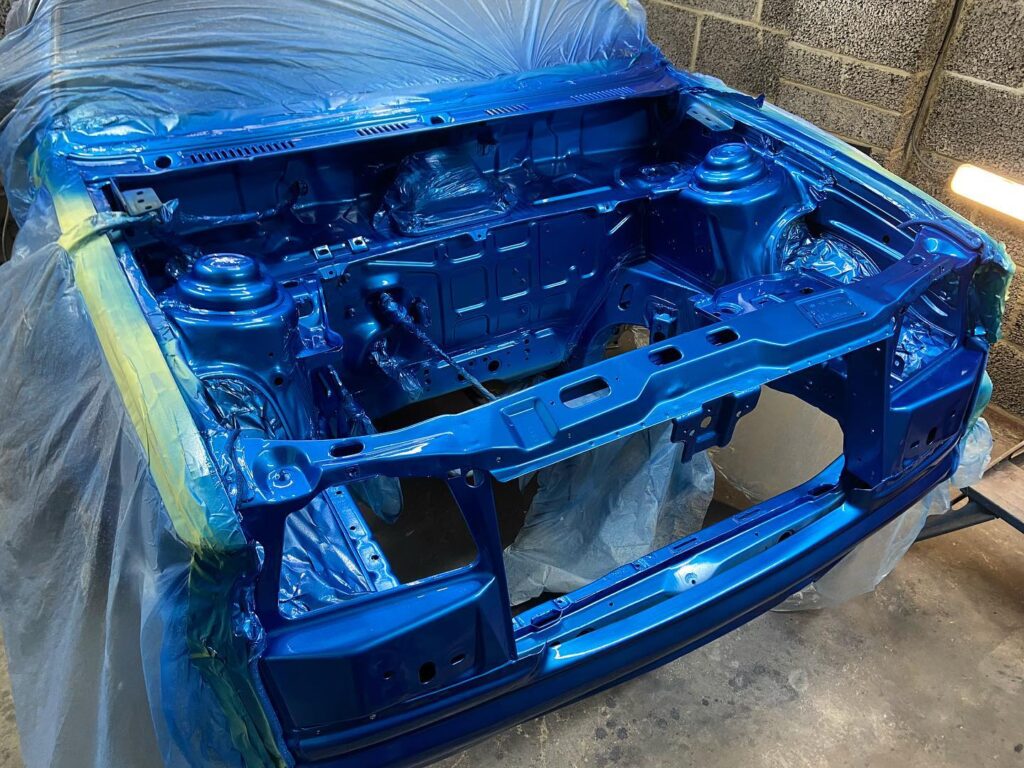
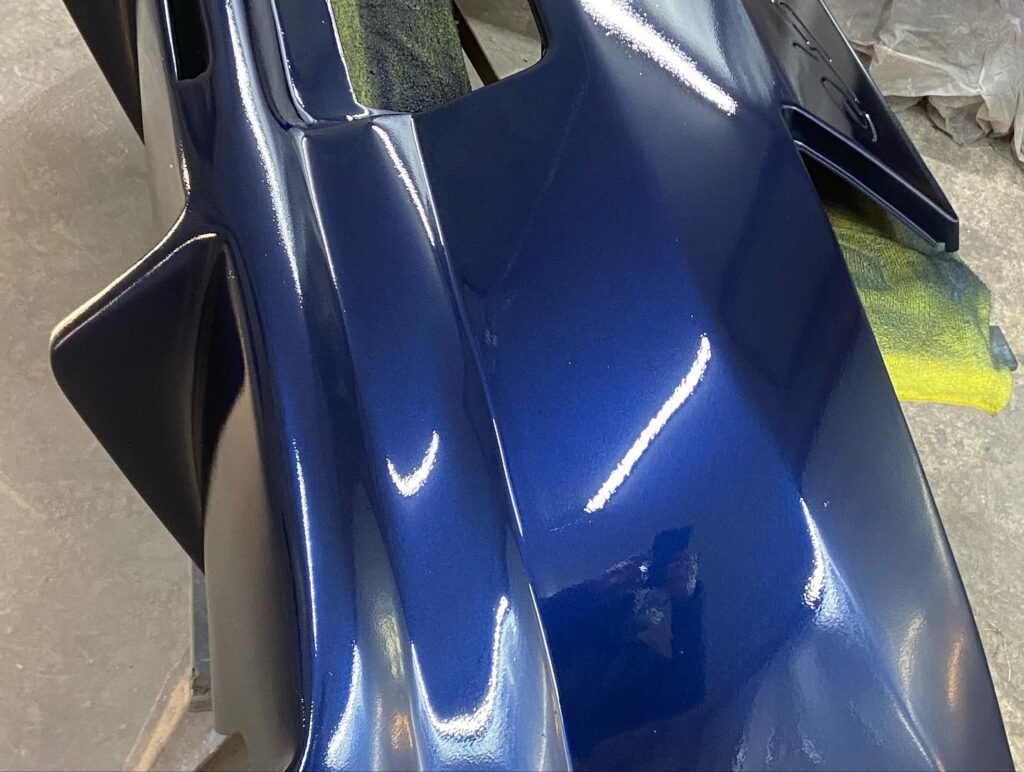
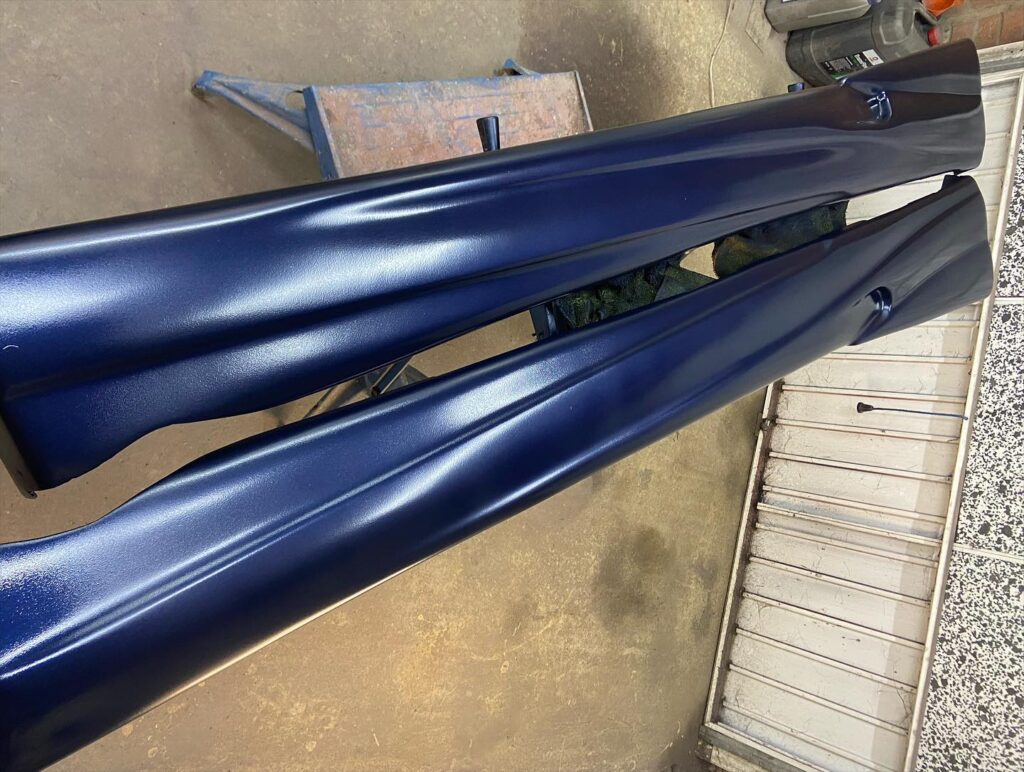
I work with 2K paints and clear coats — the same systems used by manufacturers. Whether you're after a factory colour match for an insurance repair, a period-correct classic colour for a restoration, or something completely custom, I can mix it. The 1986 Ford Capri Brooklands I restored got a VW blue metallic with added flake — six stages of wet sanding and two stages of machine polish gave it a wet-look depth that stops people in their tracks. That's the standard I work to on every job, whether it's a full colour change or a single panel blend.
"Anyone can spray paint on a car. The difference between a £500 respray and a proper one is what happens in the three days before the trigger gets pulled."
The process matters. Old paint, underseal, stone chips, and any existing damage all need dealing with first. If there's rust, it gets cut out and welded properly — not just skimmed over with filler. If there's bodywork damage, it gets straightened and repaired before any primer goes near it. Then it's etch primer, high-build primer, block sanding, guide coat, more blocking, and finally the top coat. It takes time, but that's why the finish lasts and looks right years down the line.
I get customers from across Milton Keynes, Buckingham, Towcester, and Northampton who've been quoted cheap resprays elsewhere and want to know why my price is different. The answer is always the same: I'm not just spraying paint — I'm doing the job properly. If you want to understand more about what goes into a quality paint job, have a look at my guides section where I go into more detail.
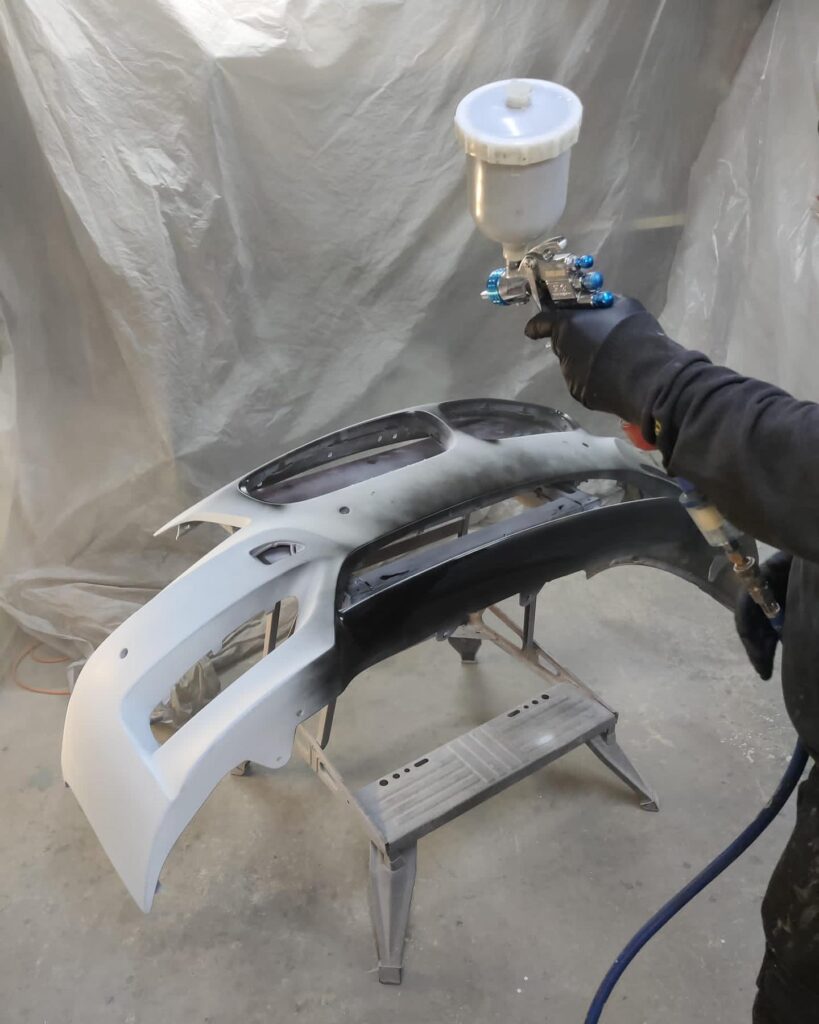
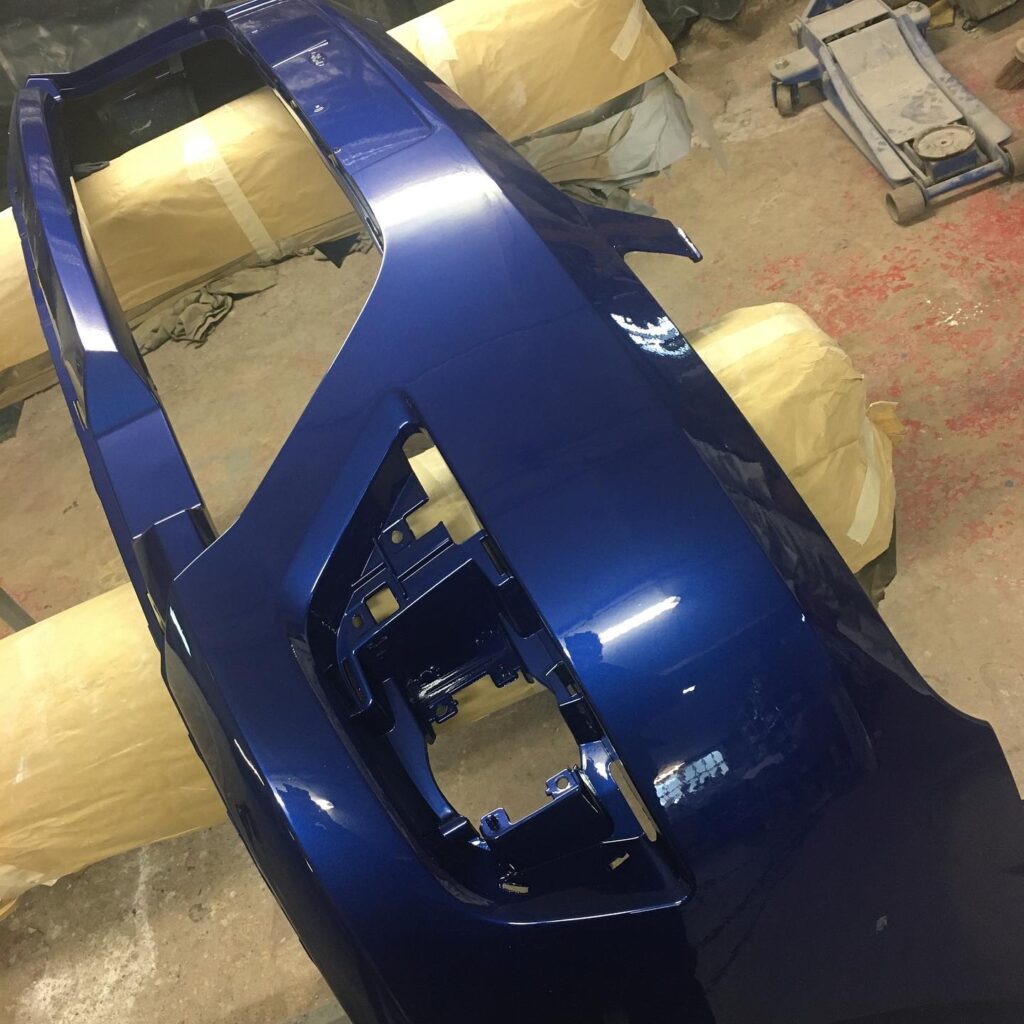
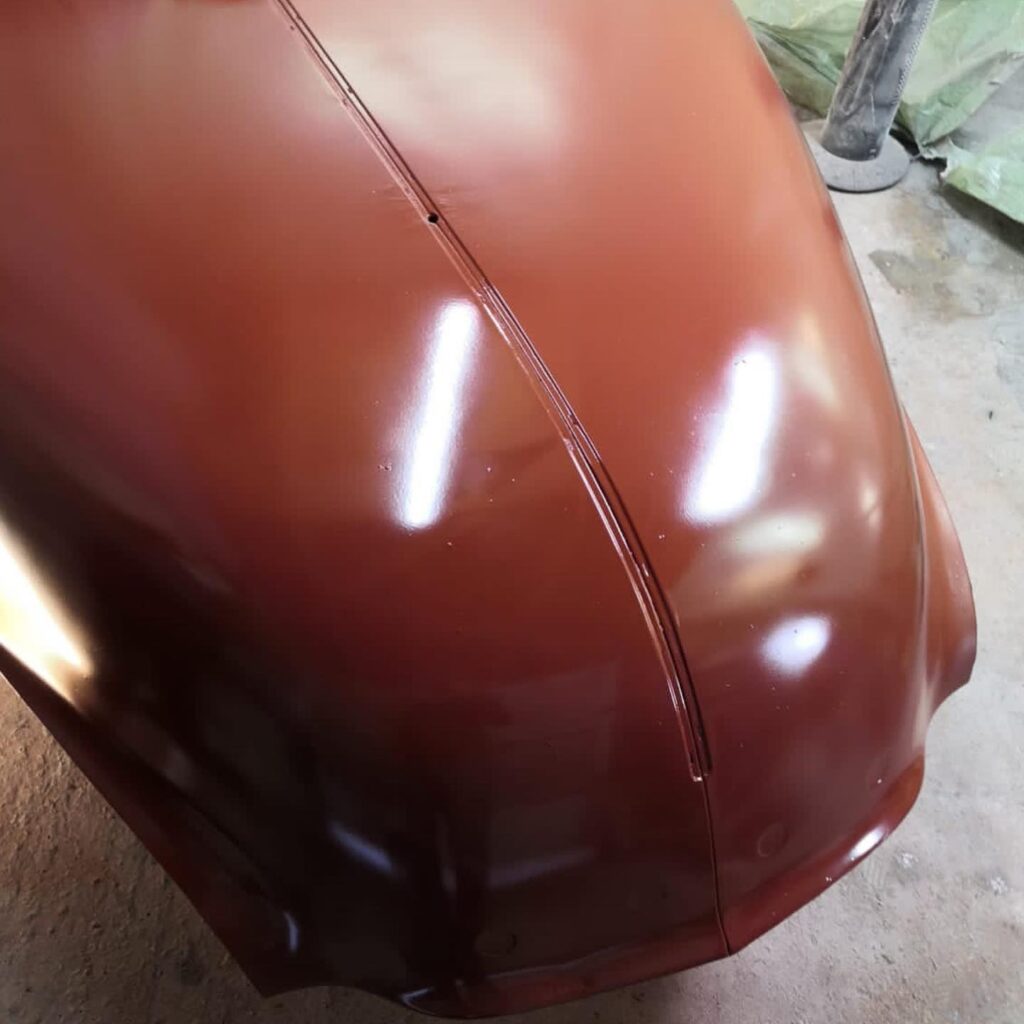
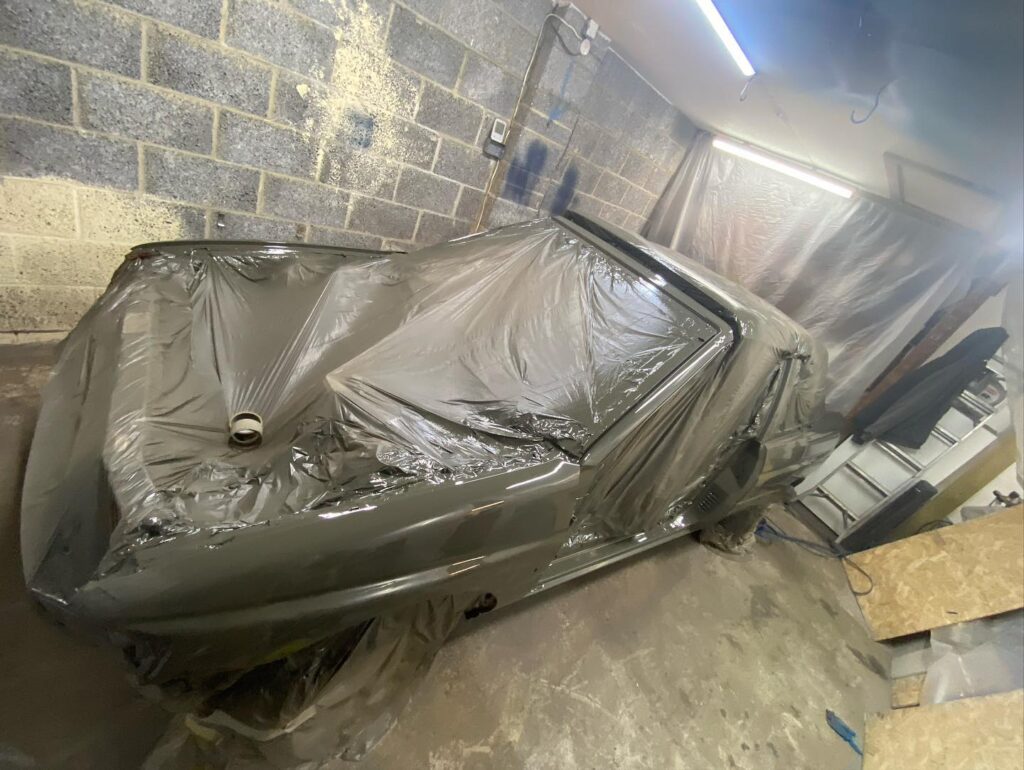
From My Spray Booth
What to Expect
Assessment & Colour Choice
I'll look over the car, discuss what you're after, and check the condition of the existing paintwork. If you're matching the original colour, I'll use your paint code. If you want something different, I'll help you choose and mix a sample to check before committing.
Strip & Prep
Trim, handles, rubbers, glass — anything that's in the way comes off. The existing paint gets flatted back or stripped depending on its condition. Any rust or damage gets dealt with at this stage, not hidden under paint.
Prime & Block
High-build primer goes on, then it's blocked back by hand. Guide coat shows up any low spots or imperfections. This stage gets repeated until the surface is dead straight — it's the most time-consuming part, and the most important.
Paint
Into the booth for base coat and clear coat. Temperature, humidity, and dust are all controlled to get a clean, even finish. Multiple coats of lacquer give depth and protection.
Polish & Reassemble
Once the paint has cured, it gets wet-sanded and machine-polished to remove any texture and bring out the gloss. Then all the trim, glass, and hardware goes back on. The result is a factory-smooth, deep-gloss finish.
Car Respray FAQs
How much does it cost to respray a car?
It depends on the car, the condition of the existing paintwork, and the finish you're after. A single panel blend might be a couple of hundred pounds. A full colour change with proper strip-back and prep will be significantly more. The difference in price always comes down to how much prep work is needed — that's what takes the time and makes the finish last. Send me photos on WhatsApp and I'll give you a straight quote.
How long does a full car respray take?
For a proper job with full prep — stripping, priming, blocking, painting, and polishing — you're looking at one to two weeks depending on the car and its condition. A partial respray or single panel can be turned around in a few days. I don't rush paint jobs because that's how you end up with orange peel and lifting edges six months later.
Can you match my car's original colour?
Yes. I use your vehicle's paint code to mix an exact match. For older classics where the original colour has faded, I can blend the new paint into the surrounding panels so there's no visible line between old and new. I can also mix custom colours if you want something different.
What's the difference between a cheap respray and a quality one?
Prep. A cheap respray skips the hard work — they spray over existing damage, use minimal primer, and rely on the paint to hide imperfections. It looks passable for a few months, then the orange peel shows, edges lift, and stone chips cut straight through to bare metal. A proper respray starts with stripping back to clean surfaces, fixing any rust or bodywork damage, multiple rounds of primer and blocking, then paint in a controlled booth. That's why it costs more and lasts years longer.
Can you respray just one panel on my car?
Absolutely. Single panel resprays and localised repairs are some of the most common jobs I do. I'll colour-match your paint code and blend into the adjoining panels so you can't see the join. If you've got a scuffed bumper, a keyed door, or stone chips on the bonnet, it doesn't need a full respray — just the affected area done properly. Have a look at my guide on respraying a single panel for more detail.
Want a Fresh
Coat of Paint?
Send me a few photos on WhatsApp and I'll give you an honest quote. Whether it's a full colour change or touching up a classic, I'll tell you exactly what's involved and what it'll cost.