Ford Cortina Restoration Costs in 2026: What You’ll Actually Pay
Honest Ford Cortina restoration costs from a working classic Ford specialist. Mk1 through Mk5, what's involved at each stage, and what catches owners out.
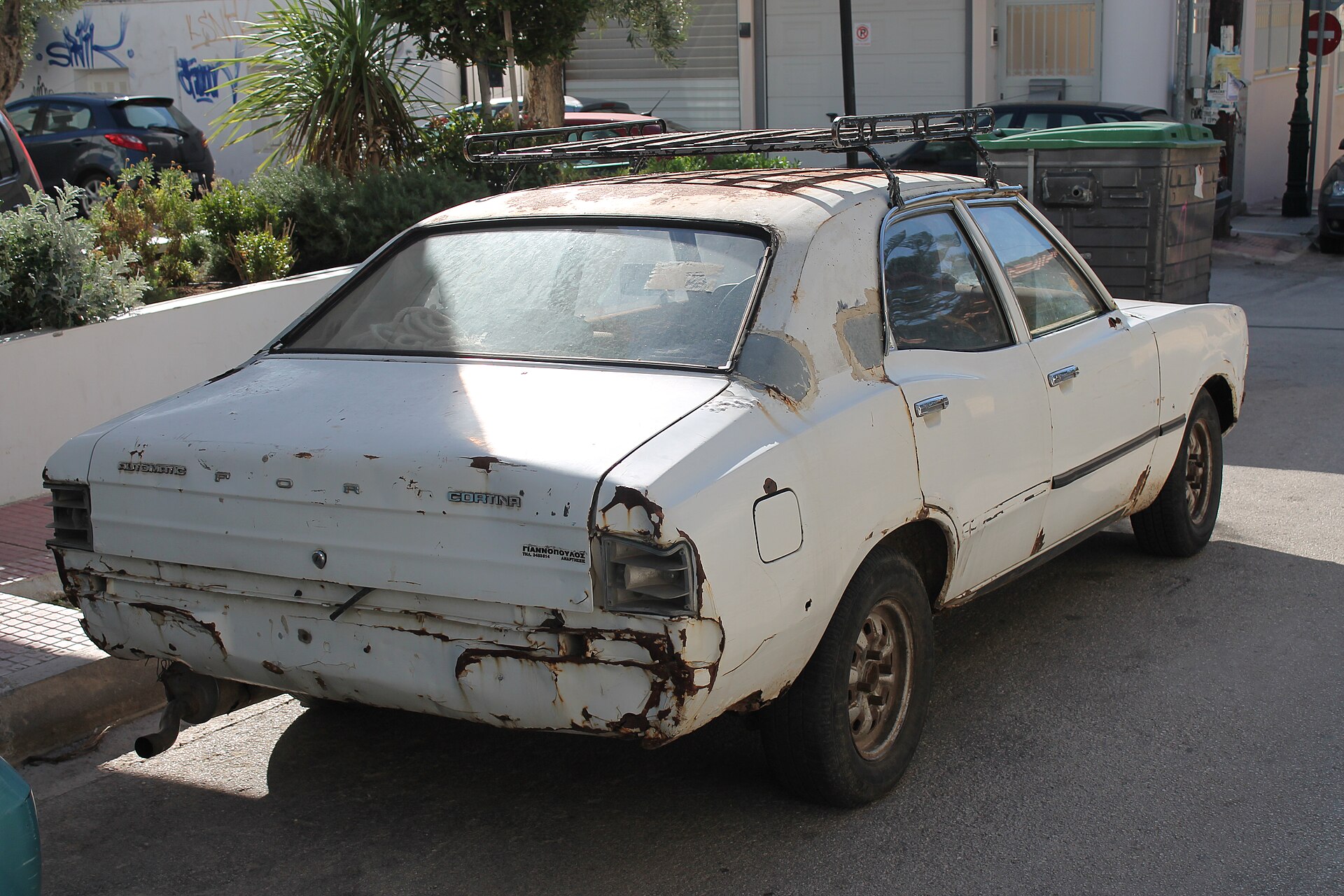
Cortina restoration isn’t cheap, and the cheapest cars cost the most. After two decades restoring classic Fords at my workshop near Milton Keynes, the Ford Cortina is the second-most-quoted car I see — after the Capri — and the one where the gap between owner-expected cost and actual cost is widest. The £3,000 “tidy” Mk3 1600E almost always becomes a £25,000 project; the £18,000 “finished” 2000E is sometimes the best buy on the market because someone else has already spent the money. This is the honest workshop guide to what a Cortina restoration actually costs in 2026, broken down by generation and by restoration level.
The Four Levels of Cortina Restoration
Same framework I use for Capri and Escort restoration quotes — these four levels cover the realistic range of work, and knowing which level you actually want is the difference between budgeting accurately and running out of money halfway through.
- Recommissioning — the car runs and drives. Recommissioning means making it MOT-able and reliable: brakes, fluids, fuel system, tyres, electrics, MOT failures sorted, perished rubber replaced. Cosmetics left as they are. £3,000 to £8,000 on most Cortinas.
- Rolling restoration — the car stays usable through the work. Bodywork is done a panel at a time, mechanicals refreshed in stages, interior tidied. Useful for owners who want to drive the car between phases. £8,000 to £20,000 on most Cortinas across two or three years.
- Full restoration — shell off, strip to bare metal, every panel assessed and repaired or replaced, full repaint, mechanical rebuild, interior retrim, reassembly. The car comes back to “as it left the factory” condition. £25,000 to £55,000 on most Cortinas.
- Concours restoration — full restoration to original factory specification with every detail correct — original colour, original fasteners, original engine numbers, original trim patterns. Concours-spec restorations on a Mk1 Lotus Cortina or Mk3 1600E run £60,000 to £120,000 depending on starting condition and the level of original-part sourcing required.
The cost gap between level 3 and level 4 is wider than people expect, particularly on a Cortina, because concours-level original-part sourcing on a Mk1 or Mk2 takes months and often involves importing from Australia or the US. On a Mk3, Mk4 or Mk5 the gap is narrower because more parts are available; on a Mk1 Lotus Cortina the gap is enormous.
Mk1 and Mk2 Cortina Restoration Costs
The pre-Coke-bottle Cortinas are the oldest, the rarest and the most expensive to restore properly. Parts availability is the main driver — many panels on a Mk1 or Mk2 are no longer reproduced and have to be hand-fabricated. The trim pieces, badges, lights and bright work all need careful sourcing, often from Australia where Cortinas were sold in higher numbers and parts have survived better.
- Mk1 standard (1300 or 1500 base): recommission £4,000–£7,000. Rolling restoration £10,000–£18,000. Full restoration £25,000–£40,000. Concours £45,000–£65,000.
- Mk1 GT: recommission £4,500–£8,000. Full restoration £30,000–£45,000. Concours £55,000–£75,000.
- Mk1 Lotus Cortina (verified): recommission £12,000–£20,000. Full restoration £45,000–£80,000. Concours-spec £80,000–£120,000+.
- Mk2 standard: recommission £3,500–£6,500. Full restoration £20,000–£35,000.
- Mk2 1600E or Savage: recommission £5,000–£9,000. Full restoration £28,000–£42,000.
- Mk2 Lotus Cortina (verified): recommission £10,000–£18,000. Full restoration £40,000–£65,000.
Why the Lotus variant costs three times what a base 1500 does: Lotus-specific structural points (the A-frame mounts on early Mk1s), Lotus-specific trim (the bucket seats, wood-rimmed wheel, gauges, gearknob), the twin-cam engine rebuild (£8,000 to £12,000), Weber DCOE reconditioning (£800), the close-ratio gearbox rebuild (£1,500 to £2,500), and the originality verification that has to feed into every parts decision. A verified Lotus is worth that work because the market rewards verified originality with a six-figure ceiling. A 1500 Lotus tribute usually isn’t worth that level of spend — the Lotus Cortina guide covers the verified-vs-tribute economics in detail.
Mk3 Cortina Restoration Costs
The Mk3 is the high-volume Cortina restoration target. Parts are more available than the Mk1/Mk2 — most exterior panels are reproduced, trim is gradually being remade by specialists, and mechanical parts are largely interchangeable with the Mk4/Mk5. The 1600E and 2000E commands the premium that justifies a proper restoration; the lower trims are usually better recommissioned than restored.
- Mk3 L or XL (1300, 1600): recommission £3,000–£5,500. Rolling restoration £7,000–£14,000. Full restoration £18,000–£28,000.
- Mk3 GL or S (post-facelift): recommission £3,500–£6,000. Full restoration £20,000–£30,000.
- Mk3 GT (1.6 or 2.0): recommission £4,000–£7,000. Full restoration £22,000–£32,000.
- Mk3 1600E: recommission £5,000–£9,000. Rolling restoration £15,000–£25,000. Full restoration £30,000–£42,000. Concours £42,000–£60,000.
- Mk3 2000E: recommission £4,500–£8,500. Full restoration £27,000–£40,000. Concours £40,000–£55,000.
- Mk3 GXL (1.6 or 2.0): recommission £4,000–£7,500. Full restoration £24,000–£36,000.
- Mk3 Ghia: recommission £4,000–£7,000. Full restoration £22,000–£34,000.
- Mk3 Estate (any trim): add £2,000–£4,000 to the saloon figure for the load floor, tailgate and rear suspension work.
The vinyl-roof Mk3 1600E and 2000E will need to have the roof removed and the steel underneath inspected — this alone adds £1,500 to £3,000 to most quotes. The full Mk3-specific rust pattern is in the Cortina rust guide; the trim-by-trim buying assessment is in the Ford Cortina Mk3 buyer’s guide.
Mk4 and Mk5 Cortina Restoration Costs
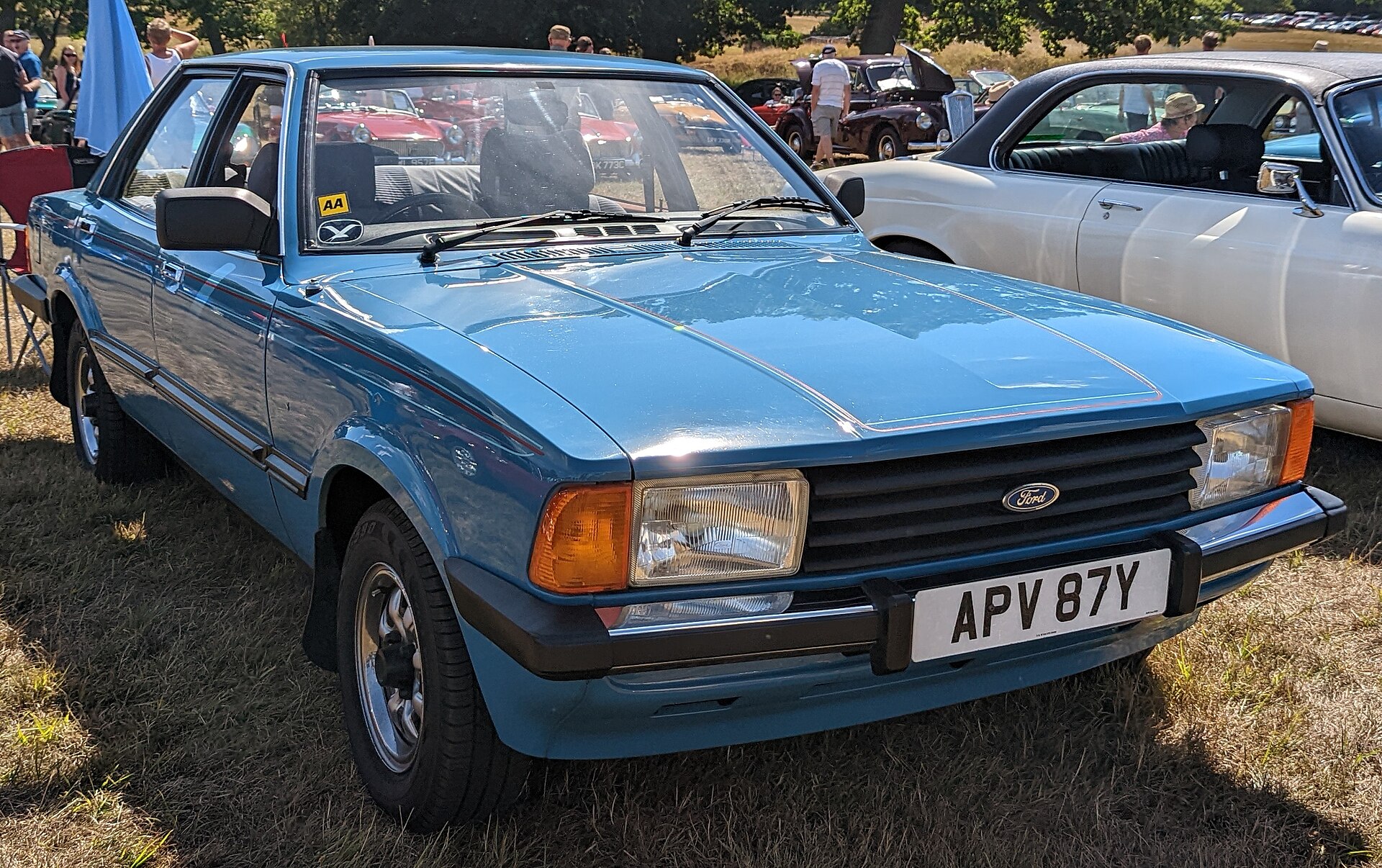
The Mk4 and Mk5 are the “still cheap to restore” generation, which is exactly where the smart-money projects sit right now. Parts availability is the best of any Cortina (interchangeability with the Sierra-era parts bin helps), survival rates are dropping, and values are climbing on the special-edition trims faster than most owners realise. The trim-vs-restoration-cost equation is critical here.
- Mk4 L or GL: recommission £2,500–£4,500. Full restoration £14,000–£22,000. Most are better recommissioned than restored.
- Mk4 S, Sport or GT: recommission £3,000–£5,500. Full restoration £16,000–£25,000.
- Mk4 Ghia (2.0 or 2.3 V6): recommission £3,500–£6,000. Full restoration £18,000–£28,000.
- Mk5 L or GL: recommission £2,500–£4,500. Full restoration £12,000–£20,000.
- Mk5 S or Sport: recommission £3,000–£5,000. Full restoration £14,000–£22,000.
- Mk5 Ghia (2.0): recommission £3,500–£5,500. Full restoration £16,000–£24,000.
- Mk5 2.3 V6 Ghia: recommission £4,500–£7,500. Full restoration £20,000–£28,000. Worth proper work because of the rarity.
- Mk5 Crusader (1.6 or 2.0): recommission £4,000–£6,500. Full restoration £18,000–£26,000. The run-out special justifies the spend.
- Mk5 Crusader Estate: full restoration £22,000–£30,000.
Don’t full-restore a base Mk4 or Mk5 L unless it has documented family history that makes it irreplaceable. The maths doesn’t work — the finished value is below the restoration cost. Recommission, drive, enjoy. Save the proper restoration for the Crusader, the 2.3 Ghia or the Mk5 estate variants where the finished values are climbing. The Mk5 picture in detail is in the Mk5 Cortina buyer’s guide.
Where the Money Actually Goes — A Typical Cortina Restoration Breakdown
Using a typical Mk3 1600E full restoration at £35,000 as the worked example, here’s where the spend lands. Percentages are typical workshop allocations; exact numbers shift with starting condition.
- Strip and assess (5–8%): £1,500–£2,500. Bodyshell off the running gear, every panel inspected, every fastener catalogued, parts list compiled.
- Structural welding and bodywork (30–40%): £10,000–£14,000. Sills, floors, arches, scuttle, strut tops, fabricated repair sections as needed. Where most Cortina restorations get expensive.
- Prep and primer (8–12%): £3,000–£4,500. Strip to bare metal, etch primer, build coats, block sanding. This is what stops the paint cracking in five years.
- Paint (10–15%): £3,500–£5,500. Colour coats, clear coat, polish. Single-stage solid colours are cheaper; metallic and pearl finishes add £800 to £1,500.
- Mechanical rebuild (15–25%): £5,000–£8,500. Engine refresh, gearbox, axle, brakes, suspension, fuel system, cooling, electrics.
- Trim and reassembly (10–15%): £3,500–£5,000. Interior refurbishment, headlining, carpets, seat retrim, badging, glass refit, weatherstrips, bright work.
- Sundries and consumables (3–5%): £1,000–£1,800. Fasteners, gaskets, fluids, sealants, primers, paints used in process work, the boxes of bolts that always need replacing.
The biggest single line is always bodywork. Cortina shells are not generously made; once you start cutting, the rot usually goes further than the inspection suggested. The honest workshops add a 10 to 20% contingency to the bodywork line on the original quote and ring you when it’s actually needed; the workshops that don’t are the ones where bills surprise you later. We use the same approach we covered in the Capri Brooklands case study — quote on what we see, ring you about what we find.
The Hidden Cortina Restoration Costs Nobody Quotes For
Every Cortina restoration has cost lines that don’t show up on the initial quote because nobody knows they’re needed until the strip is done. Common surprises:
- The 1600E grille that turns up missing — a genuine 1600E grille is £400 to £700, sometimes more for a pristine example. They get knocked off, broken in the dishwasher, or “lost in the move”.
- The Mk3 wood dash that’s worse than it looked — original wood-effect dashes delaminate, crack and warp. Replacement is £400 to £900 depending on completeness.
- The Lotus twin-cam head that needs a £4,000 rebuild — head off, valve seats inspected, often comes back as a “needs new valves, seats and a skim” job. Allow £4,000 to £6,000 even if the engine seemed to run fine.
- The estate tailgate frame that’s gone where you couldn’t see it — the bottom of the tailgate rusts from the inside out. £500 to £1,200 to repair properly.
- The vinyl roof underneath — if the car has vinyl, it’s hiding rust until proven otherwise. Allow £1,500 to £3,000 to strip, repair and either replace or replace with paint.
- The Webers that need rebuilding — twin Weber DCOEs look fine until you take them apart. Float chambers, jet wear, throttle spindle wear. £600 to £1,000 to recondition a pair properly.
- Wiring and electrics — fifty-year-old wiring is brittle and the insulation cracks. A complete loom replacement is £1,200 to £2,000 fitted; piecemeal repair is usually false economy.
- Glass and weatherstrips — original Mk1 and Mk2 glass is increasingly hard to find; reproductions are £300 to £600 a piece, weatherstrips add another £400 to £800 to a full restoration.
Why “I Could Buy a Finished One for That Money” Applies Less to Cortinas
The argument that comes up on every classic-Ford restoration: why spend £30,000 restoring a Cortina when I could buy a finished one for £25,000? On a Capri or Escort the maths sometimes works that way — the market has enough finished cars that you can shop for one. On a Cortina it works less often, because so few have been properly restored.
Walk any classic-car auction or specialist forecourt and count the finished Mk3 1600Es. There will be one or two; they sell quickly, usually at or above asking. Finished 2000Es are rarer; finished Crusaders and Mk5 V6 Ghias are unicorns. The market hasn’t yet absorbed the Cortina restoration wave that the Capri market went through in 2015–2020, which means finished cars are scarcer than restoration projects. The “buy a finished one” argument lands harder on Capri restoration economics than on Cortina restoration economics.
The other factor: finished Cortinas at attractive prices are often finished to a standard you wouldn’t repeat. Bondo over rotten sills, vinyl roof hiding three layers of filler, paint already cracking after two summers — the £25,000 “finished” Cortina is sometimes the £40,000 restoration in disguise. The Cortina rust guide covers the inspection checks that catch these cars before you commit.
How to Keep Cortina Restoration Costs Down
Practical ways to spend less without compromising the result:
- Stage the work — bodywork first, mechanicals second, interior last. Drive between phases. Spreads the cost over years rather than months.
- Focus spend on structure over cosmetics — sound sills, sound floors, sound strut tops. A scruffy interior is reversible; a rotten chassis isn’t.
- Choose the shell carefully at the start — a £2,000 Cortina with sound sills will restore for less than a £6,000 Cortina with hidden sill rot. Pre-purchase inspection is the cheapest line in the whole budget.
- Leave the mechanicals until the body is done — there’s no point rebuilding an engine in a rotten shell. Get the structure right first, then refresh the mechanicals against a sound base.
- Source trim parts gradually — start the search for the rare bits (1600E grille, Crusader decals, original radio) early. Paying retail when you need it urgently is twice the price.
- Use period-correct paint codes — non-original colours cap value substantially. A £400 paint colour saving costs £2,000 to £4,000 in resale value.
- Avoid bodging the bits you can’t see — patches under the floor, plastic body filler over rotten metal, “we’ll redo that later” jobs always come back twice as expensive.
Getting a Quote from Our Workshop
The honest way to quote a Cortina restoration is to see the car. Photos help, but the strip-and-assess phase is where the realistic number emerges. We typically work in stages: a first £500 to £1,500 assessment, the strip and inspection, a detailed quote against what’s actually there, then staged payments against each phase as the work progresses.
If you’ve got a Cortina that’s heading for restoration, send photos through the contact page — sills, arches, floors (lift the carpet), boot floor, strut tops, engine bay, interior, and any vinyl-roof edges. A WhatsApp video walking round the car is even better. We’ll come back with an honest bracket on what level of restoration the car makes sense for and what the realistic budget looks like. We’re classic Ford specialists in Milton Keynes, and the same approach we used on the Escort GTI and the Capri Brooklands applies to every Cortina that comes through the workshop: quote honestly, build what’s needed, ring you about what we find.