Ford Cortina Mk3 Buyer’s Guide: 1600E, 2000E, GXL & Ghia Explained
A classic Ford specialist's buyer's guide to the Mk3 Cortina. Trim levels explained, where they rust, what they cost, and which Coke-bottle Cortina is the smart buy in 2026.
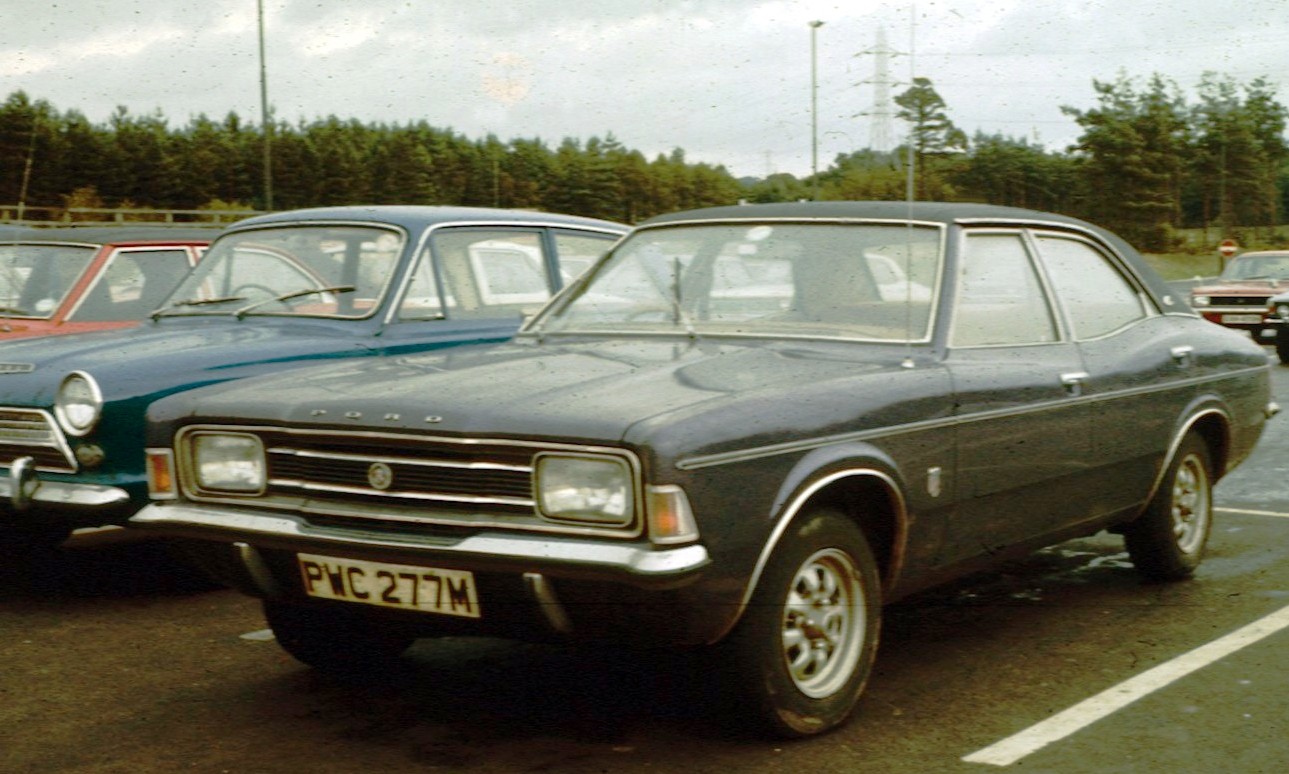
The Coke-bottle Ford Cortina Mk3 is having its moment. Values on the 1600E, 2000E and GXL have climbed steadily since 2020, even base 1300L cars are appreciating, and the supply of decent project shells is shrinking every year. After two decades welding and respraying classic Fords at my workshop near Milton Keynes, the Mk3 is the most-restored Cortina shape on the road right now. This is the buyer’s guide I give every prospective Mk3 owner before they part with money — trims explained, what to check, what to pay, and which Coke-bottle Cortina is the smart 2026 buy.
The Mk3 Cortina in Context — 1970 to 1976
Ford radically restyled the Cortina for the Mk3 generation. The “TC” platform underneath was new — coil-sprung rear suspension, MacPherson struts up front, a properly modern chassis for the time — and the body was unmistakably “Coke bottle”, an American-inspired shape with kicked-up rear haunches and a low waistline. Early cars (1970 to 1973) had a smaller grille and the high-waist look. The 1973 facelift cleaned it up: wider grille, larger square headlamps on the upper trims, simpler side mouldings, and a much-improved interior.
Production ran from 1970 to 1976, ending when the Mk4 launched in September 1976. Over 1.1 million were built across saloon and estate. That’s still high enough that decent project cars come up regularly — but the desirable trims (1600E, 2000E, GXL, Ghia) are now the cars that fetch four-figure premiums even in scruffy condition.
Ford Cortina Mk3 Trim Levels at a Glance
The trim hierarchy split into pre-facelift and post-facelift, with some overlap. Knowing which trim you’re looking at — and which one it actually was when it left the factory — is half the buying battle.
- Pre-facelift (1970 to 1973): Base, L, XL, GT, GXL, plus the 1600E executive trim sitting at the top.
- Post-facelift TD (1973 to 1976): Base, L, GL, S, GT, 2000E and Ghia. The GXL and 1600E were replaced; the 2000E took over the executive role.
L cars got chrome bumpers and basic carpet. XL added the wood-effect dash and slightly nicer seats. GT was the sports trim — uprated engine, sports steering wheel, Rostyle wheels. GXL and 1600E were the pre-facelift executive trims. The 2000E and Ghia took over the executive role post-facelift. The S was a sporting trim slotted between GT and GXL on later cars and is the dark horse for affordability. Right now the 1600E, 2000E and GXL lead the market, the Ghia and GT sit just behind them, and the L and XL are appreciating quietly because of how few have been saved.
Ford Cortina 1600E (1970 to 1973)
The 1600E is the pre-facelift halo trim and the most collectable single Mk3 model. Spec is the executive package — wood-effect dash, four-spoke wood-rimmed wheel, sports bucket-style seats, vinyl roof on most cars (originally an option but fitted to the majority), Rostyle wheels, and a unique 1600E grille that’s worth real money on its own.
- Engine: 1599cc Kent crossflow, 88 bhp at 5,700 rpm.
- Suspension: GT-spec — lowered ride height, uprated dampers.
- Wheels: 13-inch Rostyles, narrower than the GXL/GT spec.
- Build numbers: roughly 57,000 across the three-year run.
- Survivors: estimated 800 to 1,500 on UK roads in restorable condition.
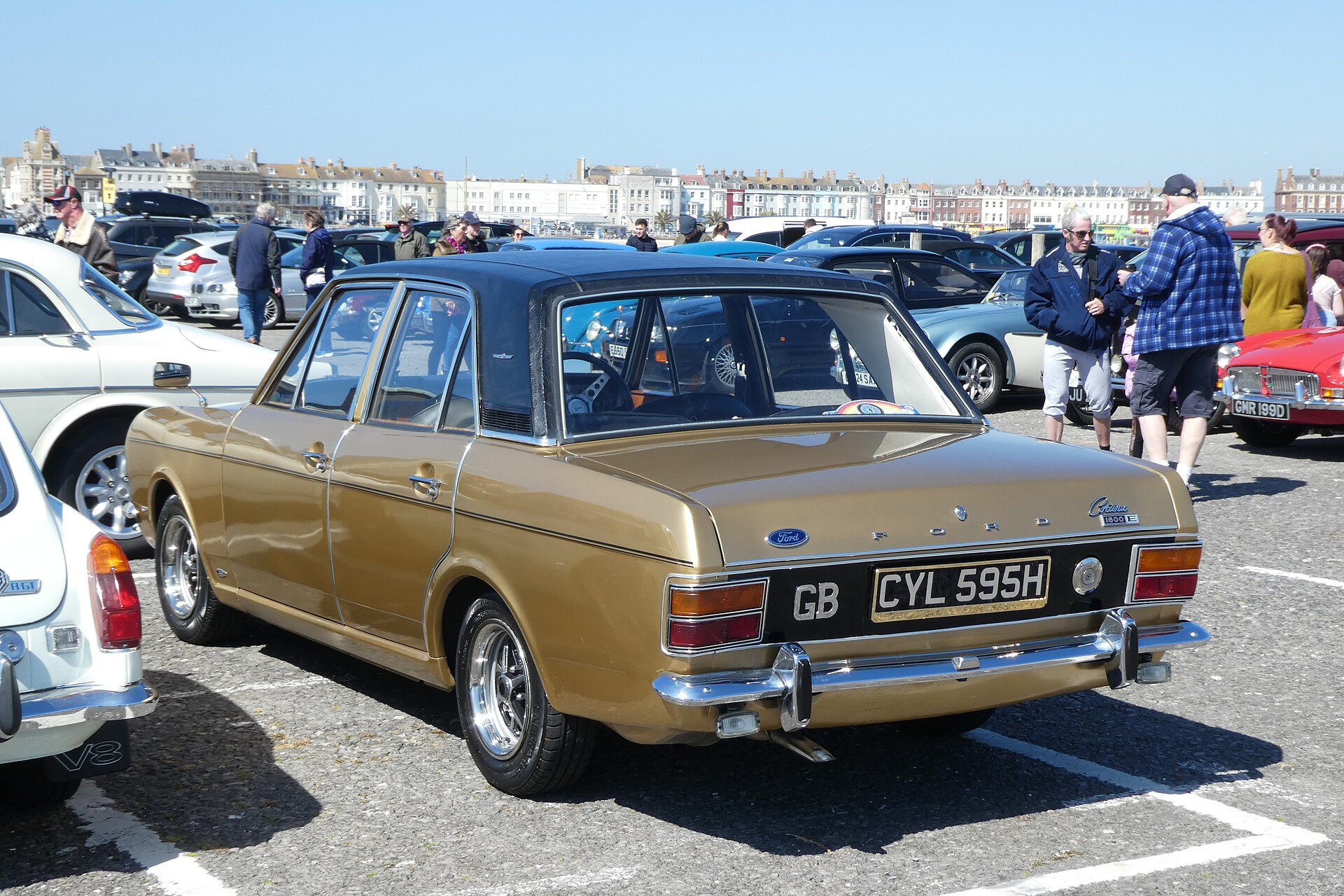
The 1600E is the easiest Mk3 to fake — a 1600 XL grille swap, a wood-dash retrofit and a set of Rostyles will get you most of the way there visually. The chassis number prefix and the unique grille are the verification points. If you’re buying for value-holding, only a fully verified 1600E with documented history makes the maths work. A “1600E spec” car built from a 1600 XL shell drives identically but is worth a third of the real thing.
Ford Cortina 2000E (1973 to 1976)
The 2000E succeeded the 1600E after the 1973 facelift and ran to the end of Mk3 production. Same executive philosophy, bigger engine, more refined manners, post-facelift styling that some buyers actually prefer to the pre-facelift 1600E.
- Engine: 1993cc Pinto OHC, 98 bhp at 5,500 rpm.
- Transmission: four-speed manual standard, three-speed automatic optional.
- Trim: wood dash, velour or vinyl bucket-style seats, four-spoke wheel, vinyl roof common but not universal.
- Wheels: 13-inch wider Rostyle pattern than the 1600E.
- Build numbers: significantly fewer than the 1600E — figures vary across sources but somewhere between 25,000 and 35,000 across three years.
The 2000E is the more usable executive Cortina — the Pinto pulls properly at motorway speeds, the cleaner late-Mk3 styling has aged better than the early-Mk3 high-waist look, and current values are catching the 1600E faster than most owners realise. Rarity is the 2000E’s strongest card.
Ford Cortina GXL and Ghia
Both luxury trims, both selling currently just below the 1600E and 2000E in usable condition, but with very different histories.
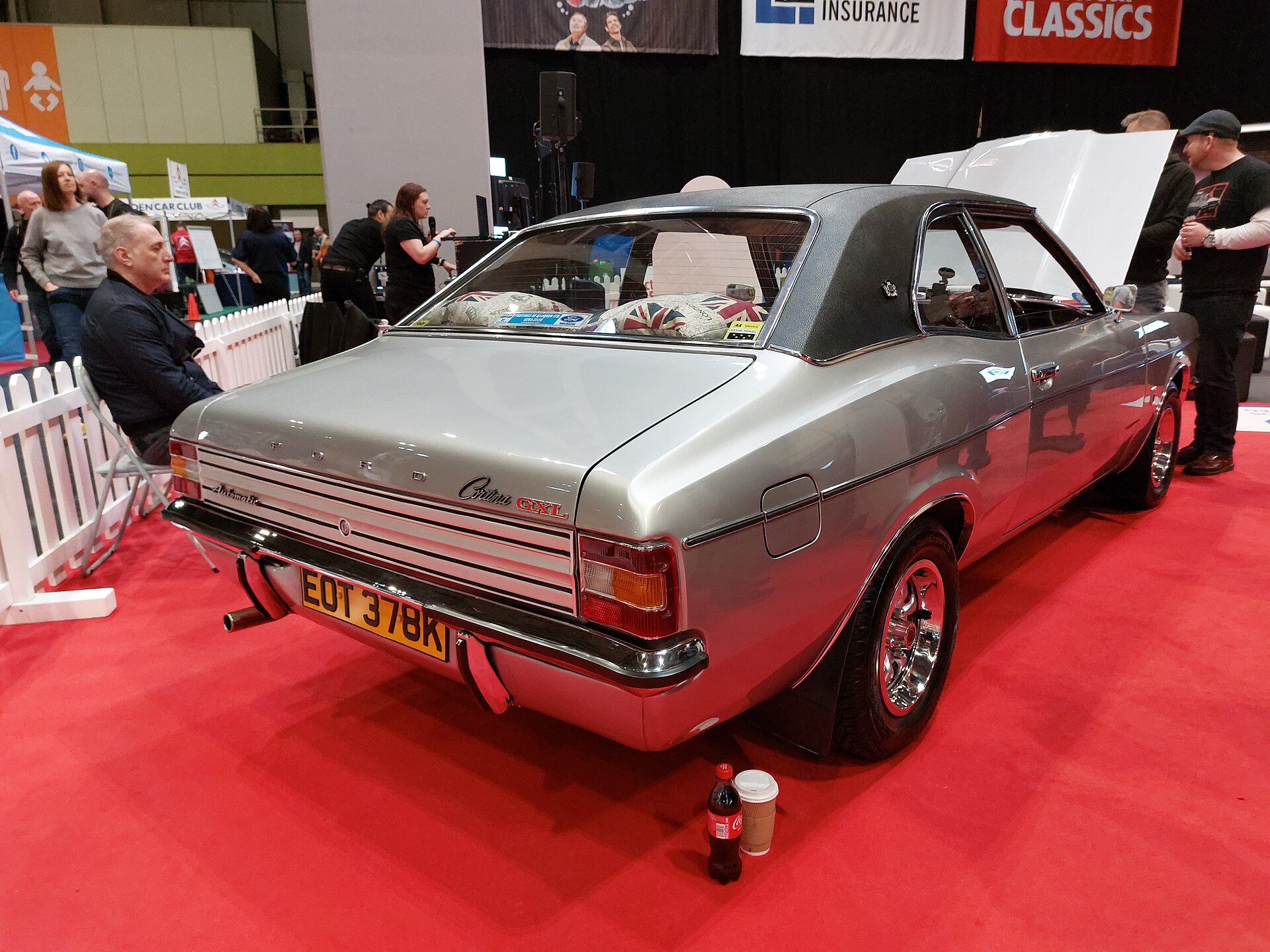
- GXL (1970 to 1973): pre-facelift luxury trim, GT mechanicals (1599 or 1993cc), wood dash, four-spoke wheel, wider Rostyles, vinyl roof commonly fitted, more conservative styling than the 1600E. The “executive choice” before the 2000E badge appeared.
- Ghia (1973 to 1976): the post-facelift Ghia introduction on the Cortina line. Premium interior, velour trim, the most “carpeted Granada” feel inside, often with bronze-tinted glass and a vinyl roof. The 2000 Ghia and 1600 Ghia ran alongside the 2000E in the run-up to the Mk4.
Both trims are currently undervalued relative to the 1600E and 2000E. A clean 2000 GXL sells for noticeably less than a 1600E in identical condition despite arguably being the better car. The Ghia sits a similar distance behind the 2000E. If you want the executive Mk3 experience without paying the 1600E premium, the GXL is the smart-money pick.
Ford Cortina GT — The Under-Appreciated One
The GT is the affordable enthusiast’s Mk3 and the one I’d quietly recommend to anyone buying their first Coke-bottle Cortina. Same 1599cc twin-Weber Kent crossflow or the 1993cc Pinto, GT-spec suspension and brakes, sports seats and a simpler dashboard. No wood, no vinyl roof, no chrome-laden executive trim — and that’s exactly why it’s still affordable.
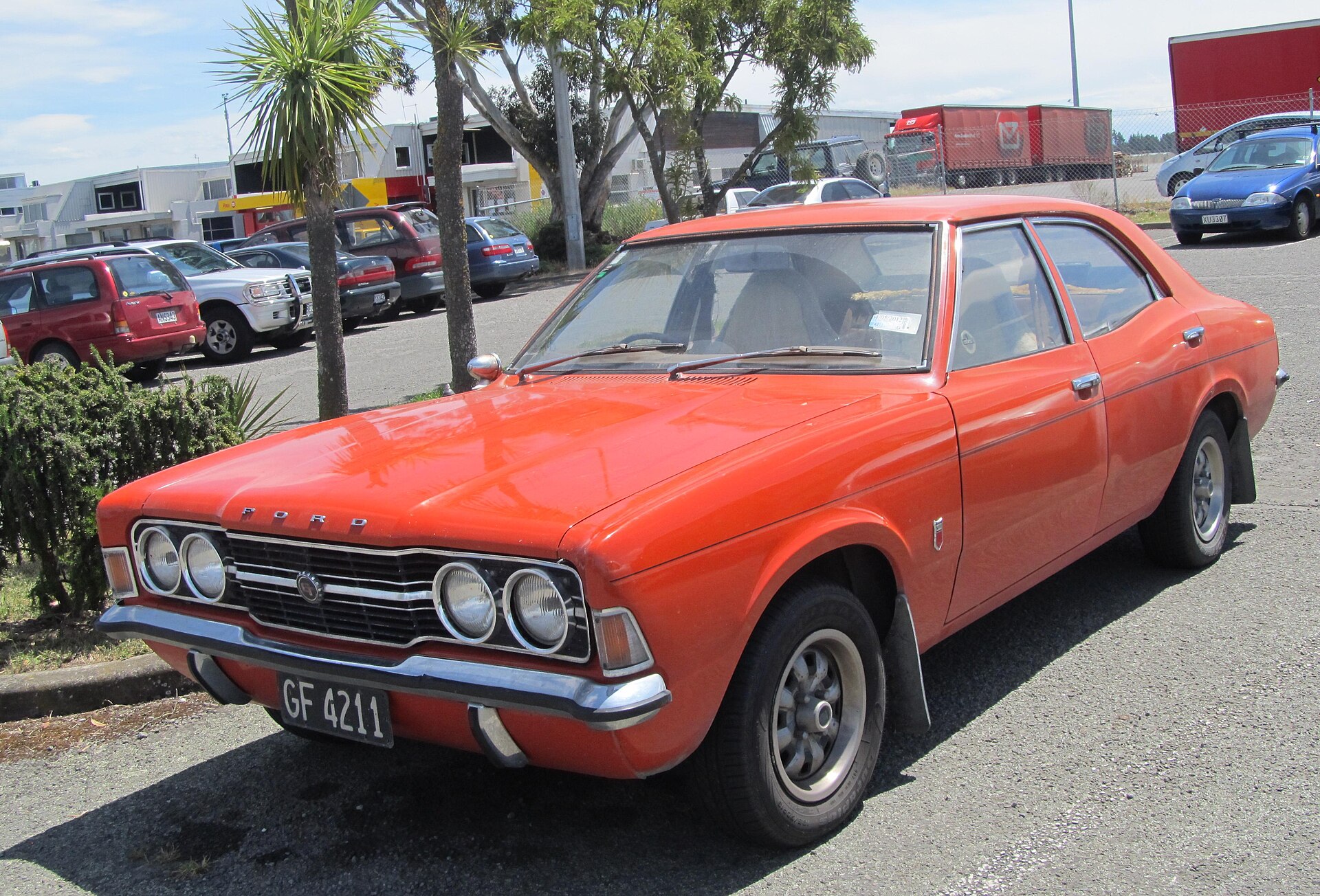
A clean 2000 GT will out-drive a tidy 1600E (same Pinto-spec engine, less weight from no vinyl roof and no wood dash) and currently sells for around half the 1600E money. The 1600 GT is even cheaper. Build numbers were high, survival rates are reasonable, and the GT is the one I’d buy if I had £8,000 to £12,000 and wanted to actually use the car instead of polishing it.
Ford Cortina Mk3 Estate Variants
The Mk3 estate is the future-collectable Cortina shape. Survival rates are noticeably lower than the saloons — they got used as workhorses, then scrapped — and current prices haven’t yet caught up with the rarity. A clean 2000E estate or Ghia estate is genuinely rare; the L and XL estates are the working-classic bargain end of the Mk3 market.
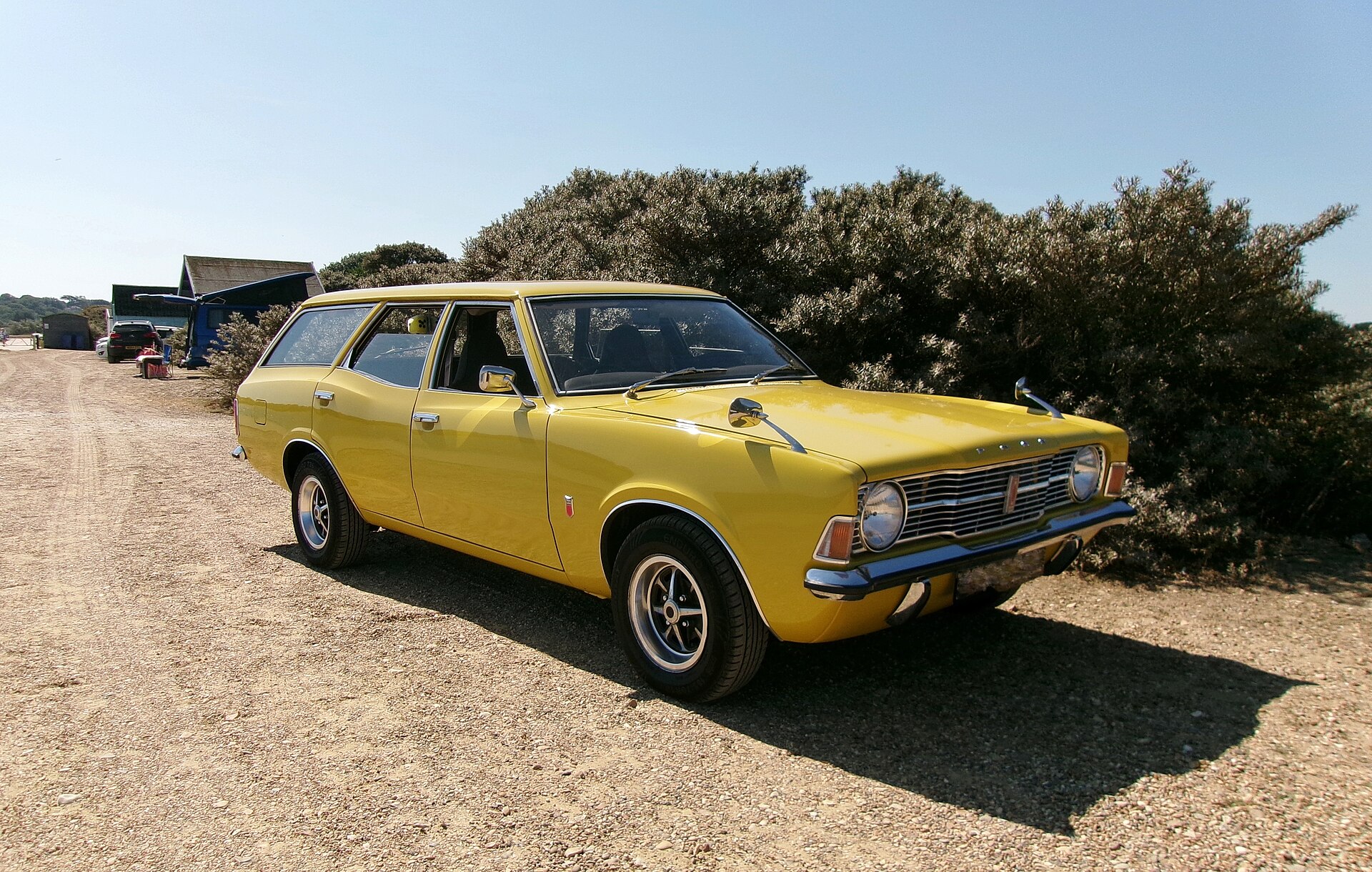
Estate-specific rust spots add to the saloon checklist: the load floor, the tailgate frame, the rear suspension turret mounts under the load bay, and the D-pillar where the tailgate hinges mount. The Cortina rust guide covers all the estate-specific spots in detail. If you’re buying an estate, factor in £1,500 to £3,000 of extra bodywork over the equivalent saloon condition.
Where Mk3 Cortinas Rust
The Mk3 has a rust pattern unique to the Coke-bottle shell, and several spots that catch out buyers used to checking Mk1 and Mk2 Cortinas. Walk round in this order on any Mk3:
- Inner sill — the killer on a Mk3. Goes from inside out, hidden under the outer skin. By the time you can see it from outside, the whole structural section is gone.
- Scuttle panel — the panel under the wipers traps water and rots from the top down.
- Front strut tops — structural, double-skinned, MOT failure when rotten.
- Rear wheel arches — the Coke-bottle styling creates a water trap behind the rear wheel. Outer arches bubble first, inners go shortly after.
- Boot floor and spare wheel well — water pools, seam goes through.
- Vinyl-roof cars — water gets under the vinyl, rusts the roof from the top down. The single most expensive Mk3 hidden problem.
- Fuel filler neck — water gets behind the cap surround and rots into the rear quarter.
Full Mk3-specific rust pattern with repair costs is in the Ford Cortina rust guide. Vinyl-roof cars need particular attention — squeeze gently along the edges where the vinyl meets the gutter. Squashy means rust underneath, and you’re looking at £1,500 to £3,000 to put right.
What to Check Mechanically on a Mk3 Cortina
- Pinto OHC engine (1.6 and 2.0) — timing belt history is critical. The Pinto destroys itself if the belt jumps. Oil pressure cold (should be 50 psi or more), head gasket history, tappet noise. Worn cam lobes on high-mileage Pintos are common.
- Kent crossflow (1.3 and 1.6) — simpler engine. Worn rings, tappet noise, oil leaks from the timing cover. Smoke on start-up means worn valve stem seals.
- Gearbox — synchromesh on second is the first to go. Whine in third or fourth means worn layshaft bearings.
- Rear axle — whine on overrun means worn pinion bearings. Clunk on take-up means a worn UJ on the propshaft.
- Brakes — the brake servo on a Mk3 has a vacuum non-return valve that fails. Spongy pedal usually means servo, not master cylinder.
- Steering — rack-and-pinion on Mk3, generally robust but listen for knocks over bumps which usually mean worn track rod ends or column couplings.
Originality Red Flags on a Mk3
The Mk3 1600E and 2000E are the most-faked Cortinas in the UK market. Knowing what to look for separates the verified original from the “tidy 1600E-spec” that someone built last winter from a 1600 XL shell.
- Wrong grille — the 1600E grille is unique and worth £400 to £700 on its own. A 1600 XL grille is a giveaway.
- Wood dash that’s been refinished badly — original wood is genuine veneer; replacements are often printed plastic.
- Seats and trim pattern — 1600E sports seats have a specific cloth pattern that’s hard to match.
- Rostyle wheels — 1600E and 2000E used specific Rostyle patterns; period-correct vs aftermarket matters for value.
- Modern stereos that have replaced the original — usually means the original radio is long gone, sometimes with the original wiring.
- Replacement rear lights — small details, but a Mk3 with non-original rear lamps has usually had a rear-end accident.
- Repainted in non-original colour — fine for a driver, but it caps value substantially.
Mk3 Cortina Values in 2026
Realistic brackets from current UK auction results and private sales. These move year to year — verified-history premium adds 25 to 40% above the bracket; non-original colour or non-matching engine numbers usually deducts 15 to 25%.
- 1600E: project £6,000–£10,000. Usable £12,000–£18,000. Restored £20,000–£28,000. Concours verified £30,000+.
- 2000E: project £4,500–£8,000. Usable £9,000–£14,000. Restored £15,000–£22,000. Concours £25,000+.
- GXL (1.6 or 2.0): project £3,500–£6,000. Usable £7,000–£11,000. Restored £12,000–£17,000.
- Ghia: project £3,000–£5,500. Usable £6,500–£10,000. Restored £11,000–£15,000.
- GT (1.6 or 2.0): project £2,500–£5,000. Usable £6,000–£9,000. Restored £10,000–£14,000.
- S, L, XL, 1300: project £1,500–£3,500. Usable £4,000–£7,000. Restored £8,000–£11,000.
- Estate (any trim): usually 10 to 20% below the equivalent saloon, but climbing fast for 1600E/2000E/Ghia variants.
Which Mk3 Should You Actually Buy?
It depends what you’re trying to do. Honest matrix from someone who works on these every month:
- Investment / value-holding: verified 1600E with documentation. Nothing else holds value the same way. Budget £18,000 to £25,000 for a usable car.
- Weekend driver, executive flavour: 2000E or Ghia. Better engine than the 1600E, similar trim spec, less likely to be a fake. £10,000 to £15,000 for a usable car.
- Weekend driver, enthusiast flavour: 2000 GT. Best engine in the range, sports trim, half the 1600E money. £7,000 to £10,000.
- Daily driver / regular use: post-facelift 2000 GL or S. Cheap, robust, easy to find parts for, won’t tear your heart out if it gets a scratch. £4,000 to £8,000.
- Show car / concours project: verified 1600E with documented chassis number, original engine, original colour. Budget £25,000+ to start, plus restoration costs.
- Long-term collectable bet: 2000E estate or 2000 Ghia estate. Rare now, climbing faster than the saloons. £6,000 to £12,000 for a usable car.
Bringing a Project Mk3 Back to Life
Mk3 restoration costs depend on the trim and the level. Recommissioning a sound L-spec car runs £4,000 to £8,000 for a usable rolling restoration. A full bare-shell restoration on a 1600E to concours standard runs £35,000 to £50,000, often more on a verified-history car where every original part matters. The Cortina restoration cost guide breaks down what each level involves and where the money actually goes.
The trim-vs-shell-condition trade-off is the critical Mk3 buying decision. A scruffy 1600E on a sound shell is almost always a better buy than a tidy XL on a rotten shell, because the trim is replaceable but proper structural welding isn’t cheap and isn’t fast. Don’t fall for fresh paint over a rotten sill — see the Cortina rust guide for the four-step inspection routine that catches every filler-and-fresh-paint Mk3.
We’ve Worked on These. Here’s What We’ve Learned
Every Mk3 1600E in the country has been through three or four owners. The well-bought ones have had each layer of work documented; the badly bought ones hide each layer under the next coat of paint. The Mk3s that come into the workshop with verified chassis numbers, matching engines and a folder of receipts are quick to assess and reasonable to quote on. The “tidy 1600E spec” cars with a 1600 XL grille swap and a wood dash retrofit take three times as long to figure out what’s actually under the paint.
The same approach we used on the Capri Brooklands case study and the Escort GTI case study applies to a Mk3 Cortina: cut into the structure first, fix what’s actually wrong, then worry about the cosmetics. If you’re about to buy a Mk3 and want a second opinion on the photos, send them through the contact page — sills, arches, floors, vinyl roof edges. The right Mk3 will hold its value for the next decade. The wrong Mk3 will cost more than a Capri to put right and never recover. We’re classic Ford specialists in Milton Keynes and we’d rather steer you to the first kind.