Ford Cortina Mk5 Buyer’s Guide: The Cortina 80, Crusader & Ghia
The last UK Cortina explained by a classic Ford specialist. Mk5 trim levels, the Crusader special edition, what to check, what they're worth and why now is the time to buy.
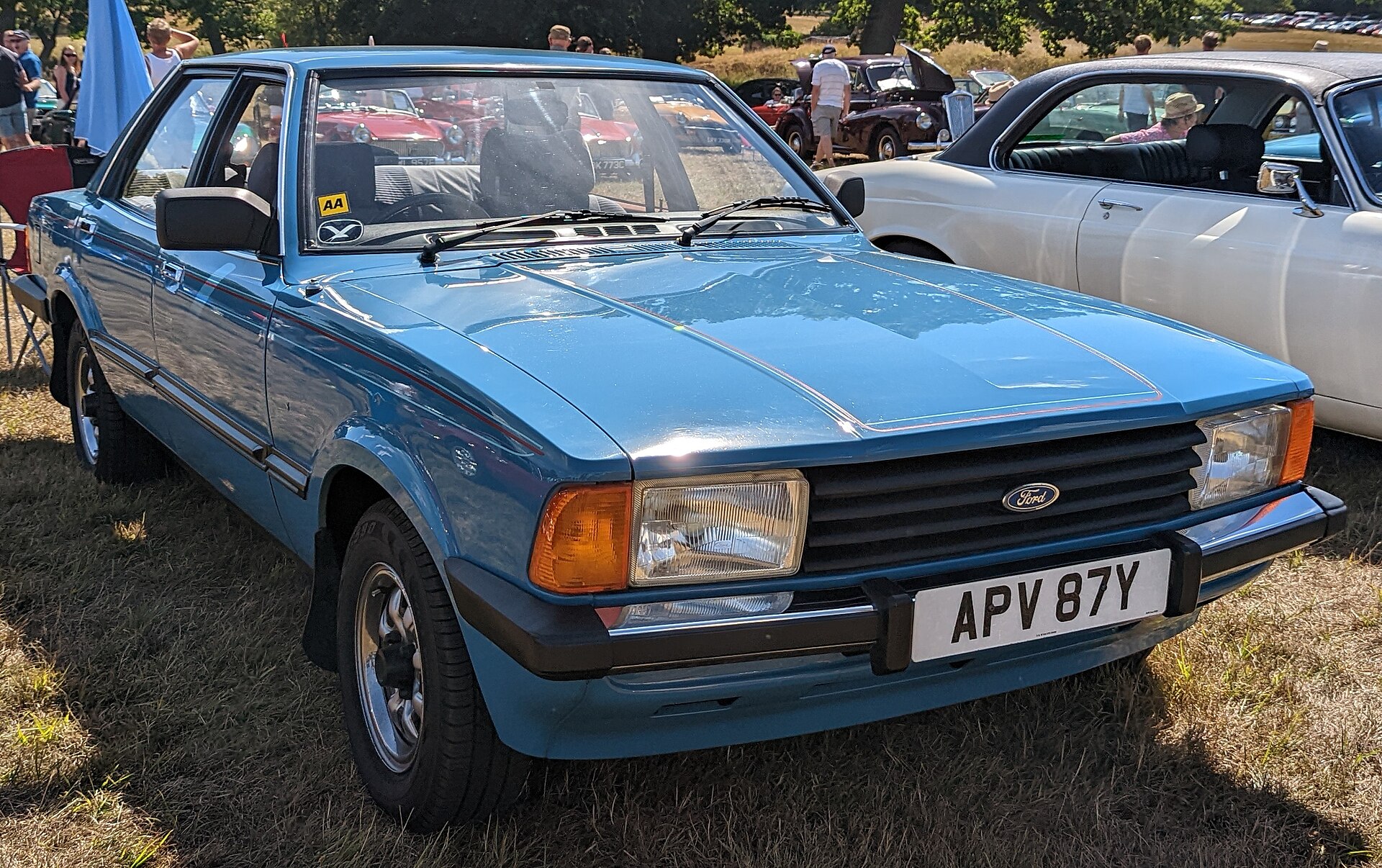
The Mk5 Cortina is the one nobody talks about, which is exactly why you should buy one. Currently the cheapest classic Cortina trim by trim, the Mk5 (sold by Ford as the “Cortina 80”) is the under-restored, under-appreciated, last-UK-built Cortina before the Sierra arrived. The smart money started moving towards Mk5 Crusaders and V6 Ghias around 2023, and prices have crept up quietly while the market still treats the Mk4 and Mk5 as the “not really classic yet” generation. They’ve been wrong on the Mk3 for fifteen years; they’re wrong on the Mk5 right now. After two decades restoring classic Fords at my workshop near Milton Keynes, the Mk5 is the Cortina I’d buy if I were starting from scratch today. This is the specialist’s Mk5 buyer’s guide — trim levels, the Crusader special edition, what to check, what they’re worth, and why now is the time to buy.
The Mk5 Cortina in Context — 1979 to 1982
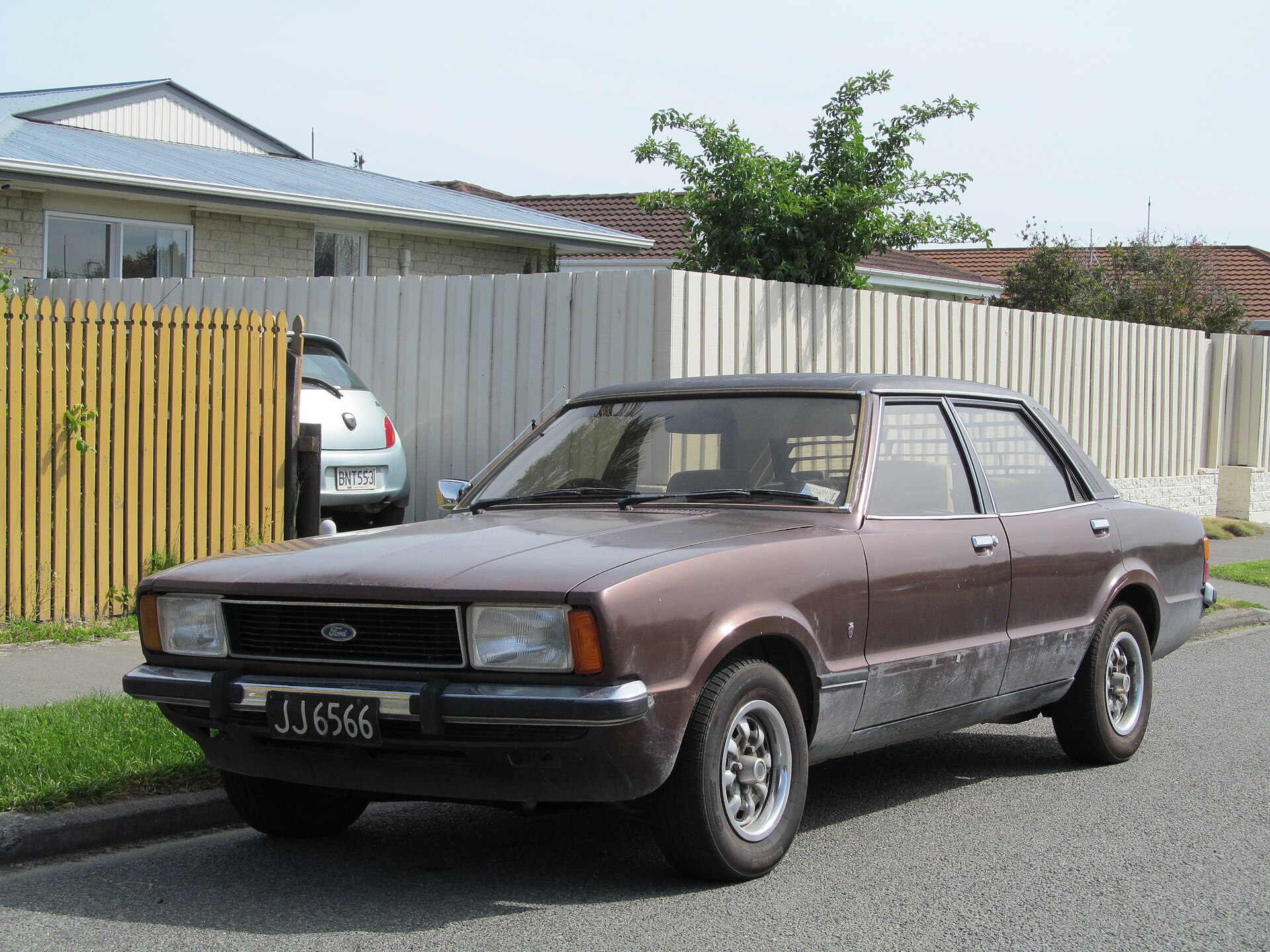
The Mk5 wasn’t really a new car. Launched September 1979 as the “Cortina 80”, it was a heavy facelift of the Mk4 — same floorpan, same doors below the swage line, same engines, same gearboxes. What changed was the styling above the waistline: new front end with rectangular halogen headlamps, taller glasshouse, larger rear lamps, revised dashboard, and an interior that brought the Cortina up to early-1980s standards. The Cortina 80 / Mk5 name applies; both are used.
Production ran from August 1979 to July 1982, when the Ford Sierra replaced it. Three years isn’t long, the survival rate is lower than the Mk3 and Mk4 because most Mk5s were treated as ordinary family cars and scrapped when they got tired, and Ford itself never positioned the Mk5 as collectable. The result, forty-plus years later, is a Cortina generation with fewer survivors than the Mk3 but a similar price ceiling potential — exactly the conditions that turn an undervalued classic into a sought-after one over five to ten years.
Mk5 Cortina Trim Levels at a Glance
The Mk5 range was simpler than the Mk3 had been at the same point in its life. The trim hierarchy:
- Base — fleet-spec only, very rare in survival.
- L — the volume trim. Basic carpet, basic seats, painted bumpers on early cars, chrome on later ones.
- GL — the family trim. Cloth seats, central locking, rear headrests, better radio.
- S — the sporting trim. GT mechanicals, sports seats, four-spoke wheel, alloy wheels.
- Ghia — the luxury trim. Velour seats, vinyl roof on most cars, alloys, tinted glass.
- Crusader (1982 only) — the run-out special edition. Crusader graphics, sunroof, alloys, tinted glass, upgraded interior.
- 2.3 V6 Ghia — the executive option. Six-cylinder engine, top-spec Ghia trim, increasingly rare.
Engines were the Kent 1300 on entry cars, the Pinto 1600 and 2000 OHCs across the volume range, and the Cologne 2.3 V6 on the upper trims. The 2.3 V6 was actually introduced on the Mk4 Cortina in 1977, but it carried over to the Mk5 and is now most closely associated with the Mk5 because survival rates on Mk4 V6 cars are even lower. On the Mk5 the 2.3 V6 was offered in GL, S and Ghia spec. Transmissions were four-speed manual on most cars, five-speed on later S, Ghia and Crusader trims, and three-speed automatic across the upper range.
Ford Cortina Crusader (1982)
The Crusader is the run-out special edition that’s leading the Mk5 market in 2026. Around 30,000 were built across saloon and estate over the final months of Cortina production, sold to clear the line ahead of the Sierra launch — Ford UK records it as their best-selling special edition. The Crusader pack added distinctive Crusader-branded side decals, a sliding sunroof, alloy wheels (Ford 5J × 13-inch slats on most cars), tinted glass, upgraded velour interior, a four-spoke sports wheel, and a Crusader-branded radio. Saloons were offered with 1.3, 1.6 or 2.0 engines; estates with 1.6 or 2.0 only. The last Cortina off the Dagenham line — a silver Crusader — was built on 22 July 1982.
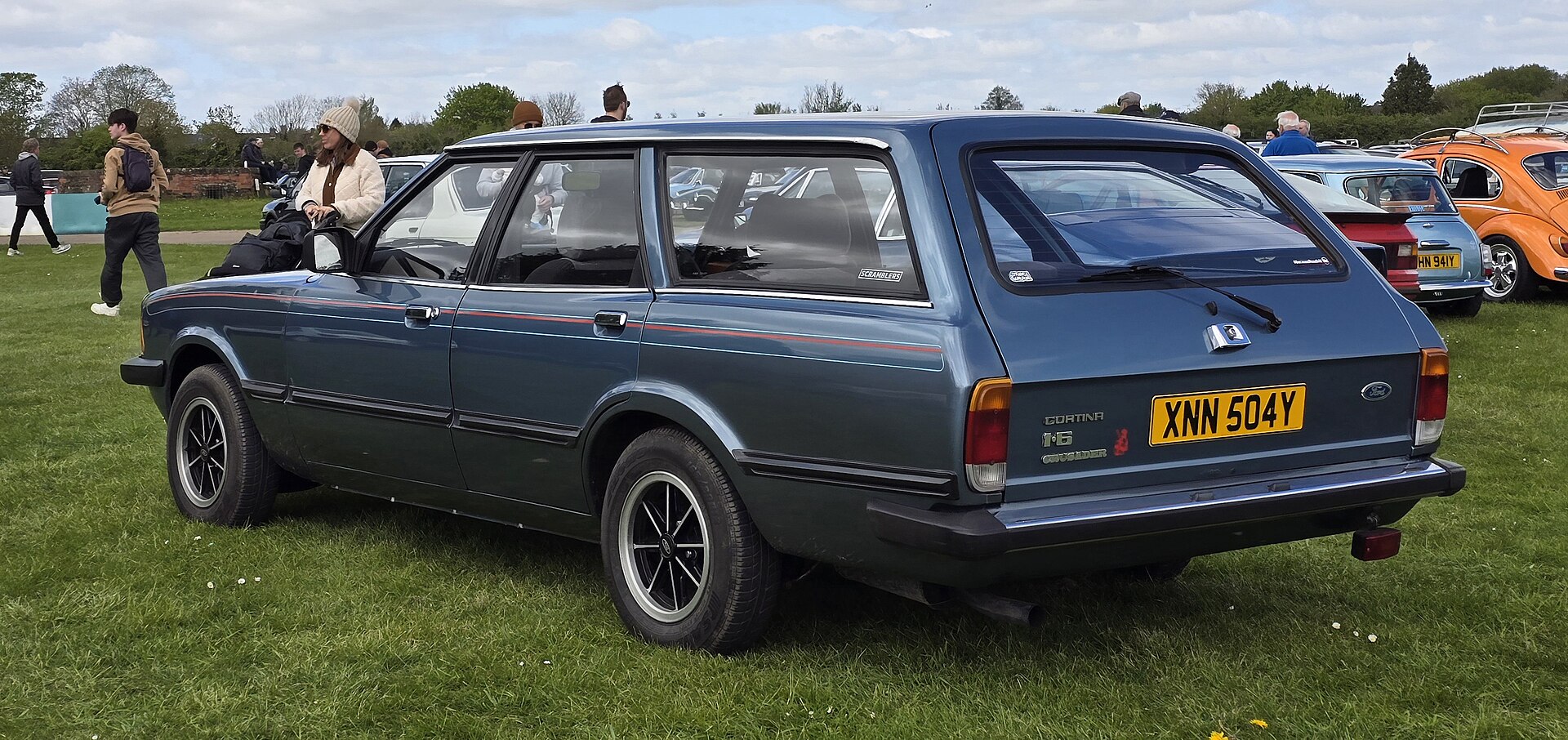
The Crusader is the Mk5 most likely to be collectable now because Ford UK kept records of every Crusader built and the build numbers are documented. The Cortina Mk5 Owners Club holds the most accurate figures and can verify a chassis against the original Crusader build list. Authentication matters because base-spec Mk5s wearing replica Crusader decals are increasingly common — the decal sets are reproduced, the alloys are interchangeable with other Mk5 trims, and from twenty feet it’s hard to tell.
Crusader-specific checks: the chassis number prefix, the original Crusader-branded radio (if still fitted), the velour upholstery pattern (specific to the Crusader), and the documented build sheet from the Owners Club. A verified Crusader sells for nearly double the price of a base-spec Mk5 wearing replica decals.
Ford Cortina Mk5 Ghia
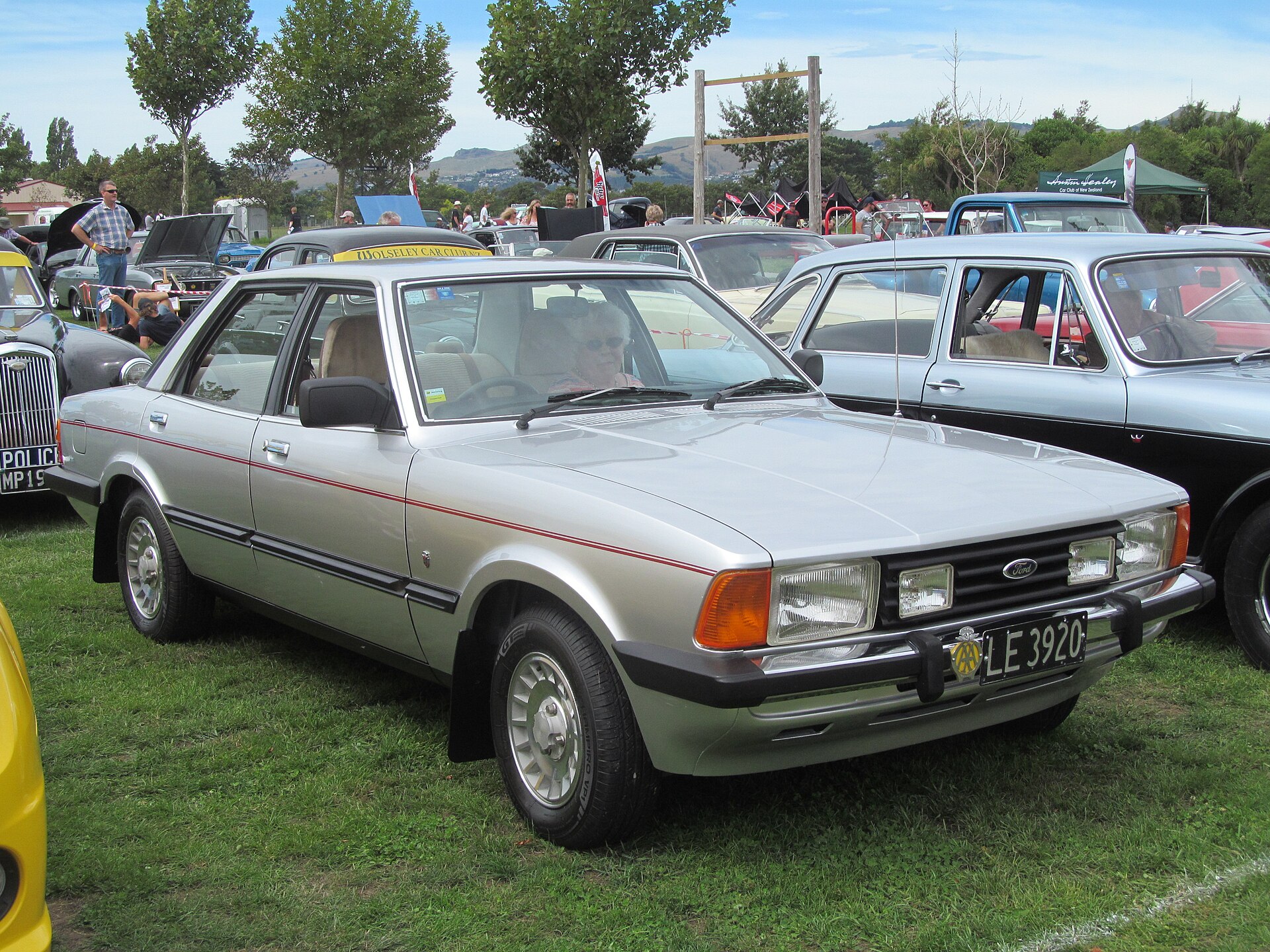
The Ghia was the Mk5’s luxury trim. Available as 2.0 Pinto and 2.3 V6, saloon and estate. Velour seats with adjustable headrests, vinyl roof on most cars (saloon-only — the estate did not get vinyl roof), wood-effect dash trim, central locking, electric windows on later cars, tinted glass, alloy wheels, four-spoke sports wheel. The 2.3 V6 Ghia is the connoisseur’s pick — the only Cortina sold in the UK with a six-cylinder, properly rare in survival, and increasingly sought-after.
- Mk5 2.0 Ghia: the volume Ghia, around 25,000 to 35,000 built across three years (figures vary). Current usable values £6,000 to £10,000; restored examples £12,000 to £16,000.
- Mk5 2.3 V6 Ghia: significantly rarer in UK survival. The Cologne 2.3 V6 is a smooth, torquey engine that suits the Cortina’s executive character — it was carried over from the Mk4 (where the V6 had been offered in GL, S and Ghia trims from 1977). Current usable values £8,000 to £14,000; restored £15,000 to £22,000.
- Mk5 Ghia Estate: rare in any engine spec. The 2.3 V6 estate is borderline unicorn now. Add 15 to 25% over the saloon prices.
Ford Cortina Mk5 GL — The Volume Trim
The GL is the trim most surviving Mk5s actually are. More equipment than the L (cloth seats, central locking, rear headrests, four-spoke wheel, better radio, full carpet) and less than the Ghia (no velour, no vinyl roof, steel wheels with trim covers rather than alloys). Available as 1.3, 1.6 and 2.0 Pinto saloon and estate.
The Mk5 GL is currently almost worthless as a project, which is exactly when the smart money starts looking. A clean 2.0 GL saloon with documented history sells for £3,500 to £6,000 right now. The same car in five years’ time will probably sit at £6,000 to £10,000 because the survival rate is dropping and the market is gradually catching up to how few Mk5s are left. The L is even cheaper; the Crusader is already moving. The GL is the bridge in between.
Ford Cortina Mk5 Estate
The Mk5 estate is the future-collectable shape. Crusader and Ghia estates are currently the standout Mk5 variants in market terms — both significantly rarer than the equivalent saloons, both with the same trim and equipment, both with the practical estate utility that increasingly young classic-car buyers want. The 2.0 Ghia estate and the V6 Ghia estate are the rarest and best-aspect variants; a documented Crusader Estate is the most-tradeable Mk5 on the market.
Estate-specific checks: the load floor (water trap), the tailgate frame (rusts from inside out), the rear suspension turret mounts under the load bay (structural), and the D-pillar around the tailgate hinges. Full estate-specific rust pattern is in the Cortina rust guide. The estate’s load-floor rust is the single biggest hidden cost on any Mk5 estate purchase.
Where Mk5 Cortinas Rust
The Mk5 has better factory rust-proofing than any previous Cortina — Ford added galvanising to several front-end panels and improved the underseal coverage. But the spots that go are the spots that matter. Walk round in this order on any Mk5:
- Sills — still the killer. Better than the Mk3 but they still go on every neglected car. £1,500 to £3,000 both sides.
- Rear arches — the lip goes first, the inner arch follows. £400 to £800 per side.
- Boot floor and spare wheel well — water pools in the well, seam goes through. £300 to £600.
- Jacking points — pressed-in tubular points tear straight out when the surrounding metal goes. MOT failure. £150 to £300 each.
- Ghia vinyl roof — water gets under the vinyl, rusts the steel from the top down. £1,500 to £3,000 to put right.
- Crusader side decals — can hide rust if removed and reapplied during a respray. Always check what’s underneath any decal that’s been replaced.
- Fuel filler neck — water gets behind the cap surround.
- Front strut tops — much better than Mk3 but still worth checking on a high-mileage shell.
- Tailgate frame (estates) — rusts from inside. £400 to £800.
- D-pillar around tailgate hinges (estates) — hinges work loose, water gets in. £300 to £600 per side.
What to Check Mechanically on a Mk5
- Pinto 1.6 and 2.0 — the standard fit. Timing belt history is critical: the Pinto destroys itself if the belt jumps. Oil pressure cold (50+ psi), head gasket history (Pinto heads warp under sustained high revs), tappet noise, cam lobe wear (worn lobes are a common Pinto failure on cars without regular oil changes).
- Kent 1.3 — simpler engine, fewer issues. Worn rings on high-mileage examples, oil leaks from the timing cover, tappet noise.
- Cologne 2.3 V6 — rarer, more expensive to fix, more to check. The V6 has a tendency to wear timing gears (steel timing gear conversion is a £400 to £600 fix on older engines). Oil consumption rises with age. Worn distributor drives are common.
- Gearbox — four-speed on most, five-speed on later upper trims. Synchromesh on second is the first to go.
- Rear axle — Atlas axle, generally robust. Whine on overrun means worn pinion bearings.
- Brakes — front discs (servo-assisted), rear drums. The servo’s non-return valve fails; spongy pedal usually means servo not master cylinder.
- Electrics — the Mk5’s electrics are noticeably better than the Mk3 but the central locking and electric windows (Ghia, later cars) develop faults with age.
Mk5 Cortina Values in 2026
Brackets from current UK auction results and private sales. The Mk5 market is moving — figures are higher than they were two years ago and likely to move further over the next three. Verified history (Owners Club documentation, original logbook, Ford build sheet) adds 20 to 30% above the bracket.
- Mk5 Crusader saloon: project £3,000–£5,000. Usable £6,000–£9,000. Restored £11,000–£15,000. Concours £16,000+. Leading the Mk5 market.
- Mk5 Crusader Estate: project £3,500–£5,500. Usable £7,000–£10,000. Restored £13,000–£17,000.
- Mk5 2.3 V6 Ghia saloon: project £3,500–£6,000. Usable £8,000–£14,000. Restored £15,000–£22,000.
- Mk5 2.3 V6 Ghia Estate: project £4,000–£7,000. Usable £9,000–£15,000. Restored £18,000–£25,000.
- Mk5 2.0 Ghia saloon: project £2,500–£4,500. Usable £6,000–£10,000. Restored £12,000–£16,000.
- Mk5 2.0 Ghia Estate: project £3,000–£5,000. Usable £7,000–£11,000. Restored £13,000–£17,000.
- Mk5 S: project £2,500–£4,500. Usable £5,500–£8,500. Restored £10,000–£14,000.
- Mk5 GL: project £1,500–£3,500. Usable £3,500–£6,000. Restored £8,000–£11,000.
- Mk5 L / Base: project £1,000–£2,500. Usable £2,500–£5,000. Recommission only — not worth full restoration.
Why the Mk5 is the Smart-Money Cortina
The case for buying a Mk5 now:
- Bottom of the Cortina market — the Mk5 is currently the cheapest classic Cortina trim by trim. The Crusader is climbing; the GL and S are still finding their floor.
- Last UK Cortina — historical end-of-era significance. Every “last UK Cortina” article in the next decade will feature a Mk5.
- Crusader is a finite-build special edition — Ford documented production. Verified Crusaders can only become rarer over time.
- Survival rate is low — Mk5s were scrapped in greater numbers than Mk3s because they were seen as “not really old”. Every year more disappear from the road.
- Mk4 is already moving — and the Mk5 is next. The Mk4 GL was £2,500 three years ago and is now £5,000 to £7,000. The Mk5 trajectory is following the same shape, two years behind.
- Restoration costs are reasonable — parts availability is the best of any Cortina, partly because the Mk4 and Mk5 share so many components, partly because Sierra-era parts are still in supply.
- 2.3 V6 Ghia is irreplaceable — the only six-cylinder UK-market Cortina with meaningful survivor numbers. Survival is dropping faster than the four-cylinder Ghias.
Restoring a Mk5 — What to Spend and What to Skip
Practical guide to Mk5 restoration economics. The trim matters more than the condition here — spending £18,000 restoring a Crusader makes the maths work; spending the same money on a base L doesn’t.
- Crusader: full restoration justified. Budget £15,000 to £22,000 for a proper job, finished value £14,000 to £17,000 saloon or £16,000 to £20,000 estate. The numbers nearly balance, and the trajectory of values is favourable.
- 2.3 V6 Ghia: full restoration justified, especially the estate. £18,000 to £26,000 restoration on a V6 Ghia estate gets you a £20,000 to £25,000 car with upside.
- 2.0 Ghia and S: rolling restoration or partial work. Spend on bodywork (sills, arches, vinyl roof) and trim originality, skip on chrome and badging if the budget’s tight. Total spend £8,000 to £15,000 for a usable result.
- GL: recommission territory. £3,000 to £6,000 to make it MOT-able, reliable and presentable. Don’t full-restore unless the car has family history.
- L / Base: recommission only. Drive it, enjoy it, don’t spend serious money on it.
The full Cortina restoration cost picture by generation is in the Cortina restoration cost guide. The Mk5 sits at the low-cost end of the table for parts and the high-availability end for body panels, which is why even the lower trims are tractable to restore.
We’ve Worked on These. Here’s What We’ve Learned
The Mk5 Cortinas that come into the workshop fall into two clear groups: the loved Crusaders and Ghias with documented history and full receipt folders, and the tired GLs and Ls that have changed hands at the lower end of the market for a decade. The first group is straightforward — the work is what the car needs, the values support the spend, and the owners know exactly what they’re buying into. The second group is the more interesting market opportunity: a £3,000 GL that needs £4,000 in welding and £1,500 in mechanicals ends up as a £8,500 car at a finished value of £6,000 to £7,000. The maths only works if you’re buying for use rather than for resale — but the market trajectory means in five years the same car will be worth £10,000 to £12,000.
The Mk5 Crusader is the trim I’d buy if I were starting a Cortina collection today. Documented build numbers, finite production, climbing values, the run-out special-edition status that always commands a premium. The 2.3 V6 Ghia estate is the wildcard — fewer survive than people realise, and the next time one comes through the workshop properly restored it’ll change hands above £20,000.
If you’re about to buy a Mk5 and want a workshop opinion on the photos, send them through the contact page — sills, arches, boot floor, vinyl-roof edges (if Ghia), chassis plate, engine bay, interior, and the underside of any estate’s load floor. We use the same assessment approach we developed on the Capri Brooklands and the Escort GTI — honest about what’s there, realistic about what it’ll cost, and clear on which level of restoration the car makes sense for. We’re classic Ford specialists in Milton Keynes and the Mk5 is the Cortina we’d point a smart buyer towards in 2026.