The Ford Consul Capri (1961 to 1964): The Forgotten First Capri
The original Ford Capri wasn't the 1969 coupe everyone remembers. It was the 1961 Consul Capri, a fastback two-door built in Halewood. A specialist's introduction.
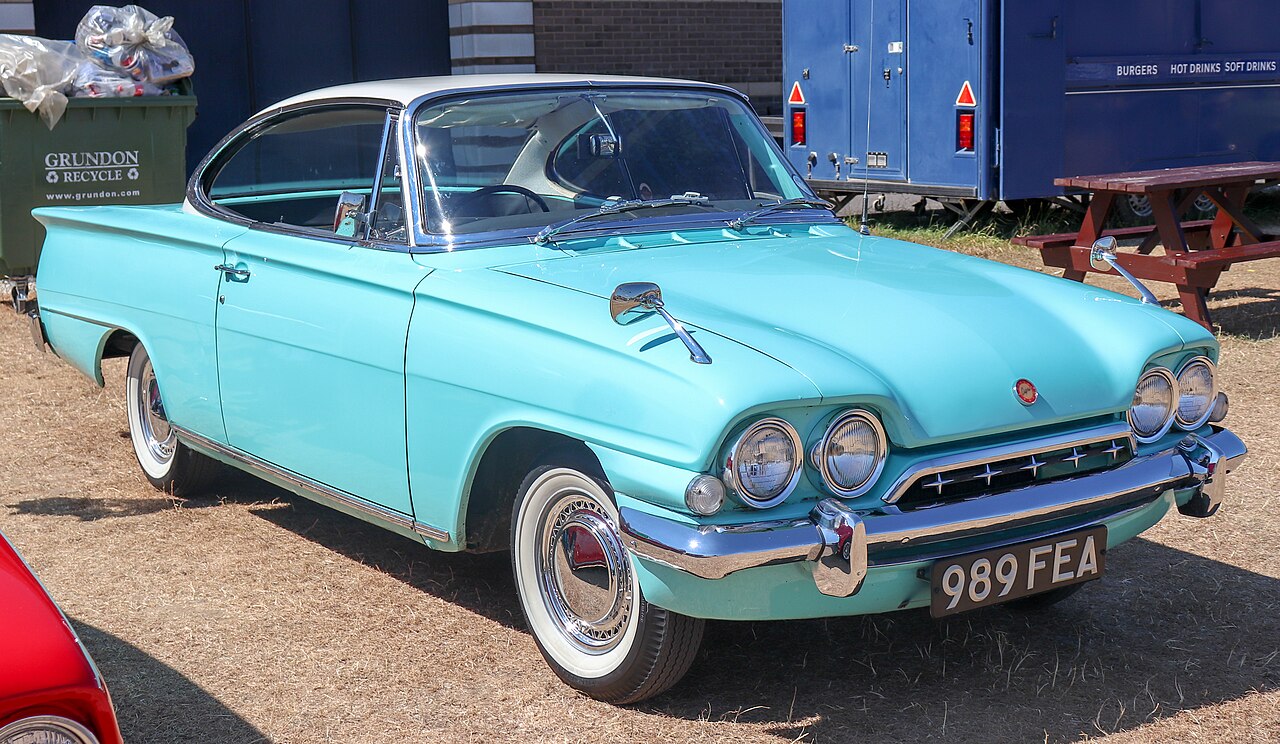
Ask the average car enthusiast when the Ford Capri started, and they’ll tell you 1969. That’s the famous Capri — the fastback coupé that became Britain’s favourite sporting Ford, that ran for seventeen years, that ended with the Brooklands. But the Capri name didn’t start there. Ford UK used it eight years earlier on a completely different car: the Consul Capri, assembled at Dagenham from 1961 and moved to Halewood from February 1963 until production ended in July 1964. As a classic Ford restoration specialist near Milton Keynes, I get asked about the Consul Capri occasionally — usually by people who’ve just discovered it exists. This is the introduction to the car most enthusiasts have never seen, and the reasons it might be one of the more interesting cheap classic Fords still available. For the 1969-onwards Capri lineage that followed, see the pillar Ford Capri special editions guide and the 2026 Ford Capri values guide.
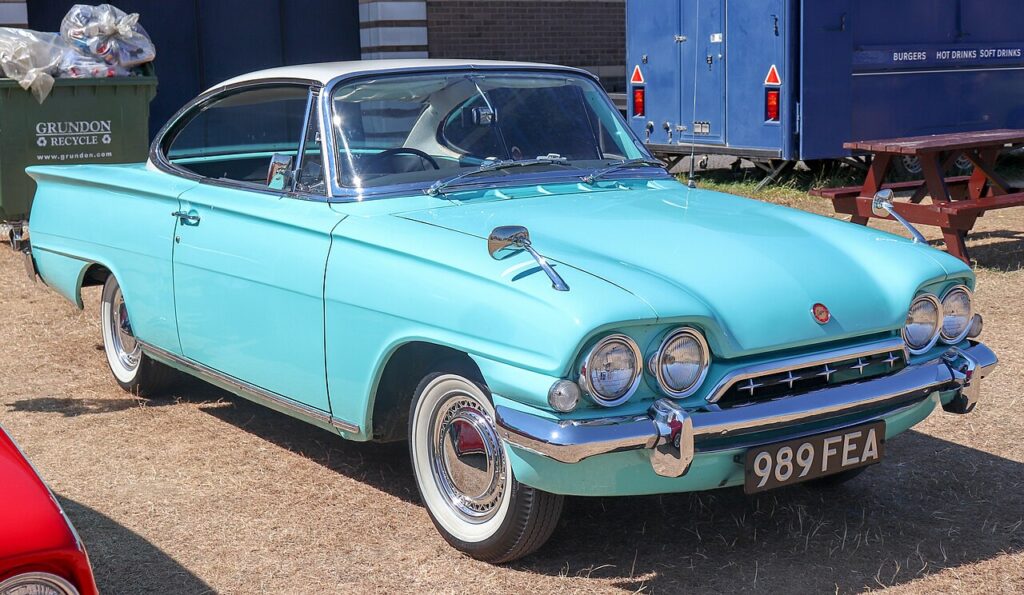

The Capri Name Is Older Than You Think
The 1969 Capri launch is the one everyone remembers because it stuck. Ford built nearly two million Capris between 1969 and 1986, the model is heavily documented, and the cars are still on the road in numbers. The Consul Capri before it sold around 19,400 units over three production years and then disappeared. Most of the surviving cars sit in private collections or quiet sheds, and the model has never had the same wave of nostalgia or magazine coverage as its successor.
That’s slowly changing. The Consul Capri is a coupé from a period when British coupés are getting reappraised, it’s mechanically simple, it’s affordable, and its survival rate is low enough that any clean example is genuinely rare. The cars that come up for sale tend to be either basket-case projects or beautifully preserved survivors with very little in between, and the prices on the better cars have been climbing slowly but steadily.
What the Consul Capri Actually Was
Final assembly started at Ford’s Dagenham plant in 1961 and moved to the new Halewood plant on Merseyside in February 1963, running through to July 1964. The Consul Capri was a two-door coupé version of the Ford Consul Classic 315 saloon. It shared most of its mechanical underpinnings with the Classic — the same chassis, the same suspension, the same drivetrain — but with a different two-door fastback body wearing distinctive trim, hooded headlamps and small “Coke-bottle” rear quarter shapes that mark it out from any other Ford of the period.
The engine started as a 1340cc “pre-crossflow” four-cylinder making around 57 bhp, and was upgraded in mid-1962 to the 1498cc “Kent” engine — the same family that would go on to power countless Cortinas and Escorts. The Ford Classic and Capri Owners Club records around 19,400 Consul Capris built in total (other sources, including Wikipedia, cite 18,716 — figures vary); either way the model is one of Ford UK’s lower-volume cars from the era and a small fraction of the Capri Mk1 production that followed.
It was positioned as a stylish two-door, designed to give Ford a presence in a market segment that had emerging European competition. The styling owed something to the early Ford Thunderbird in profile — Ford’s American influence on the UK design team is unmistakable — and the car was deliberately marketed as aspirational rather than sporting.
Why It Failed (And Why That Makes It Interesting Now)
The Consul Capri didn’t fail because it was a bad car. It failed because it was the wrong car at the wrong moment. Three reasons.
First, it was heavy. The fastback bodywork was steel and substantial, and the 1340 engine in particular struggled to move it convincingly. The car wasn’t slow exactly, but it never felt sporting in the way the styling promised.
Second, it was expensive. The Capri was priced at a premium over the Classic saloon it was based on, and Ford UK never quite explained to buyers what justified the difference. Two doors instead of four. Slightly more rakish styling. The same mechanical bits underneath. Buyers weren’t paying for the look.
Third — and this is the killer — the Cortina launched in 1962. The first Cortina was lighter, cheaper, more practical, just as well-built and considerably more fun to drive. It rendered the Consul Capri instantly redundant. By 1964 Ford UK had moved on, and the Capri was quietly dropped from the range with no replacement until the famous 1969 launch.
The reason that history is interesting now is exactly the inverse. The Consul Capri was a commercial flop in 1964 and its rarity now is the direct consequence of that flop. Cars that sold in huge numbers — the Cortina, the early Anglia — are common at every classic show. The cars that sold poorly are the ones you don’t see, and rarity is the engine of long-term value in the classic market.
The GT Version
From 1963 onwards, Ford offered the Consul Capri GT — the genuinely interesting variant. The GT used a more tuned version of the 1498 Kent engine, with a twin-choke Weber 32 DCD carburettor, a four-branch exhaust manifold, and a higher-lift camshaft. Power was around 78 bhp, which was substantial in a 1960s 1.5-litre car, and the GT also picked up a tighter ratio gearbox, uprated brakes, and a specific interior with full instrumentation including a tachometer.
The Capri GT is the spiritual ancestor of every GT-badged Ford that followed. The Lotus Cortina, the GT40, the Mk1 Capri 1600GT, the Escort RS — all of those cars descend from the lineage that started with this small Halewood two-door. The GT version is also the most desirable Consul Capri today, with values noticeably above the standard 1498 cars. Of the roughly 19,400 cars built across the model run, the GT accounts for around 2,000 — making it scarce on the ground.
Spotting an Original
Identifying a Consul Capri is straightforward because nothing else looks quite like it. The two-door fastback body shape is distinctive. The hooded headlamps, the small fins along the boot line, the Coke-bottle rear quarter section that swells slightly behind the back door — these are styling cues you don’t see on other early-sixties UK cars.
To confirm a genuine GT against a standard car, check:
- The badging on the boot lid — GT cars carried a specific “Capri GT” script in chrome, separate from the standard “Capri” script.
- The dashboard — GT cars have full instrumentation including a tachometer, where standard cars have a simpler binnacle.
- The engine — the twin-choke Weber on the Kent unit, with a four-branch exhaust manifold. Cars without that Weber installation are not GTs no matter what the boot badge says.
- The chassis number — Ford recorded GT specification in the build records. Ford UK doesn’t run a BMIHT-style Heritage Certificate scheme, so cross-checking goes through the Ford Classic and Capri Owners Club registrars instead, who hold the chassis-level data for the Consul Capri and Classic 315.
As with any rare and now-valuable model, there are standard Consul Capris that have been “GT-converted” by enthusiastic owners over the years. The conversion isn’t difficult mechanically and the parts can be sourced. None of those cars are genuine GTs, and the price difference should reflect that.
What Survives, and Where the Rust Gets Them
Production was small. Attrition over sixty-plus years has been severe. The best estimates from the Ford Classic and Capri Owners Club and similar specialist sources suggest fewer than 100 roadworthy survivors in the UK, with perhaps another 50 to 100 in storage or off-road projects. That makes the Consul Capri rarer than the Capri Tickford and far rarer than the RS3100 — see how those rarer 1969-onwards specials fit into the same survivor-rarity ladder in my Ford Capri special editions guide.
The cars rust badly. Like every Ford of the period the bodywork wasn’t designed with corrosion protection in mind, and the unusual body shape creates several water-trap areas that aren’t shared with the Classic saloon. The areas I’d inspect on any Consul Capri being considered for purchase:
- Sills. Structural and almost always gone on cars that haven’t been restored. The body lines and sound deadening conceal the damage until you start poking.
- Floor pans. Front footwells, around the seat mountings, and under the carpets. Water gets in through aged door seals and rots from underneath.
- Front wings around the headlamps. The hooded headlight pods trap water against the inner panel. Bubbling around the top of the headlamp opening is the give-away.
- Boot floor. Spare wheel well rots through. Tailgate seals have been failing for sixty years and the boot floor pays the price.
- Inner wheel arches. The Coke-bottle rear quarter shape creates a double-skinned cavity that traps moisture between the layers. By the time you see surface rust, the inner structure has often gone.
- Door bottoms. Drain holes are usually blocked, water collects, and the bottom 3 inches of every Consul Capri door is the first thing to go.
- Scuttle. Around the base of the windscreen, same pattern as the later Capri Mk3 but with even more limited replacement panel availability.
Body panels for the Consul Capri are not available new. Sills, floors, wings, door skins — almost everything bodyshell-related has to be either hand-fabricated, salvaged from a donor shell, or sourced through specialist suppliers who reproduce small runs of panels for specific classic Fords. The work falls firmly under hand-fabricated panel work rather than off-the-shelf replacement.
Restoring a Consul Capri (The Honest Version)
I’ll be straight about my experience here — I’ve inspected a handful of Consul Capris over the years and I’ve quoted on several, but I haven’t yet completed a ground-up restoration on one. What I can tell you is what makes the job harder than a comparable Mk1 Capri restoration, because the obstacles are real and they affect the budget.
Panel availability is dire. Where a Mk1 Capri restoration can mostly source new replacement panels off the shelf — sills, wings, floors, arches — the Consul Capri can’t. Every panel either needs to be made, salvaged from another shell, or located through specialist suppliers in batches of one or two at a time. Allow significantly more labour time on bodywork than you would on a later Capri.
Trim is rarer still. Interior trim panels, headlining, door cards and specific badging are hand-to-find items. The Consul Capri Owners Club is the single best source — being a member is essentially mandatory if you’re restoring one.
Mechanical parts are obtainable but scattered. The engine and gearbox share components with the Anglia 105E, the Classic 315 and the early Cortinas, so service parts are available through the wider sixties Ford specialist network. But the GT-specific items — the twin-choke Weber installation, four-branch manifold, tachometer-equipped dash — have to be tracked down individually.
The realistic budget for a competent Consul Capri restoration sits somewhere north of £25,000 if the shell is reasonable and well over £40,000 if the metalwork is severely gone. That’s the same money as a Mk3 Capri restoration but with significantly more sourcing time involved. The honest framing of this is: if you’ve got a Consul Capri, restoring it is a project of love rather than a financial decision.
What’s a Consul Capri Worth?
The market is thin enough that valuations are volatile and any specific number is only a starting point. Rough brackets based on Bonhams and H&H Classics auction results, plus Car & Classic sold listings over the last 18 months:
- Project (1498 standard): £2,500 to £6,000
- Driver (1498 standard): £8,000 to £14,000
- Excellent (1498 standard): £15,000 to £22,000
- Project (1498 GT): £4,000 to £8,000
- Driver (1498 GT): £12,000 to £18,000
- Excellent (1498 GT): £20,000 to £30,000-plus
The GT premium is real and growing. A documented matching-numbers GT in genuine excellent condition is the car the small but committed Consul Capri community will pay for, and £30,000-plus is now a realistic ceiling for the best cars. By comparison, my 2026 Ford Capri values guide shows the 1969-onwards Capri spreads — useful context for where the Consul Capri sits relative to the volume market.
Is It the Next Big Classic Ford?
Speculative closing thoughts. The Consul Capri has several things going for it as a future appreciator.
It’s rare — fewer than 200 survivors total. It’s good-looking in a quirky way that ages well — the styling is genuinely distinctive and isn’t going to fall out of fashion. It has a direct lineage to the most loved era of classic Fords — the Cortina, the Lotus Cortina, the Mk1 Capri all share DNA with this car. It’s mechanically simple — Kent engines and four-speed boxes are widely understood. And it’s still affordable at the project end, which means the buyer pool can grow rather than shrink.
There are precedents for this kind of slow re-rating in the classic Ford world. The Corsair was forgotten for forty years and then started climbing. The Classic 315 itself — the saloon that the Consul Capri was based on — has gone from sub-£3,000 cars to £15,000 in five years. The “obscure becomes desirable” pattern is well-established and the Consul Capri fits it neatly.
Counter-arguments: the cars are very hard to restore because of parts availability, the model has no significant motorsport history to drive interest, and the wider sub-£10,000 classic car market is still soft. The Consul Capri is unlikely to be a fast mover — but a slow, steady appreciation over the next decade looks plausible.
The forgotten classic Fords don’t stay forgotten forever. The Consul Capri is overdue a moment, and the rarity is going to do the work eventually whether the market notices today or in 2032.
Thinking About a Consul Capri?
If you’ve got a Consul Capri and you want to talk through what a restoration would involve, I’d be happy to take a look. I do full bare-metal restorations on classic Fords from my workshop near Milton Keynes, with hand-fabricated panel work in-house for the cars where off-the-shelf replacements aren’t available. The Consul Capri is exactly that kind of car.
If you’re considering buying one, I’d also be happy to come and look at it before you commit. My honest advice on buying a classic Ford project applies in spades to the Consul Capri because the wrong shell on this model is much harder to recover from than on a later Capri.
Send me a WhatsApp with photos if you’ve got one, or details of one you’re looking at. I’ll give you an honest read on what I see — what the metalwork looks like, what the trim is missing, and what a sensible restoration plan would involve. The Consul Capri is one of the more interesting cars in the classic Ford world right now, and the small surviving community deserves to grow.