2025 Ford Capri vs The Original: A Restorer’s Verdict
Ford brought the Capri name back as an electric SUV. We restore the originals for a living. Here's what we actually think, and what Capri owners are saying.
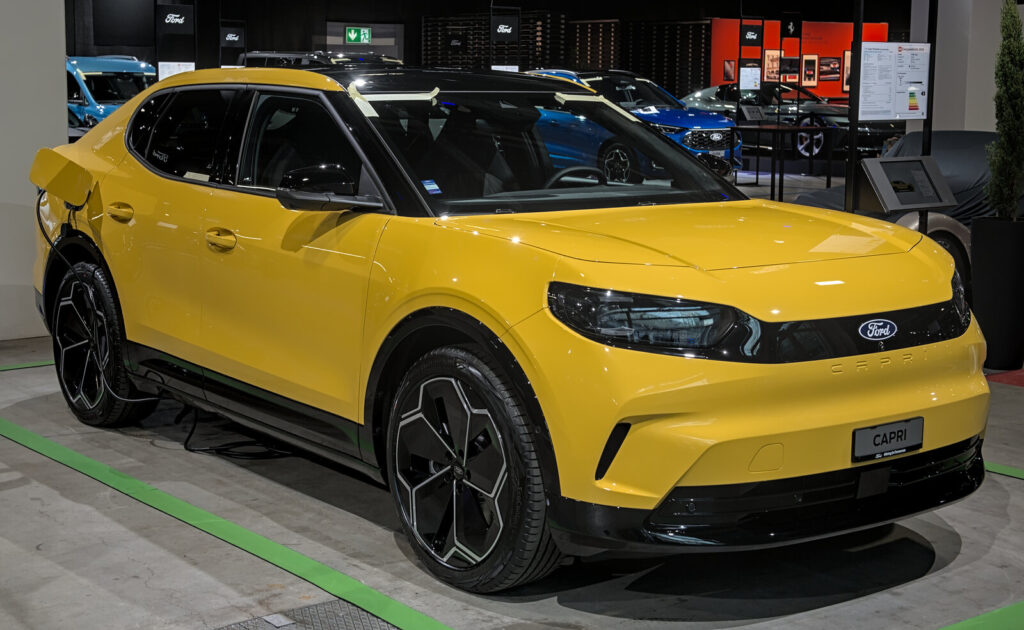
The 2025 Ford Capri is Ford’s first electric Capri — an EV crossover SUV built in Cologne on Volkswagen’s MEB platform, sharing underpinnings with the VW ID.4 and the Ford Explorer EV. It is not a coupe, it has five doors not two, it weighs over two tonnes, and it shares no mechanical lineage with the original 1969–1986 Ford Capri. Whether you think the badge revival is fair or borrowed depends on what the name means to you. I’ve spent the last twenty-plus years restoring the originals at my workshop near Milton Keynes, so here’s the honest verdict on the new Ford Capri EV from someone who puts the originals back on the road for a living.
What the Original Ford Capri Actually Was
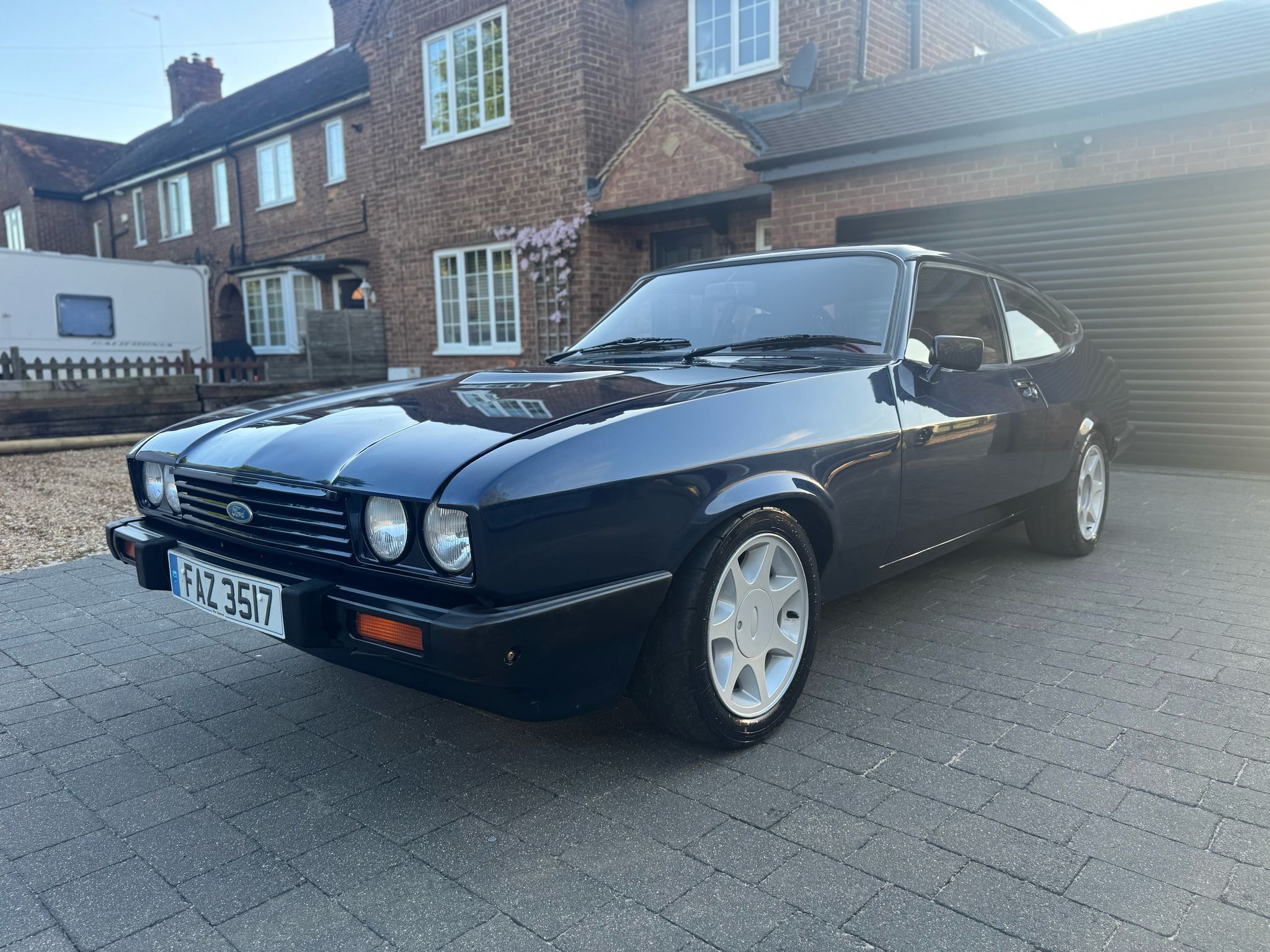
The Capri launched at the Brussels Motor Show in January 1969. Ford’s pitch was simple: a Mustang for Europe. Long bonnet, fastback rear, two doors, two-plus-two seating. Affordable enough that an apprentice could save up for one, fast enough at the top end that bank managers wanted them. The clever bit was the options list — you could buy a Capri with anything from a 1.3-litre Kent engine to a 3.0 Essex V6, and Ford would happily sell you wider wheels, vinyl roofs, dummy bonnet scoops, and the rest.
Three generations ran from 1969 to 1986. The Mk1 (chrome bumpers, separate boot), the Mk2 (hatchback, softer styling), and the Mk3 (quad headlights, sharper edges, the cars most people picture). 1.9 million sold across all markets. The two main production lines were Halewood and Cologne, with small-volume CKD assembly in South Africa (where the Basil Green Motors Perana V8 conversions also took place). Rear-wheel drive, manual gearbox, mechanical heart, mechanical soul. For the generation-by-generation buyer’s perspective, my Ford Capri Mk1 buyer’s guide covers the first-gen cars in detail.
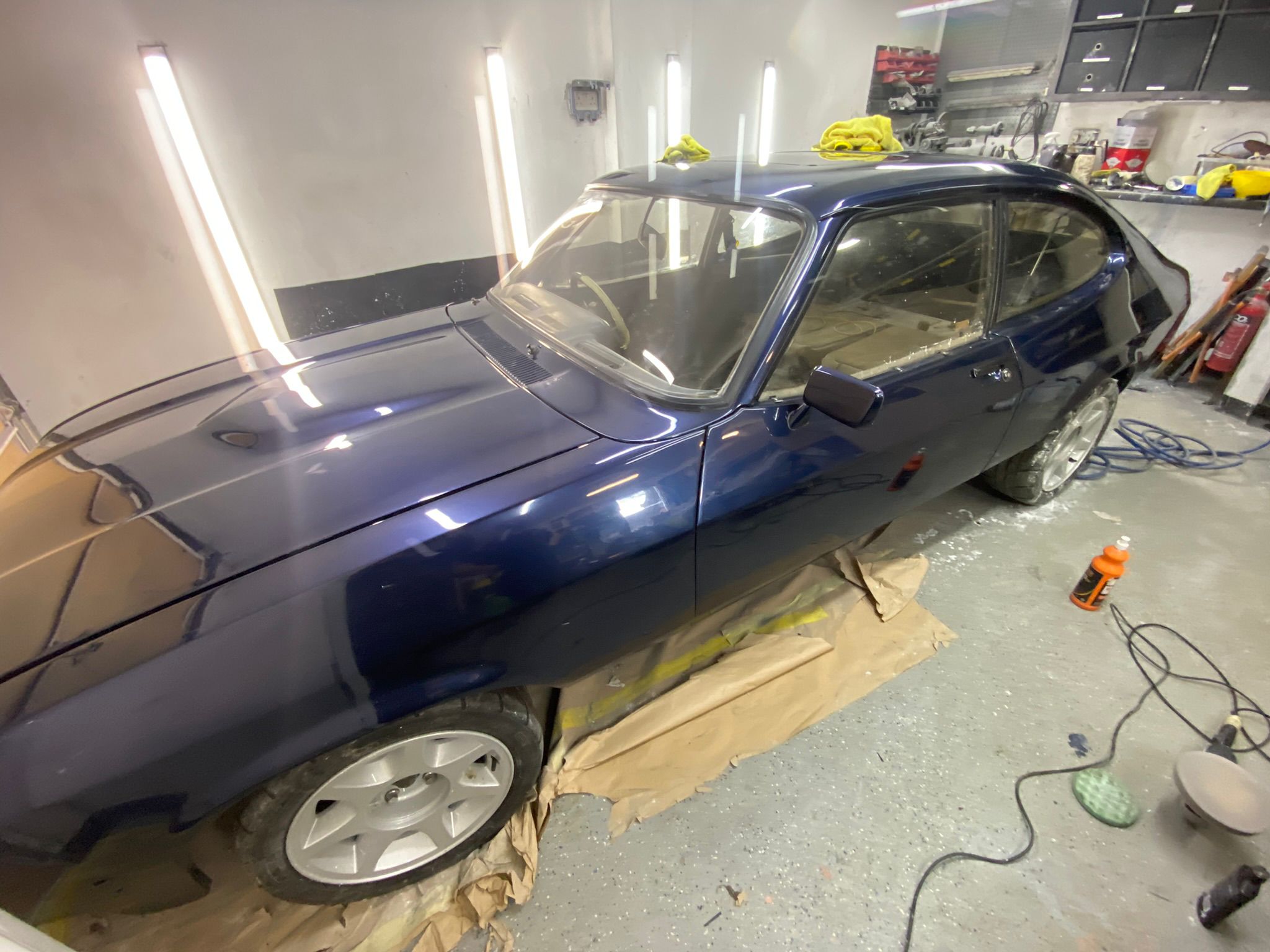
The badge meant something. It was the car people who didn’t have a lot of money saved up for and then drove for years. It was the lads’ car of the 1970s and 80s before that turned into a parody. Plenty of them still get used as daily-ish cars in their fifth decade — like the 2.8i Brooklands I restored, which goes out on dry days and earns its keep.
What the 2025 Ford Capri Actually Is
Let’s be factual before we get to opinions. The 2025 Ford Capri is an electric Ford Capri — or more accurately, a Ford Capri SUV. It’s built in Cologne, on Volkswagen’s MEB platform — the same architecture that underpins the VW ID.4 and ID.5 and Ford’s own Explorer EV. Five doors. Single-motor variants are rear-wheel drive (the MEB motor sits on the rear axle), with optional all-wheel drive via an added front motor. WLTP range claims of 244 to 389 miles depending on trim and battery. Prices in the UK start around £42,000 and run to about £57,000. Ford’s official UK reveal materials confirm the Volkswagen platform and Cologne build line — there’s no Ford engineering content in the chassis or running gear.
The body is a fastback-ish SUV — taller and longer than the original, on bigger wheels, with the rear roofline sloping down to suggest a coupe shape. Some Capri styling cues have been carried over: the slatted treatment over the headlights, a side-window kink that nods to the Mk3 rear quarter, a similar font on the badging. The grille is closed because there’s no engine to cool, but Ford has shaped the front to mimic a traditional Capri nose. It’s a real attempt at a callback. Whether it lands is the conversation.
For background context, the new Ford Capri UK launch ran through 2024 and into 2025, replacing the Ford Capri 2024 reveal materials with full production cars during 2025. The Ford media centre publishes the official spec sheets and Autocar’s review is one of the more measured takes from the UK motoring press.
_Auto_Zuerich_2024_DSC_6382.jpg)
The Case For the New Ford Capri
I want to give the new car a fair hearing because there is one to give. Stripped of the badge, the electric Ford Capri is a perfectly competent electric crossover. The range is decent. The interior is well put together. It drives well enough — reviewers like it more than the related Ford Explorer EV and the Volkswagen IDs because Ford has tuned the suspension a bit firmer and made the steering a bit sharper. For a family that wants a five-seat electric SUV with around 300 miles of range and reasonable looks, it’s a perfectly reasonable buy.
And here’s the thing — Ford could have called it anything. They could have called it the Explorer EV (they do, in fact, for the closely related model). They could have called it the Puma EV, or the Escape, or invented a fresh nameplate. Instead they reached back into the cupboard and pulled out a name that still means something to a lot of British and European buyers. That’s a choice. Whether you like the choice or not, it keeps a heritage badge alive at a time when most manufacturers are killing off legacy names in favour of alphanumeric soup. Some genuine Capri owners I know have ordered one. Their logic: if the brand is going to use the name anyway, better that someone who loves the original is driving the new one than someone who has no reference for it.
The Case Against It Being Called a Capri
And here’s the other side, because there’s an honest argument here too.
- Two doors became five. The original Capri was a two-door fastback coupe with rear seats that you didn’t really expect adults to sit in. The new Ford Capri is a five-door family SUV. Different car. Different brief.
- The mechanical character is gone, regardless of which wheels are driven. Every original Capri was a light, mechanical, rear-wheel-drive coupe. The 2025 car is still rear-wheel drive in single-motor form (MEB puts the motor on the rear axle, and the AWD models add a front motor for four-wheel drive) — but it’s a 2.1-tonne EV crossover with instant electric torque, not the lift-off-oversteer, manual-gearbox, mechanical-noise Capri the badge has always meant.
- It weighs more than twice what a Mk1 weighed. A Mk1 Capri 1600 GT weighed about 965kg. The 2025 Capri ranges from around 2,100kg in Standard Range RWD form up to ~2,190kg for the top Extended Range AWD. That’s a different physics — even with the instant torque of an EV, two-tonne-plus is two-tonne-plus through corners.
- No mechanical lineage. The new car shares no parts, no platform, no engine architecture, no body structure with the original. It’s a Volkswagen group EV with Ford styling and a Ford badge. By the standards of how Ford used to develop a Capri — properly in-house — there’s no through-line.
Whether any of that matters is the reader’s call. For some people the badge is just a badge — if Ford want to put it on an EV crossover, fair play. For others, the badge is shorthand for a specific kind of car (light, rear-wheel-drive, two-door, mechanical) and putting it on something that isn’t any of those things feels like a borrowed cheque being cashed against memories that don’t belong to the new product.
What the Capri Community Is Actually Saying
I’ve spent some time over the last year reading the forums, the Facebook groups, the Capri Club International member chatter, and the comments under every car-journalist video on YouTube. The community isn’t a monolith. There are three broad camps, and there are people in each one.
- “Not a Capri.” The biggest camp. Polite but firm. The new car is fine on its own merits, but the badge should have been retired or used on something rear-wheel drive and two-door — even an EV version of that brief would have been welcomed. Heritage shouldn’t be borrowed to sell an SUV.
- “Give it a chance.” Smaller but vocal. The original Capri was Ford’s affordable, accessible, slightly-aspirational car. The new one tries to be that for a different generation. If you accept the badge as a brand statement rather than a literal continuation, it’s defensible. Some longtime Capri owners have ordered one as a daily driver to sit alongside their original.
- “Both can exist.” Probably the most practical position. The new Capri doesn’t make the old one disappear. The badge revival might even draw fresh attention to the originals — which is good for values and good for the community. Take the new car for what it is, keep the old ones on the road, and let people make their own choices.
For an official position from the community, Capri Club International is the place to look — they’ll cover the new car in their member publications and at events alongside the originals they exist to celebrate. From everything I’ve read across forums and group conversations, the broad position seems to land somewhere between “new car on its own merits, fine” and “different vehicle, different brief, just don’t compare it to a Mk3 directly.” Diplomatic — and probably the right answer.
Will the New Ford Capri Make Old Capris Worth More?
This is the most practical question and the one customers ask me most. Short answer: probably yes, in the medium term, but not by as much as people hope.
Heritage badge revivals usually lift values on the originals. Land Rover did it with the new Defender, and old Defender prices climbed sharply in the few years before and after launch. Mini and Fiat 500 had similar effects. The mechanism is straightforward: the new car puts the name in front of a wider audience, some of those people remember the original fondly, a few of them want one, and demand for the originals firms up.
I expect a similar but milder effect on Capris. Values were already moving in the right direction before the new car launched — the Mk3 2.8i Brooklands has gone from £18,000-territory five years ago to £25,000–£35,000 today, and the rarer Mk1 RS variants have climbed even faster. The new car will accelerate that for the better examples. But it won’t rescue a rotten project. The market still pays for condition, originality, and history — not for the badge alone.
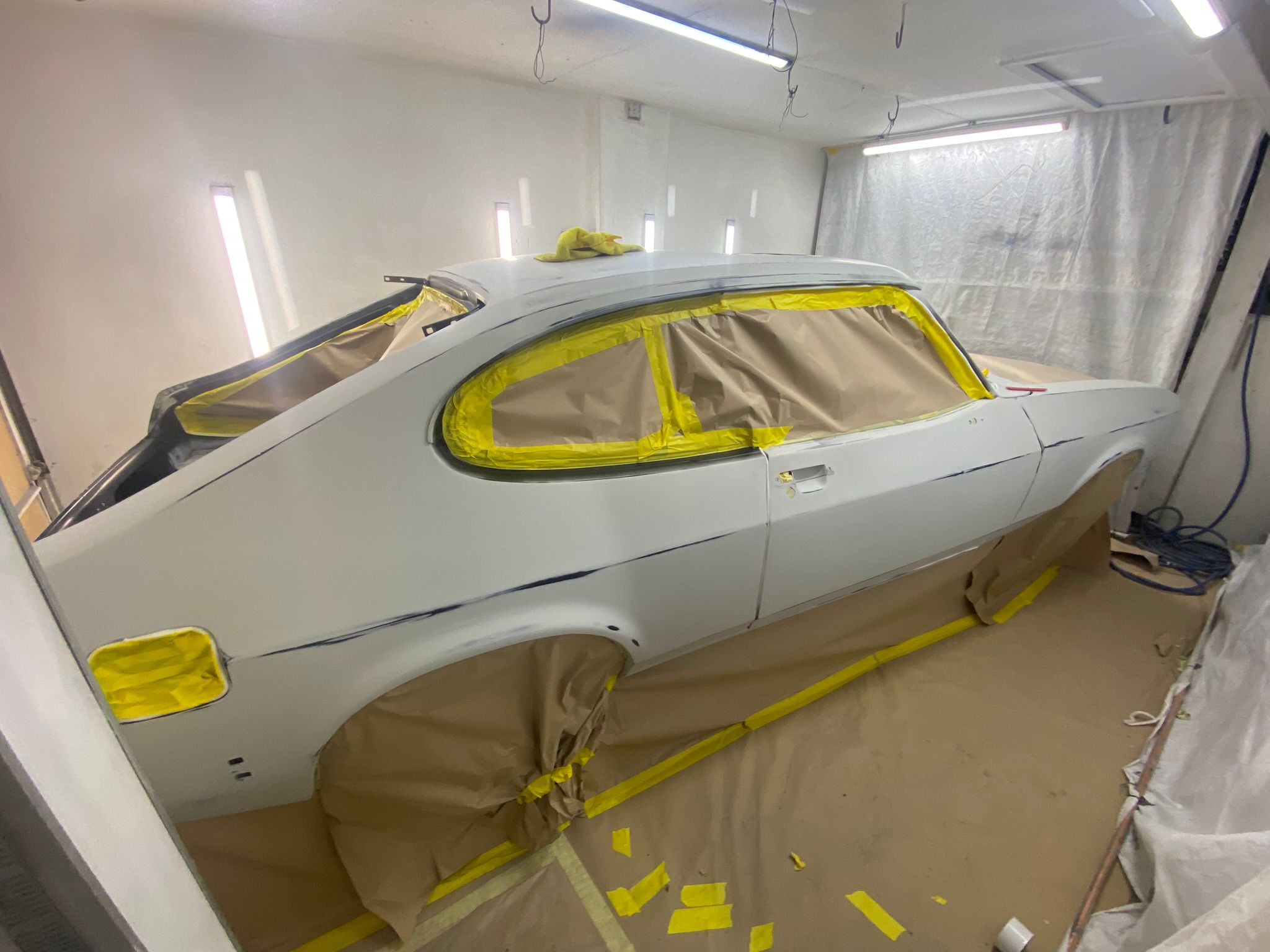
If you own a sound original Capri, you’ve probably got nothing to worry about. If you’ve got a project sitting under a tarpaulin that you’ve been meaning to start, the calculation is harder. Restoration costs have climbed alongside values, and unless you’re doing the work yourself, the margins are tight. The cars worth restoring are the ones you’ll keep — not the ones you’re hoping to flip. The 8 places a Ford Capri always rusts guide is worth a read before you start spending — it’ll tell you whether the shell you’ve got is one of the ones worth saving.
The Honest Verdict
The 2025 Ford Capri is a competent electric SUV that I wouldn’t have bought even if Ford had called it anything else. That’s not because of the new car — it’s because I’m a restorer, I don’t want a new car, and I’d rather have a Capri I can rebuild a wing on than a Capri I have to plug into a wall.
For the buyer who wants a 5-seat EV crossover with about 300 miles of range and a badge that means something to them — go for it. It’s a fair car. For the buyer who wants a Capri in the sense the badge has meant since 1969 — a light, two-door, rear-wheel-drive coupe with mechanical character — the new car isn’t that, and no amount of marketing will make it that.
Both cars can exist. The new one will keep the name visible to a generation that wouldn’t otherwise know it. The originals will keep being driven, restored, and loved by the people who already know what the name used to stand for. I’ll be in the workshop putting another 1970s shell back together while the new one sits in some Costa car park in twenty years’ time, parked next to all the other crossover SUVs that came and went. By then someone will probably be restoring one of those, and I hope they have a good time with it.
If you own an original Capri and you want it looked after properly, get in touch through the classic Ford specialists page or message me direct. Doesn’t matter whether you’re inspired by the new car, annoyed by it, or completely indifferent — what matters is keeping the right ones on the road. If you’re buying a classic Ford project car for the first time, the new car launch is actually a useful moment to start. Interest in originals is high, sound examples are well-priced relative to their future trajectory, and there are still cars out there worth saving.
2025 Ford Capri — Frequently Asked Questions
Is the 2025 Ford Capri a real Capri?
It carries the Capri name and badge, but mechanically it shares nothing with the 1969–1986 original. It’s built on Volkswagen’s MEB platform, it’s an electric SUV not a coupe, it has five doors not two, and although it’s still rear-driven in single-motor form (with optional AWD), it’s a 2.1-tonne crossover not a light fastback coupe. Whether that makes it “a real Capri” is a matter of how strictly you define the badge.
Is the 2025 Ford Capri rear-wheel drive?
Single-motor variants are rear-wheel drive (the MEB platform’s electric motor sits on the rear axle). The Extended Range AWD adds a front motor for four-wheel drive. So drivetrain-wise the new Capri does keep RWD as the base layout, like the original. But everything else differs — it’s a 2.1-tonne EV crossover SUV with five doors and a front-biased weight distribution, not the light two-door rear-driven coupe the badge has always meant.
How much does the new Ford Capri EV cost in the UK?
UK pricing for the 2025 Ford Capri starts around £42,000 for the base Standard Range and rises to roughly £57,000 for the Extended Range Premium AWD. WLTP range claims run from 244 miles (Standard Range) to 389 miles (Extended Range RWD) depending on trim and battery.
Will the new Ford Capri increase the value of original Capris?
Probably, but not dramatically. Heritage badge revivals usually lift values on the originals (Defender, Mini, Fiat 500 all saw this). Mk3 Brooklands cars are already £25,000–£35,000 and Mk1 RS variants £80,000+ as of 2026. The new car will firm up demand for the best original examples but won’t rescue rotten projects — condition still drives the market.
What platform is the 2025 Ford Capri built on?
The 2025 Ford Capri is built on Volkswagen’s MEB electric platform — the same architecture as the VW ID.4, VW ID.5 and Ford’s own Explorer EV. It’s assembled at Ford’s Cologne plant in Germany.
The new Capri sells itself on what it is. The old Capri sells itself on what it was. Both can be true at the same time — and twenty years from now, only one of them will still be turning heads.