Ford Capri Mk1 Buyer’s Guide: Rust, Values & What to Check
Thinking of buying a Mk1 Capri? A classic Ford bodywork specialist walks you through the rust traps, model variants, and what you should pay in 2026.
The Ford Capri Mk1 is the first-generation Capri Ford built between 1969 and 1974 — the chrome-bumpered, long-bonnet original that gave Europe its answer to the Mustang. If you’re thinking of buying one in 2026, the short version is this: budget £8,000–£18,000 for a usable car, £20,000–£35,000 for a properly restored one, and never buy on the paint — buy on the bodywork underneath. The detail below covers exactly where Mk1 Ford Capris rust, how to check, what to pay, and what each variant is actually worth.
I’ve had plenty of Mk1s, Mk2s and Mk3s through my workshop near Milton Keynes over the last twenty-plus years, and I’ve watched people sink serious money into cars that weren’t worth saving. This is the honest guide I’d give to a mate before they handed over any cash for a Mk1 Ford Capri — Mark 1 cars in particular have a small set of repeatable traps that catch people out, and they’re all spotted before you write the cheque if you know where to look.

A Quick History of the Ford Capri Mk1 (1969 to 1974)
The Capri launched at the Brussels Motor Show in January 1969 with one of the cleverest marketing lines in motoring history — “the car you always promised yourself”. Ford wanted a European answer to the Mustang: affordable, good-looking, available in everything from a shopping-trolley 1.3 to a properly quick 3.0 GT. They sold the bones of it as a “personal coupe” and gave buyers a long options list so two Capris on the same street rarely looked identical.
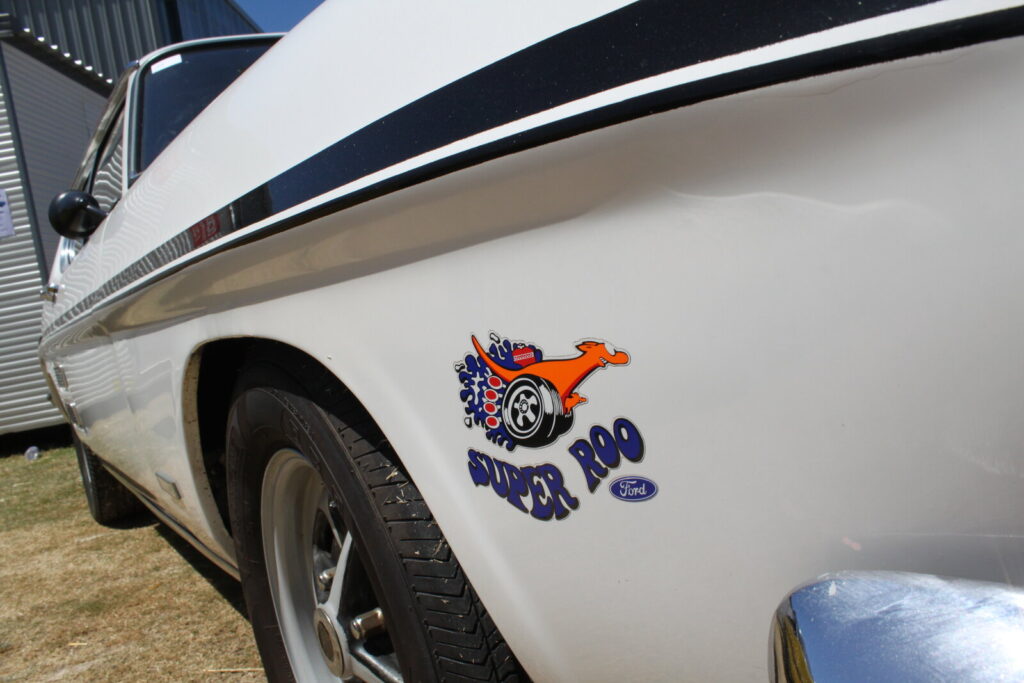
The UK range started with the 1300 (Kent crossflow), worked through the 1600 and 2000, and topped out with the 3000 GT running the Essex V6. In 1970 Ford introduced the 3000E (Executive) and the rorty 3000 GT XLR. The big news for enthusiasts came with the homologation specials: the German-built RS2600 (Kugelfischer mechanical fuel injection on the 2.6-litre Cologne V6, fitted with Weslake-developed alloy heads and assembled by Weslake), and the UK-built RS3100 with a 3.1-litre Essex breathing through a twin-choke Weber 38 DGAS. These are the Capris that turn up at auction now and make collectors lose their minds.
.jpg)
A facelift announced in late 1971 (for the 1972 model year) brought larger tail lights, a bigger grille, revised seats, and a quieter, plusher cabin. From the bodywork side, the facelift cars are slightly easier to live with — better trim availability, fewer fiddly chrome bits — but the pre-facelift cars are arguably the prettier of the two. Mk1 production ended at the end of 1973, with the Mk2 launching in February 1974 with its hatchback and softer styling. Well over a million Mk1s were built across all markets. A lot fewer survive today, and the survivors have usually had a hard life. For the full launch context, the Capri Club International register is the definitive reference for production numbers and chassis-number authentication.
Mk1 vs Mk2 vs Mk3 at a Glance
Quick guide so you know you’re looking at the right car. If you’ve landed here and you actually want a different generation, you’ll save yourself some time:
- Mk1 Ford Capri (1969–1974) — Chrome bumpers, separate headlights (twin on lower trims, quad round on GT models), long bonnet, fastback rear with bootlid (not a hatch). The purest “Capri” shape and the most sought-after by collectors right now.
- Mk2 (1974–1978) — Hatchback rear, softer styling, larger glass area, still chrome bumpered on early cars. Often overlooked, often the cheapest way into a Capri, and values are starting to climb. Bodyshell shares less with the Mk1 than you’d expect.
- Mk3 (1978–1986) — Quad headlamps, slats over the headlight surrounds on the Brooklands and Tickford cars, integrated bumpers on late cars. The 2.8 Injection, 2.8i Special and the 2.8i Brooklands are the headline models. I’ve covered the Mk3 in depth elsewhere — see my Capri 2.8i Brooklands restoration for a proper look at one.
All three rust. All three are bought and sold on body condition more than anything else. But the rust patterns differ enough that you can’t apply Mk3 knowledge wholesale to a Mk1. Here’s where it actually goes.
Where Ford Capri Mk1s Rust (And Why It Matters More Than Anything Else)
I’ll say this once and then we’ll get into the detail: bodywork is the entire game on a Mk1. Engines are findable. Gearboxes can be rebuilt. Interiors can be retrimmed. A rotten shell is what bankrupts people. So before you look at the paint, look underneath, look behind, and bring a torch. For a complete diagnostic walkthrough of every rust spot on a Capri with photos and screwdriver-test instructions, my 8 places a Ford Capri always rusts guide is the companion piece to this one.
Front valance and headlight surrounds
The front valance traps road salt and water against the inside of the panel, and on Mk1s the metal around the headlamp bowls is particularly thin. Look for bubbling paint at the bottom edge of the valance and around the indicator surrounds. A sound front end should ring solid when you tap it. If you can flex the valance with your thumb, it’s already gone.
A-posts and door bottoms
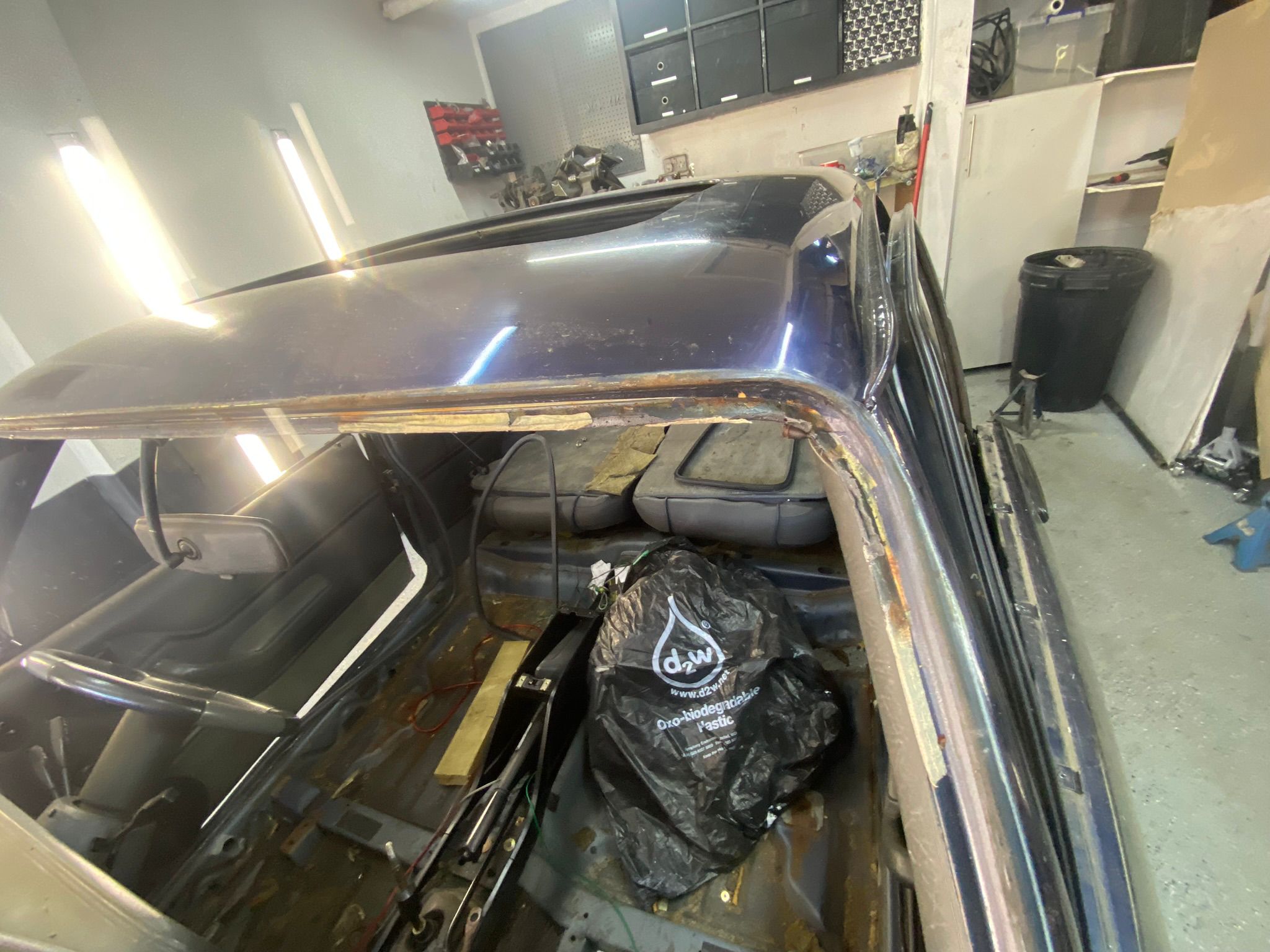
The A-post is the vertical bit of structure that runs from the sill up to the roof, behind the front edge of the door. It carries the windscreen surround, the hinge mounts, and a lot of the body’s torsional rigidity. Water tracks down inside it from the scuttle and works outwards. Open the door, look down at the bottom corner where the A-post meets the sill — if you see filler or rust bubbling through paint here, walk away or knock thousands off the price. Door bottoms rust from the inside out because the drain holes block. Press the inside of the door skin near the bottom — if it crackles or flexes, the metal has thinned.
Sills (inner, outer, and the box section between)
Sills on a Capri are structural — they tie the front and rear of the car together. There are three layers: the outer skin you see from outside, the inner sill you see from underneath, and a closing box section between them. Cosmetic outer sills are easy to bodge. Proper sill repair means cutting back to good metal on all three layers, which is a serious bit of welding and fabrication work. Jack the car up and see whether the doors still close properly — if the gap changes when the wheels are off the ground, the sills are gone.
Floor pans, including under the seats
Lift the carpet if the seller will let you. Look at the footwells, the seat mounting points, and the bit of floor under the rear bench. Mk1 floors corrode where they meet the sills and around the seatbelt anchorages. Push down firmly with your thumb. A sound floor doesn’t give. If it does, expect serious patching at minimum or full floor sections at worst.
Scuttle panel and bulkhead corners
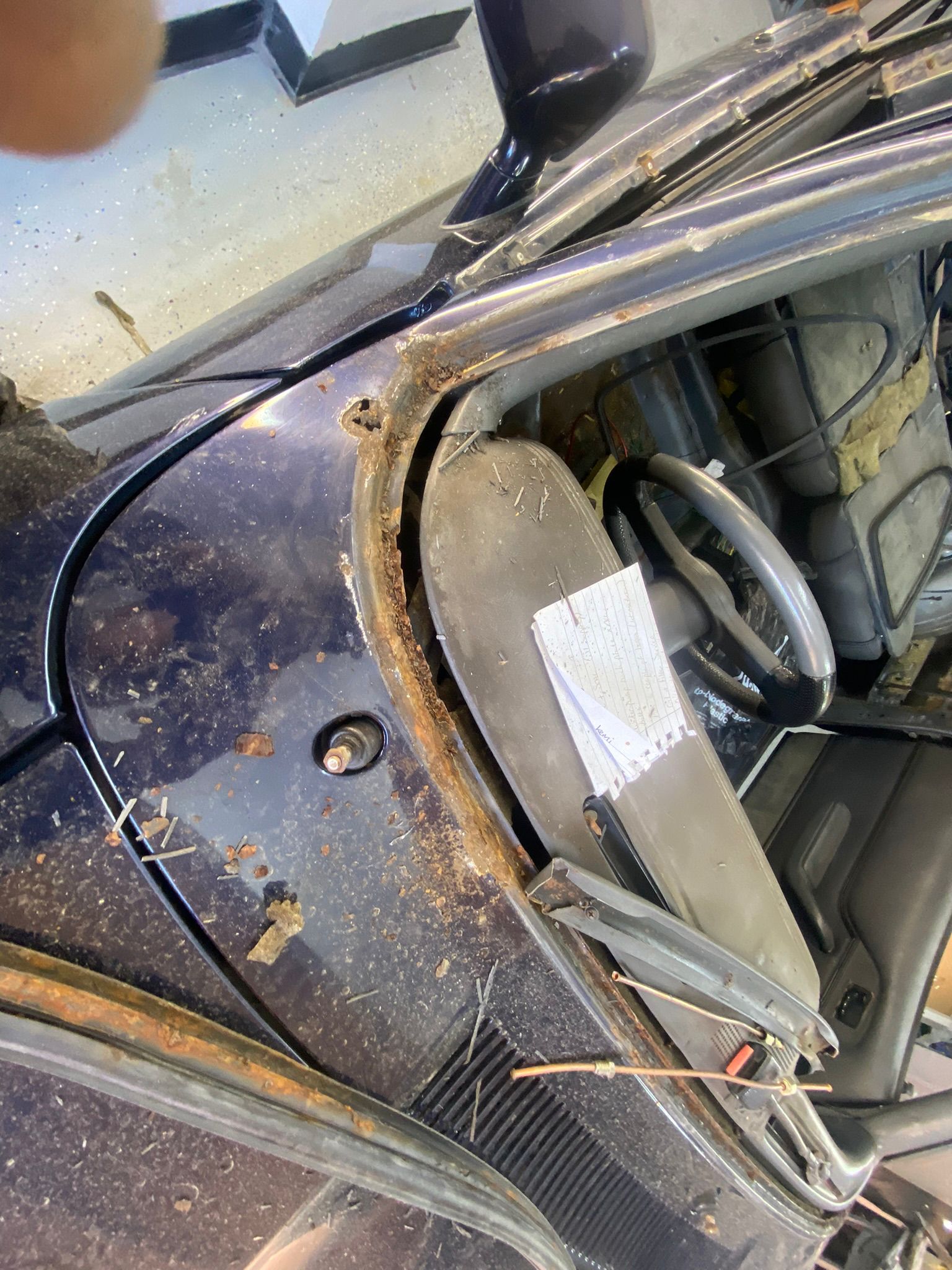
The scuttle is the panel beneath the windscreen wipers. Water sits in the channel under the wiper arms, the seal perishes, and the metal rots from the top down. It’s a common Mk1 weak spot and one of the worst to fix — proper repair means removing the windscreen to get at it. Brown staining around the bottom edge of the screen rubber is a warning sign. So is paint that bubbles at the corner where the scuttle meets the A-post.
Rear wheel arches
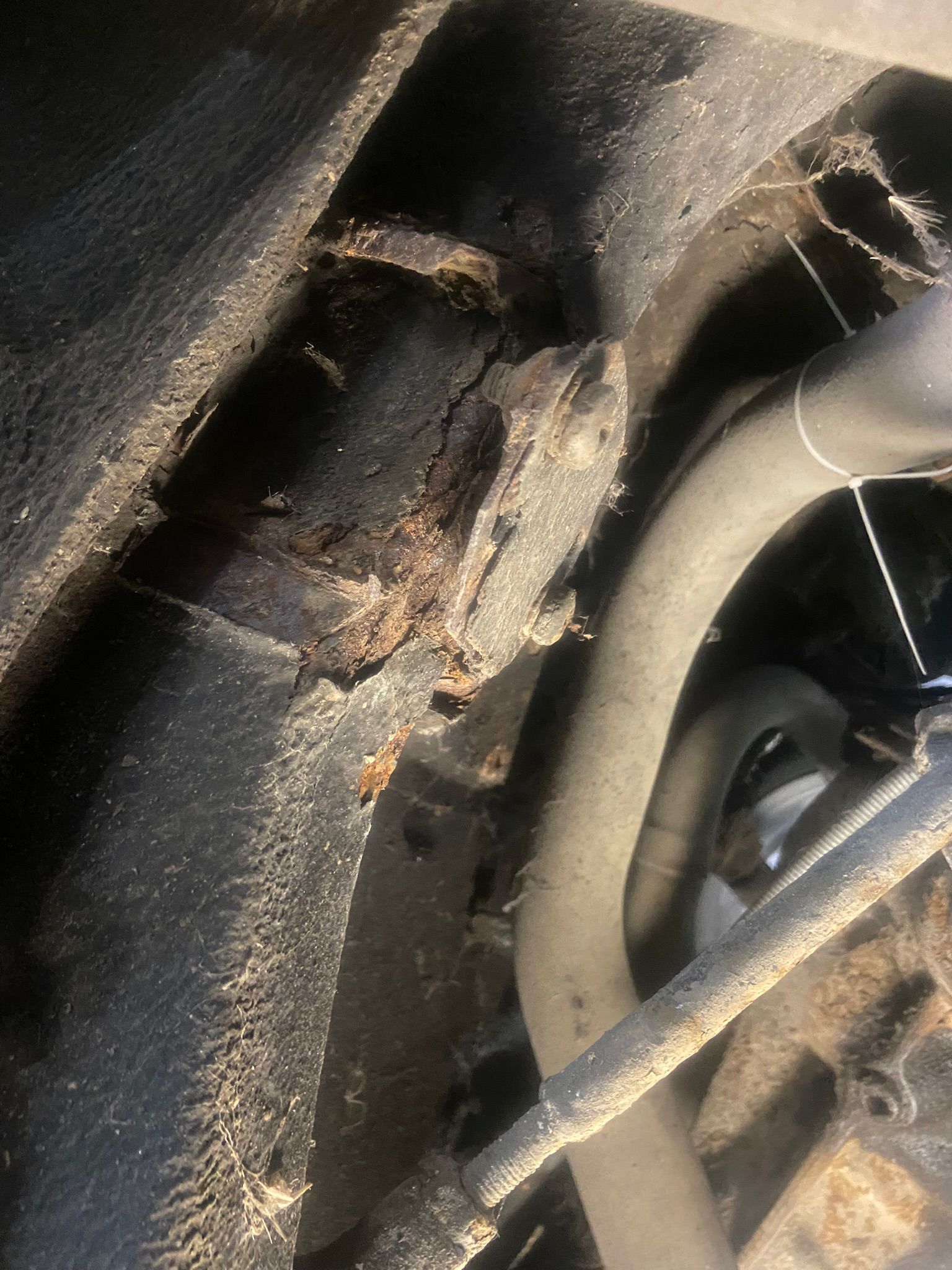
Mk1 rear arches are double-skinned. Mud builds up between the inner and outer skins, holds water, and the outer skin rusts through from behind. The first you’ll see is small bubbles at the lip of the arch — by which point the inner has usually gone too. Tap behind the arch with a screwdriver handle. If it sounds dead or flakes paint, that’s bad news. Repair sections are available but fitting them properly means cutting back well past the visible damage.
Boot floor and spare wheel well
Lift the boot carpet, lift the spare wheel, look at the floor underneath. Water collects in the spare wheel well from leaking tail-light seals, perished boot rubbers, and condensation. A rotten spare wheel well is a Mk1 trademark. Boot floor corrosion also spreads forward into the rear seat pan and rearwards into the rear valance. Check both directions.
Fuel tank straps and chassis legs
Get under the car. The fuel tank hangs from two metal straps that rust through where they meet the chassis. A dropping tank is genuinely dangerous and surprisingly common. While you’re under there, check the chassis legs — the front rails that run from the front bulkhead forward to the radiator support, and the rear sections that locate the leaf-spring hangers. Repair sections are available for most chassis rust, but big jobs are big money. You want straight, solid, undented rails. Any sign of welded patching from a previous repair needs scrutiny.
Body Filler Red Flags
Half the cars I see have been “tidied up” by someone who reached for the filler before the welder. Filler isn’t always evil — there’s a place for skim-coating over honest metal — but a quarter-inch of filler over rust is a time bomb, not a repair. Here’s how I check a car before I commit to it:
- Magnet test — A small fridge magnet pressed against the panel should stick firmly. If it pulls away easily or won’t stick at all, there’s filler underneath. Run it along sills, arches, lower doors, and the rear valance.
- Tap test — Knuckle or screwdriver handle against the metal. Sound steel rings. Filler thuds. Once you’ve heard the difference once, you can’t unhear it.
- Panel gap check — Walk around the car. The gap between door and wing, door and sill, bonnet and wing should be consistent. Stepped or wavy gaps mean the shell has moved — usually because the structure underneath let go.
- Reflection test — Stand at one end of the car and look down the length of a panel in low, raking light. Bumps, dips, and orange-peel ripples show up far more in side-light than head-on. A panel that’s wavy in low light has filler on it somewhere.
- Paint thickness gauge — Cheap ones are about £30 online. A factory paint job reads 100–150 microns. Anything over 300 is suspicious. Over 500 and there’s a definite filler problem.
On the Brooklands I rebuilt, the previous owner had skimmed filler over the rear quarters and sprayed it black. From three metres it looked usable. Once we started stripping back, there was almost no metal left underneath. Same trick gets pulled on Mk1s, only the rust patterns are different and the repair sections are slightly harder to source.
Mechanicals (But Bodywork Is What’ll Bankrupt You)
I want to be straight with you — I’m a bodyshop, not a tuner. But here’s what to listen for on each Mk1 engine, because mechanicals do matter, just not as much as the shell.
- Kent crossflow (1.3 / 1.6) — Simple, tough, parts plentiful. Listen for top-end rattle on cold start (worn rockers or timing chain), and check for oil leaks at the rear main seal. Rebuilds are straightforward and affordable.
- Pinto (2.0 OHC) — Robust if the cam has been oiled properly. The cam runs in the head with no separate bearings, and if the spray bar blocks the cam wears flats. Top-end rattle on a Pinto is usually terminal cam wear. Worth pulling the rocker cover before you buy.
- Essex V6 (2.5 / 3.0) — The hero engine of the GT cars. Lovely thing. Two things to listen for: fibre timing gear failure (a horrid graunching from the front of the engine — the original fibre gear was a known weak point and most have been replaced with steel by now, but check), and worn rocker shafts giving a top-end tap. Both fixable, neither cheap if the engine has to come out.
- Cologne V6 (2.3 / 2.6 — RS2600, plus some later imports) — Rarer in Mk1s. Different head architecture to the Essex, generally durable. Parts harder to find than Essex. (The 2.8 Cologne came in for the Mk3 2.8 Injection — not a Mk1-era engine.)
On the gearbox, Mk1 four-speeds are tough but synchromesh on second gear goes first. A baulky shift into second on a warm gearbox is the early warning. The rear axle is a Salisbury or English unit depending on year and engine — listen for whine on the overrun, which usually means worn crown wheel and pinion. Diff rebuilds aren’t cheap but they’re a known quantity.
The point I want to leave you with: an engine, a gearbox, a back axle — these are bolt-in parts. They come off, they get rebuilt or swapped, they go back in. A rotten shell can’t be swapped. So if you have to choose between a tidy car with a tired engine and a scruffy-looking car with a fresh rebuild, take the tidy shell every time.
Ford Capri Mk1 Values in 2026
Values have moved a lot in the last five years. What was a £4,000 car is now £8,000. What was a £15,000 car is now £25,000. The market has split into clear bands and where your money goes depends on which band you want to play in:
- Project (£3,000–£8,000) — Running car, MOT failure or fresh, needs everything. Bodywork rough, interior tired, mechanically tatty. You’ll spend more than the purchase price putting it right. Realistic for a 1300 or 1600 GT. Forget projects on the rare V6 cars at this money — they don’t exist.
- Usable (£10,000–£18,000) — Driveable car with an MOT, presentable from a few metres, no immediate structural panic. Will still need money spent over time. The 1600 GT and 2000 GT sit here. A driveable 3.0 GT is probably £18,000+ now.
- Restored (£20,000–£35,000) — Properly sorted car, recent bodywork, paint that bears scrutiny, mechanicals known-good. A clean 3000 GT or 3000E will land in this band. Expect history — receipts, photos of the restoration, an honest seller who’ll let you put it on a ramp.
- Concours (£35,000–£60,000+) — Show-standard, original or correct-spec throughout, often bare-shell restored. The very best 3000 GTs are nudging £60,000 now in 2026. If you’re searching for a “Ford Capri Mk1 3000GT for sale” at any other price point, scrutinise the bodywork like your bank balance depends on it — because it does.
- RS2600 and RS3100 — A different conversation. UK auction results from 2022–25 put properly authenticated standard RS3100s in the £45,000–£75,000 range (a top record of £74,250 at CCA in 2022), with the very best fully-documented cars reaching above that. RS2600s span £40,000–£150,000 depending on documentation, originality and history. There are also fakes — be careful, get bodyshell numbers verified through the Capri Club register before you write a cheque.
For up-to-date asking prices, watch Car & Classic, Bonhams, and the Capri Club International classifieds for a month before you buy anything. The Hagerty UK price guide is a useful sanity check — they publish quarterly trend data on classic Ford values. Don’t buy on a whim — Mk1 Ford Capri prices are too high now to make impulse mistakes.
What a Proper Mk1 Ford Capri Restoration Costs
Short version: a usable Capri respray and tidy-up is £3,000–£5,000 of bodywork. A medium restoration with structural welding, new floor sections, sills, and a paint job is £6,000–£12,000. A bare-shell, no-compromises rebuild — like the Brooklands I did, which ran over 150 hours of labour — is £12,000–£20,000+. I’ve broken those numbers down properly in my full Capri restoration cost breakdown, which is worth a read before you start spending. Add mechanical work on top of those figures.
Verdict: Should You Actually Buy One?
If you’ve got the time, the budget, and you want a car you’ll keep — yes. The Mk1 is one of the great British Fords and values are still moving the right way. Buy the best one you can afford. Skip the projects unless you genuinely have the welder, the workshop, and the patience to do it yourself. A “cheap” Mk1 isn’t cheap once you’ve put the work into it.
If you want a flip — a car you’ll restore and sell to make money — be honest with yourself about the maths. Restoration costs are catching up with values. Unless you’re doing the work yourself, the margins are thin. The people making money on Capris right now are the ones who bought ten years ago.
If it’s your first classic car — start with a usable example, not a project. Drive it. Learn what it should feel like, sound like, and how it should behave. Then if you want to do a proper restoration later, you’ll have the reference point. Same advice I give anyone buying a classic Ford project car for the first time.
Wherever you land, get any Capri properly inspected before you buy. If you’re in the Milton Keynes area and you want a second pair of eyes, get in touch — I’d rather spend half an hour stopping you buying a wrong car than fifty hours patching one up six months down the line. You can find me through the classic Ford specialists page or message me direct.
Ford Capri Mk1 — Frequently Asked Questions
How much is a Ford Capri Mk1 worth in 2026?
A project Mk1 Ford Capri is £3,000–£8,000, a usable runner £10,000–£18,000, a properly restored example £20,000–£35,000, and concours-grade 3000 GTs are pushing £60,000. The homologation specials are a different market entirely: authenticated RS3100s sat at £45,000–£75,000 at UK auctions through 2022–25 (top record £74,250 at CCA), with RS2600s spanning roughly £40,000–£150,000 depending on documentation and history.
Where do Ford Capri Mk1s rust the most?
The worst spots on a Mk1 are the sills (all three layers), the floor pans, the scuttle panel under the windscreen, the rear wheel arches, the A-post bases, the boot floor and spare wheel well, the front valance, and the chassis legs. Sills and scuttle are the most expensive to put right — both are structural and both usually need a windscreen out for proper repair.
Which Ford Capri Mk1 model is the best to buy?
For value and usability, a 1600 GT or 2000 GT. For collector appeal and rising values, a 3000 GT or 3000E with the Essex V6. For investment-grade ownership, an authenticated RS2600 or RS3100 — but expect £80,000+ entry and always verify the bodyshell number through the Capri Club International register first.
How can you tell if a Mk1 Capri has been filled rather than welded?
Run a small fridge magnet along the sills, lower doors, rear arches and valance — if it doesn’t stick firmly, there’s filler underneath. A £30 paint thickness gauge will read over 300 microns where filler has been used; factory paint reads 100–150. Tap the panel: sound steel rings, filler thuds. And look down the length of the panel in low, raking light — ripples and dips that vanish head-on become obvious.
Is the Ford Capri Mk1 a good investment in 2026?
For ownership-and-keep, yes — values are still trending upward and the model has strong club support. For flipping, the maths is tight: restoration costs have climbed alongside values, and margins are thin unless you’re doing the work yourself. The Mk1 Ford Capris making real money right now are the ones bought ten years ago and held.
The difference between a Mk1 you’ll love for twenty years and a Mk1 that empties your bank account isn’t the price you pay. It’s what you do — or don’t do — before you hand over the money.