Ford Escort Mexico Buyer’s Guide: Mk1 vs Mk2, What to Check, What to Pay
A classic Ford specialist's Ford Escort Mexico buyer's guide. Mk1 vs Mk2 differences, AVO plate authentication, rust traps, values and red flags.
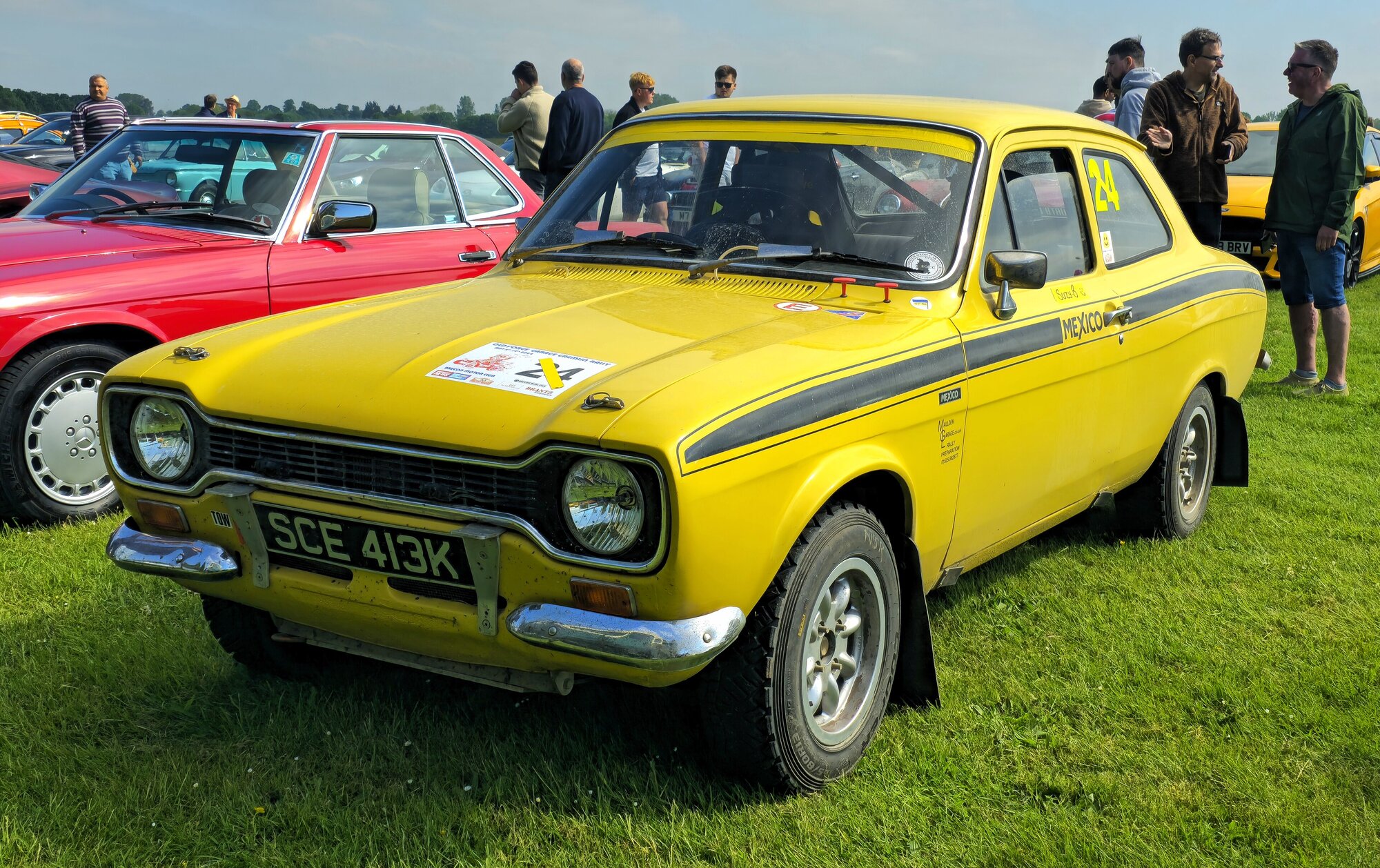
The Ford Escort Mexico is the most-faked Escort there is. There are more Mexicos on the road today than Ford built — and the gap grows every year as values climb and tribute cars get more sophisticated. After twenty years as a classic Ford specialist at my workshop near Milton Keynes, I’ve assessed enough Mexicos for prospective buyers to know exactly where the fakes show themselves and where the real ones earn their keep. This is the honest Mk1 vs Mk2 Mexico buyer’s guide — what to check, what to pay, and why authentication matters more than condition.
Why the Ford Escort Mexico Matters — The World Cup Rally Story
The London-to-Mexico World Cup Rally ran from 19 April to 27 May 1970 — a roughly 16,000-mile (25,700 km) endurance event through Europe and South America, timed to coincide with the football World Cup. Hannu Mikkola and Gunnar Palm won outright in a Ford Escort 1850 GT Mk1. Of 96 starters, only 23 finished. The marketing department turned the win into a car: the Escort Mexico, launched November 1970, built at AVO Aveley in South Essex, sold as the rally-pedigree road Escort.
The Mexico was the most successful AVO-era performance Escort in terms of sustained showroom impact. A naming note: the Mk1 was badged simply “Escort Mexico” — the RS prefix only came in for the Mk2 (“RS Mexico”). Two generations were built, totalling around 12,900 cars between 1970 and 1978. Today, surviving Mexicos with proper provenance are the cars that anchor the entire Mk1 and Mk2 performance market.
Mk1 Ford Escort Mexico (1970 to 1975) at a Glance
- Engine: 1599cc Kent crossflow (some homologation papers cite 1601cc) with twin-choke Weber 32/36 DGAV
- Power: 86 PS (85 bhp) at 5,500 rpm
- Gearbox: Type E four-speed manual (the 2000E “Rocket” box)
- Production: 10,352
- Build: AVO Aveley, South Essex
- Trim cues: distinctive side stripes, Mexico badging on rear wings and bootlid, RS multi-spoke alloys (typically 13″), bucket-style front seats, full instrumentation with rev counter and oil pressure gauge
The Mk1 Mexico shares the standard Escort shell with strengthening welded in at the strut tops, inner wings and gearbox crossmember to handle competition use. Externally identical to a Mk1 1300 from twenty paces — which is why so many Mexicos are tribute cars built on 1300 shells.
Mk2 Ford Escort Mexico (1975 to 1978) at a Glance
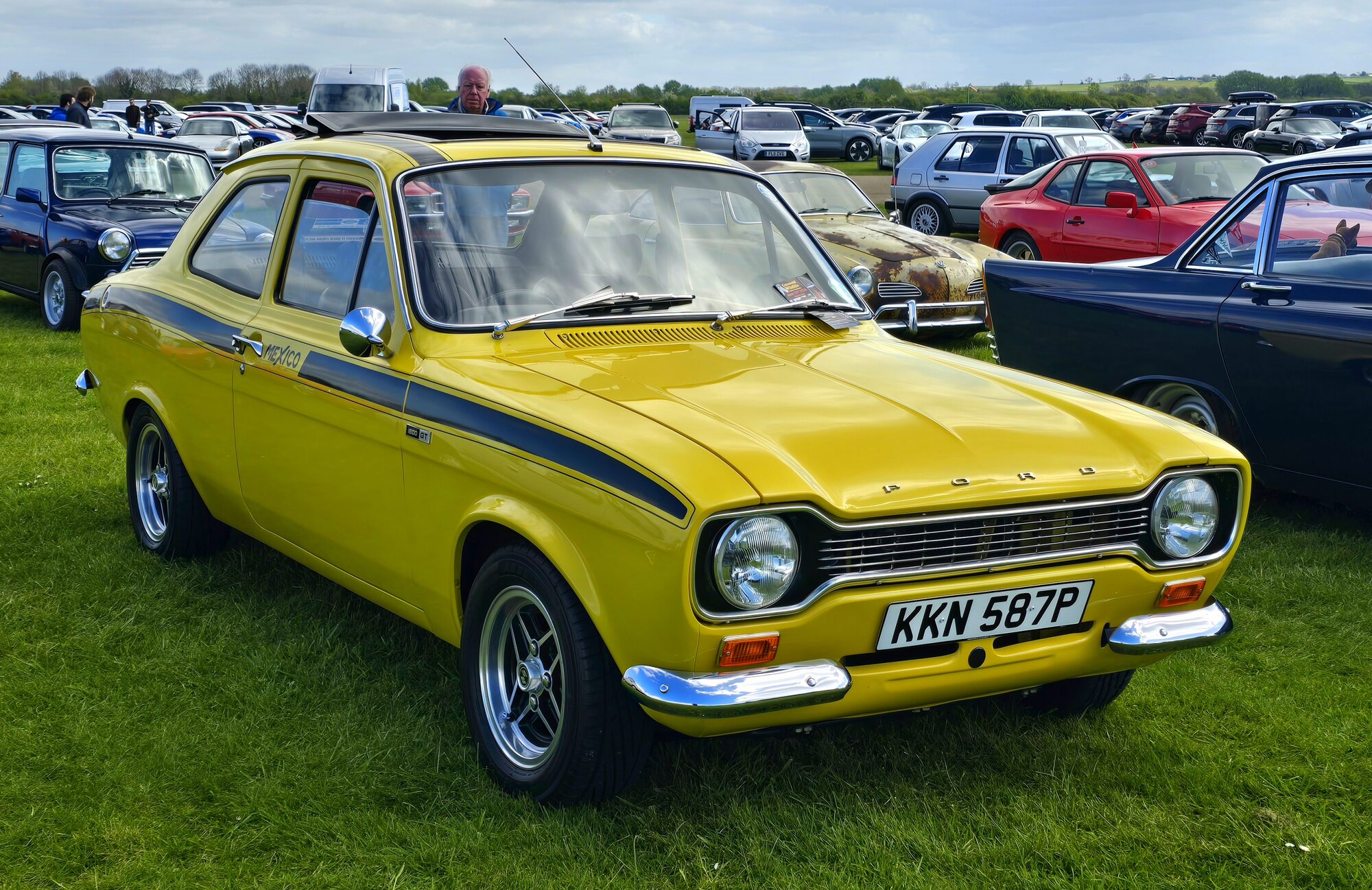
- Engine: 1593cc Pinto SOHC with twin-choke Weber 32/36 DGAV
- Power: 95 bhp at 5,750 rpm
- Gearbox: four-speed manual
- Production: approximately 2,500
- Build: Saarlouis, West Germany (AVO Aveley closed in early 1975, before Mk2 Mexico production began in November 1975)
- Trim cues: Mexico side stripes (different pattern to Mk1), Mexico badging, RS alloys, sport seats, distinctive instrumentation
Mk1 vs Mk2 Mexico — Which Is the Better Buy?
| Factor | Mk1 Mexico | Mk2 Mexico |
|---|---|---|
| Production volume | 10,352 | ~2,500 (4x rarer) |
| Engine | Kent crossflow 1601cc, 86 bhp | Pinto 1593cc, 95 bhp |
| Recognition / icon factor | Higher — the original | Lower — but rising |
| Replicated rate (fakes) | Very high | High |
| Parts availability | Mixed — fab work likely | Better, but Mexico-specific trim rare |
| Project price (2026) | £15k–£30k | £18k–£35k |
| Driver price | £35k–£55k | £40k–£60k |
| Concours price | £55k–£75k+ | £65k+ |
The honest summary: Mk1 is the trophy, Mk2 is the connoisseur’s choice. The Mk1 has more recognition and more market liquidity. The Mk2 is rarer, more powerful, often genuinely overlooked by the headline-chasing money — and that’s why discerning buyers are increasingly choosing the Mk2.
AVO Build Plate and Mexico Authenticity Check
This is the section that earns this guide its specialist credentials. Authenticate every Mexico — no exceptions.
- Find the AVO build plate — small aluminium plate, riveted to the inner wing under the bonnet on the offside (driver’s side, UK cars). On Mk1 Mexicos (1970-1975) built at AVO Aveley this is always there on real cars. Mk2 Mexicos were built at Saarlouis from November 1975 and carry factory build plates rather than AVO plates — make sure you know which plate you’re looking for on the Mk you’re inspecting.
- Read the build plate — should show chassis number, paint code, trim code, and AVO build sequence. The chassis number should match the V5 and the number stamped elsewhere on the shell (typically the bulkhead and the inner wing).
- Order a Ford Heritage Certificate — Ford UK Heritage sell certified production records for around £100 per car. The Heritage Certificate confirms factory build date, original colour, factory spec and originally-supplied dealer. This is the most important £100 you’ll spend before any Mexico purchase.
- Cross-reference the chassis number across the shell — Mexico chassis numbers are stamped in multiple locations. Re-shelled cars typically have one number stamped neatly and others ground off or missing.
- Check the engine number — matching numbers on a Mexico is worth meaningful money. Non-matching is fine for a driver but discount accordingly.
Where Mexicos Rust — Mexico-Specific Spots
The general Mk1/Mk2 rust pattern is in the Ford Escort rust guide. Mexico-specific things to add:
- Strut top reinforcement plates — Mexicos had additional plates welded in around the front strut tops. These were spot-welded, trap moisture between the layers, and rot from inside out. A genuine Mexico without strut-top reinforcement is suspect.
- Inner wing strengthening — same story. Look for the original spot welds versus later home-rewelds. Skilled re-welds blend in; rushed ones don’t.
- Boot floor around the spare wheel well — Mk1 Mexico especially. Water pools in the well and rots the seam where the well meets the floor.
- Gearbox crossmember area — strengthened for the Mexico’s four-speed box. The reinforcement is another double-skinned area that traps water.
Mechanical Checks on a Ford Escort Mexico
- Kent crossflow (Mk1) — cold-start rattle is the timing chain (£200–£400 to sort). Listen for big-end rumble at idle. Oil leaks from the rear main seal are common, expensive to do properly.
- Pinto (Mk2) — top end and cam are the killer if oil-spray on the cam has failed. Listen for top-end tap. Pinto cam rebuilds are £400–£800.
- Type E (2000E/”Rocket”) gearbox — second gear synchro goes first. Watch for crunch on a brisk down-change. Rebuild £400–£800. (The Type 9 five-speed is a later Sierra/Capri box and shouldn’t be in a factory-spec Mexico.)
- Rear axle — Atlas axle whine when warm under light load. £200–£500 to rebuild or swap.
- Front struts and steering rack — original Mexico struts are different to base Escort. Check the spec is correct, and listen for clonks over speed bumps.
- Brakes — Mexicos use a specific front disc and caliper. Wrong-spec brake parts on a “Mexico” are an authentication red flag.
Mexico Originality Red Flags — The Full Checklist
- Wrong-pattern seats — Mexico seats are specific. Base Escort or Mexico-pattern aftermarket are red flags.
- Wrong dash — Mexicos have full instrumentation with rev counter, oil pressure, oil temp. Base dash on a “Mexico” is a major red flag.
- Wrong-spec dials — even cars with the right dash sometimes have wrong-spec dials swapped in. Check the dials are period-correct.
- Modern replacement panels — aftermarket sills, arches and wings are fine as repair sections. Whole-panel replacements without explanation suggest a re-shelled car.
- Repainted-over chassis numbers — chassis numbers should be stamped, slightly recessed, surrounded by original paint. Fresh paint over stampings is suspect.
- Mexico badges riveted to non-Mexico shells — Mexico badges and stripe kits are freely available. The shell underneath them is what matters.
- Wrong-spec engine — a Mk2 Mexico with a Kent engine, or a Mk1 with a Pinto, is wearing the wrong engine.
- No AVO plate, no Heritage Certificate, no period paperwork — assume tribute.
What a Ford Escort Mexico Is Actually Worth in 2026
| Condition | Mk1 Mexico | Mk2 Mexico |
|---|---|---|
| Project shell (rotten, needs everything) | £15,000–£22,000 | £18,000–£28,000 |
| Restorable, on the road | £22,000–£35,000 | £28,000–£42,000 |
| Driver-quality, usable | £35,000–£55,000 | £40,000–£60,000 |
| Concours, matching numbers (Mk1 AVO Aveley / Mk2 Saarlouis factory build) | £55,000–£75,000+ | £65,000–£80,000+ |
| Period race or rally provenance | £75,000–£150,000+ | £80,000–£150,000+ |
An AVO Aveley-built Mk1 with full provenance carries a premium of 10 to 20% over a less-documented car. Matching-numbers engine adds 15 to 25% on either Mk. Documented racing or rally history can double the figure on a concours car. The complete Ford Escort RS guide places the Mexico in context against the rest of the RS line.
Bringing a Project Mexico Back to Life
Mexico restoration costs sit at the top of the Mk1/Mk2 bracket because the standard of work has to match the value of the finished car. A £20k project Mexico needs £25k to £40k of work to come back as a £55k+ driver. Concours Mexico restoration is £40k to £70k of work. The Escort restoration cost guide breaks down what that money buys and where it goes.
The maths: £20k project + £40k restoration = £60k finished car. That’s at the upper end of driver prices but at the lower end of concours. The right approach depends on the shell you’re starting with. A genuine AVO-built Mexico project is worth chasing; a tribute on a 1300 shell at the same price is not.
Should You Buy a Mexico — or Build a Tribute?
This is the honest question every Mexico buyer should ask. A well-built Mexico tribute on a 1300 shell drives the same as the real thing. It can wear the right stripes, the right alloys, the right interior, the right engine spec. It costs £20k to £30k to build properly versus £55k to £80k for a real one.
The case for a real Mexico: matching numbers, AVO build provenance, Heritage Certificate, investment appreciation, and a place in the Mexico Owners Club register. If those matter to you, only the real thing satisfies.
The case for a tribute: driving experience is identical, build budget is a fraction of the cost, you can modify without guilt, and you can use it without the value-anxiety that follows owners of £60k+ Mexicos. If driving matters more than investing, the tribute is the better choice.
What you don’t want is a tribute sold as a real car. That’s the buy that costs people five-figure sums when the truth comes out — which is why every prospective Mexico purchase needs the authentication checklist above, every time.
If you’re looking at a Mexico and want a specialist’s eyes on it before you commit, I’ll happily check one over. Send me a few photos on WhatsApp — AVO plate, chassis numbers, underbody, interior, engine bay — and I’ll tell you what you’re looking at. See also the 1998 Escort GTI case study for the level of work involved in any major Escort project.