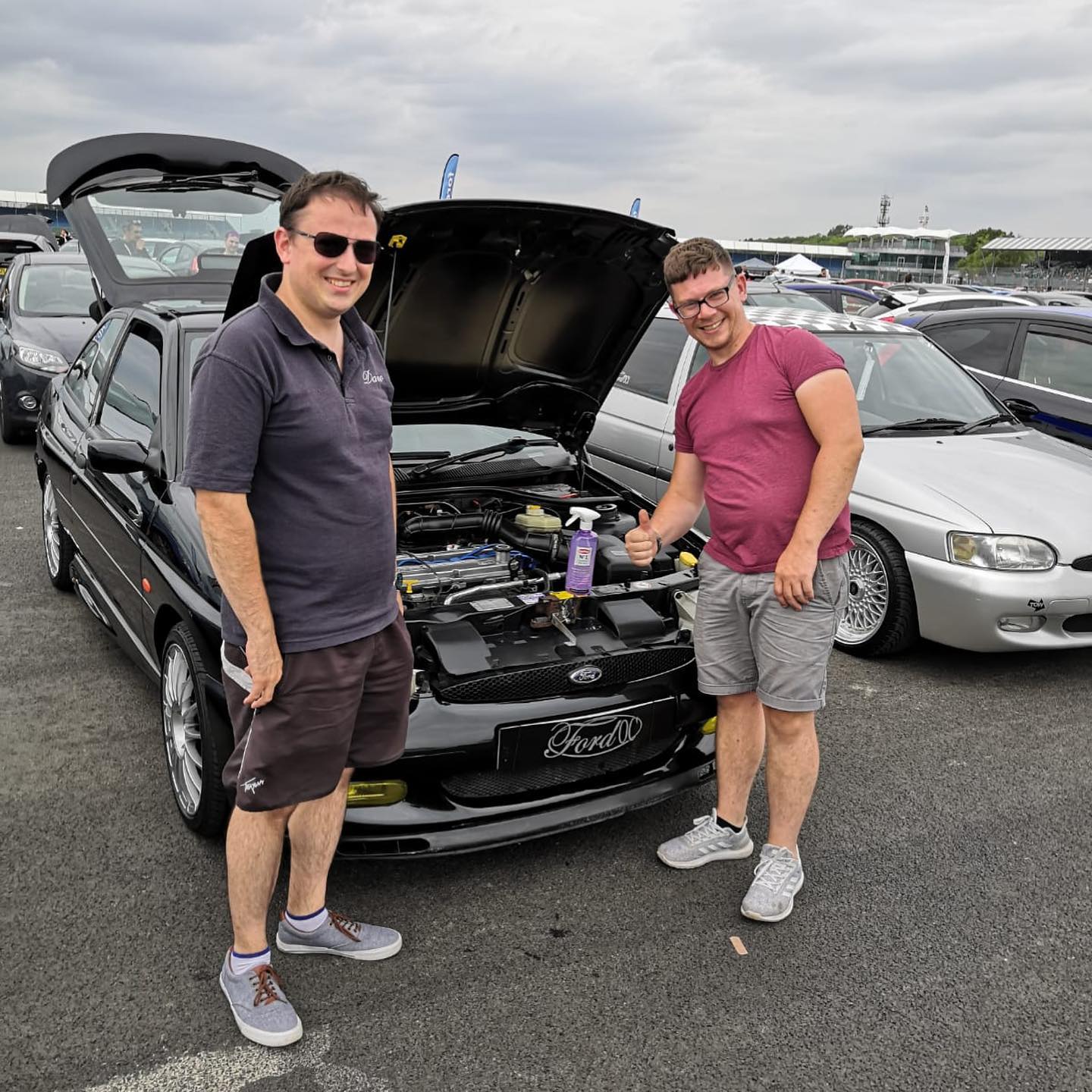
Ford Escort RS Models: The Complete Guide From Mexico to Cosworth
Every Ford Escort RS variant from 1970 to 1996 explained by a classic Ford restoration specialist. Mexico, RS1600, RS1800, RS2000, RS Turbo, RS Cosworth — history, specs, values and what to check.
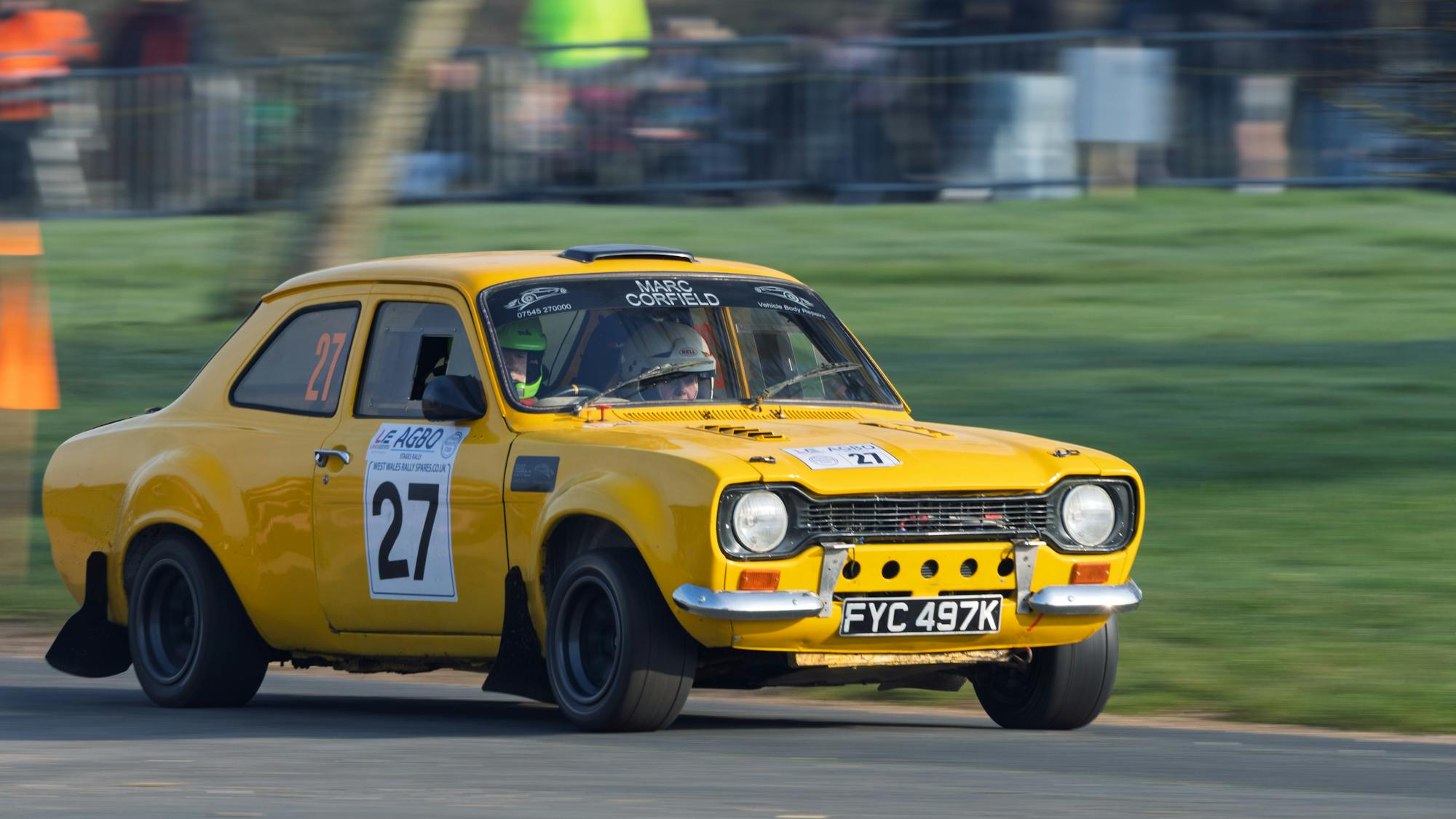
The Ford Escort RS family is the most important line of fast Fords ever built. From the 1970 Mexico to the 1996 Cosworth, eleven distinct RS variants defined British motorsport, hot-hatch culture and the way an entire generation thought about Fords. After twenty-plus years working on classic Fords at my workshop near Milton Keynes as a classic Ford specialist, I’ve owned, restored, welded, painted and driven most of them. This is the complete Ford Escort RS guide — every variant, every production number, what to check, and what each one is worth in 2026.
The Ford Escort RS Family Tree
RS stands for Rallye Sport. Ford created the RS designation specifically for homologation specials — road cars built in the numbers required by motorsport regulations so that the rally cars based on them could legally compete. From 1970 to 1996, eleven distinct Escort RS variants left the factory:
- Mexico (Mk1 and Mk2)
- RS1600 (Mk1)
- RS2000 (Mk1, Mk2 and Mk5/Mk6)
- RS1800 (Mk2)
- RS1600i (Mk3)
- RS Turbo (Mk3 Series 1, Mk4 Series 2)
- RS Cosworth (Sierra Cosworth 4×4 floorpan, Escort-Mk5-style bodywork)
Each one was built for a reason. Each one earned its badge. None of them deserve to be replicated on a base shell — though plenty have been.
AVO Aveley — Where the RS Escorts Were Built
The story starts before the RS badge existed. The Escort Twin Cam (1968 to 1971) was the first performance Escort — the 1558cc Lotus-Ford twin-cam 8-valve engine on a pre-crossflow block, around 110 bhp, built at Halewood (the first 25 at Boreham). Production figures vary by source, from roughly 880 to 1,263 cars. It was never RS-badged — the “Rallye Sport” name didn’t exist yet — but its rally success and the demand it created are exactly why Ford opened the Advanced Vehicle Operations plant at Aveley in January 1970. Every RS Escort that followed traces back to it.
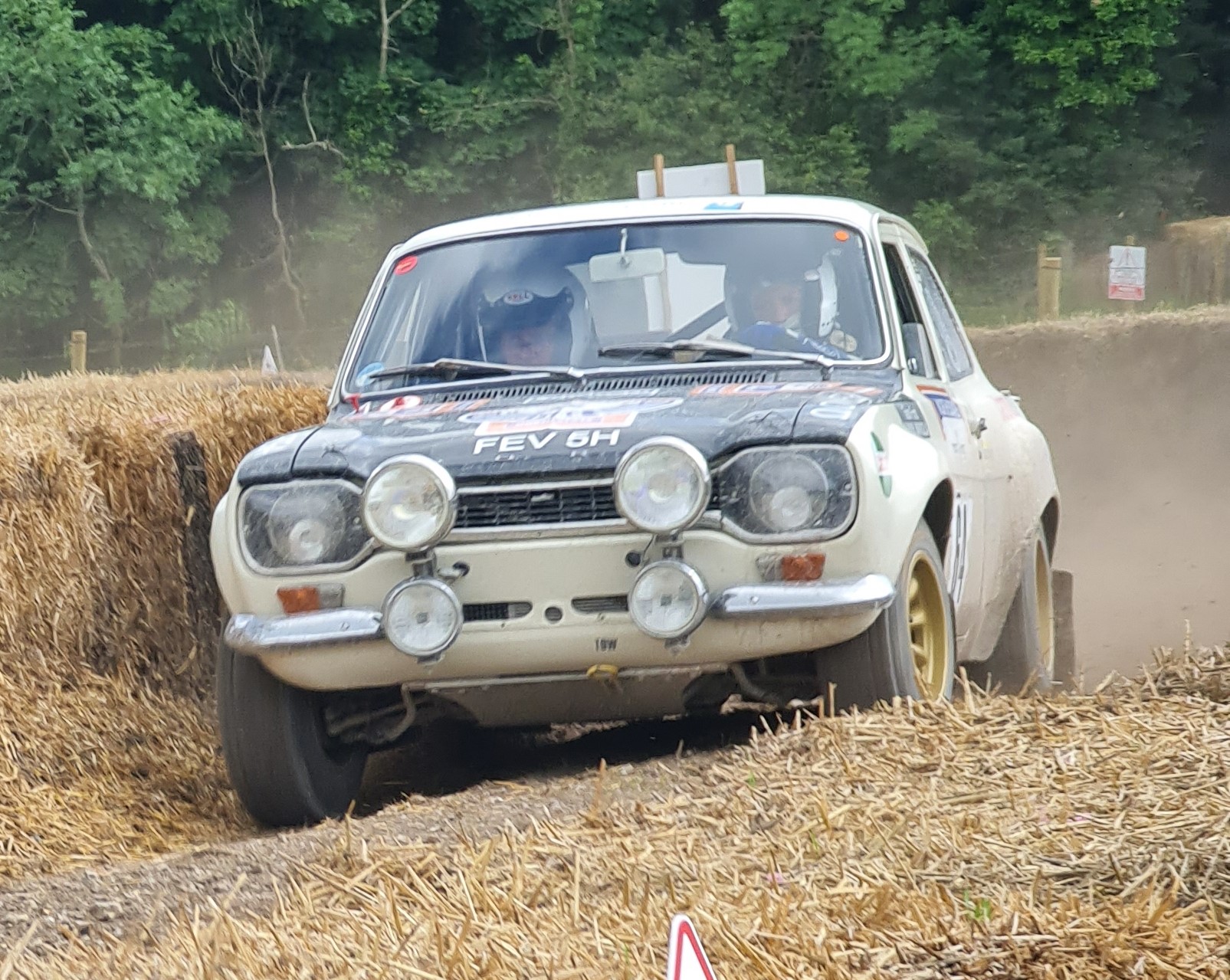
Ford’s Advanced Vehicle Operations facility was at the Aveley Plant in South Essex (South Ockendon), where the Mexico, RS1600, Mk1 RS2000 and the Mk2 RS1800 were built between 1970 and 1975. AVO was a low-volume specialist line — closer to a rally team’s workshop than a production plant. The AVO build plate, riveted to the inner wing under the bonnet, is what separates a real RS from a re-shelled tribute. (Boreham, often confused with AVO, was Ford’s competitions department in Essex — separate facility, separate purpose.)
When AVO closed in early 1975, RS production moved to Saarlouis in Germany (Mk2 RS2000, RS1800) and later to the main Ford plants. The Aveley-built AVO cars carry a price premium today simply because of the build provenance — which is the most-faked part of the Escort RS market.
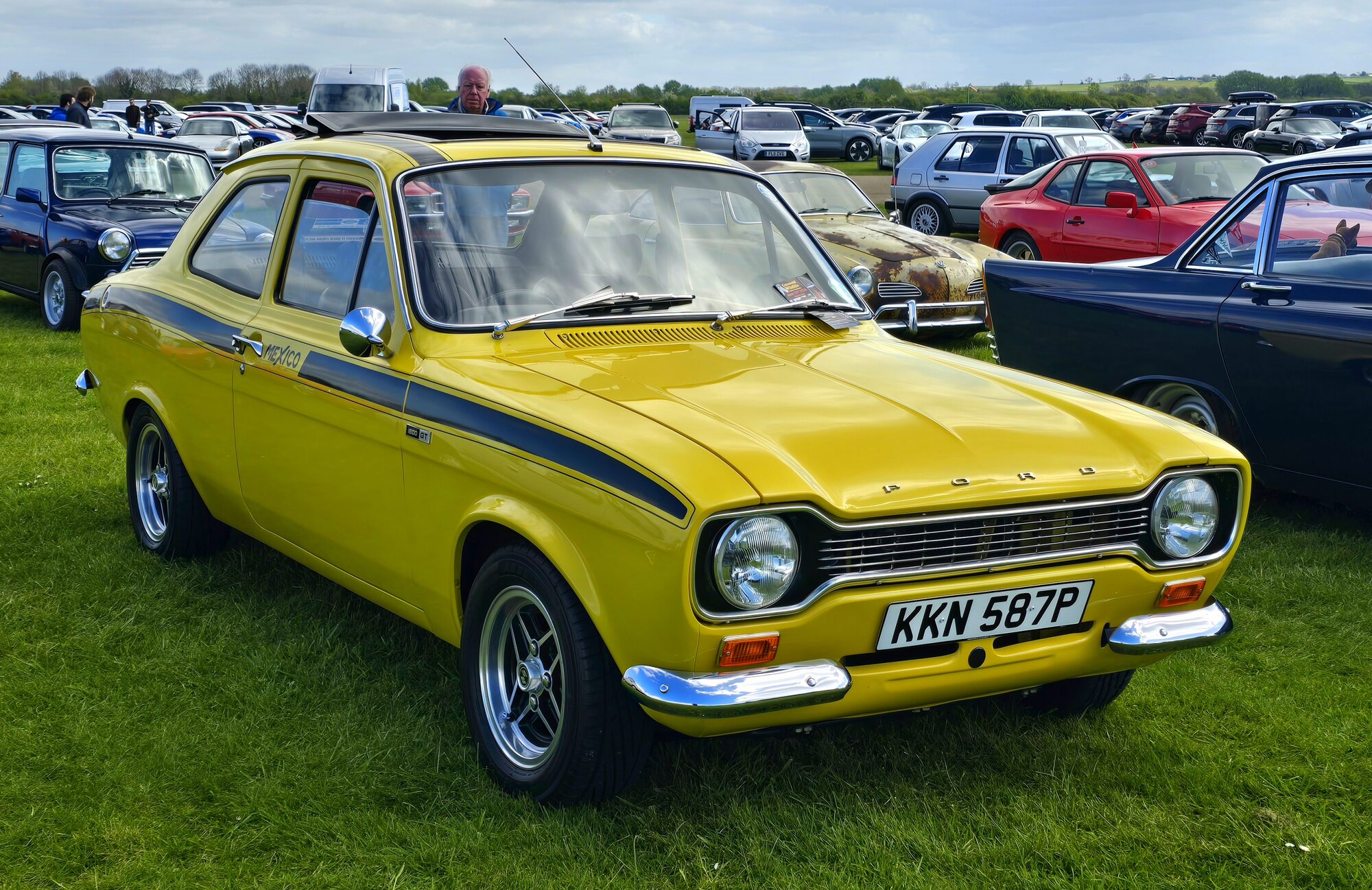
Ford Escort Mexico (1970 to 1978)
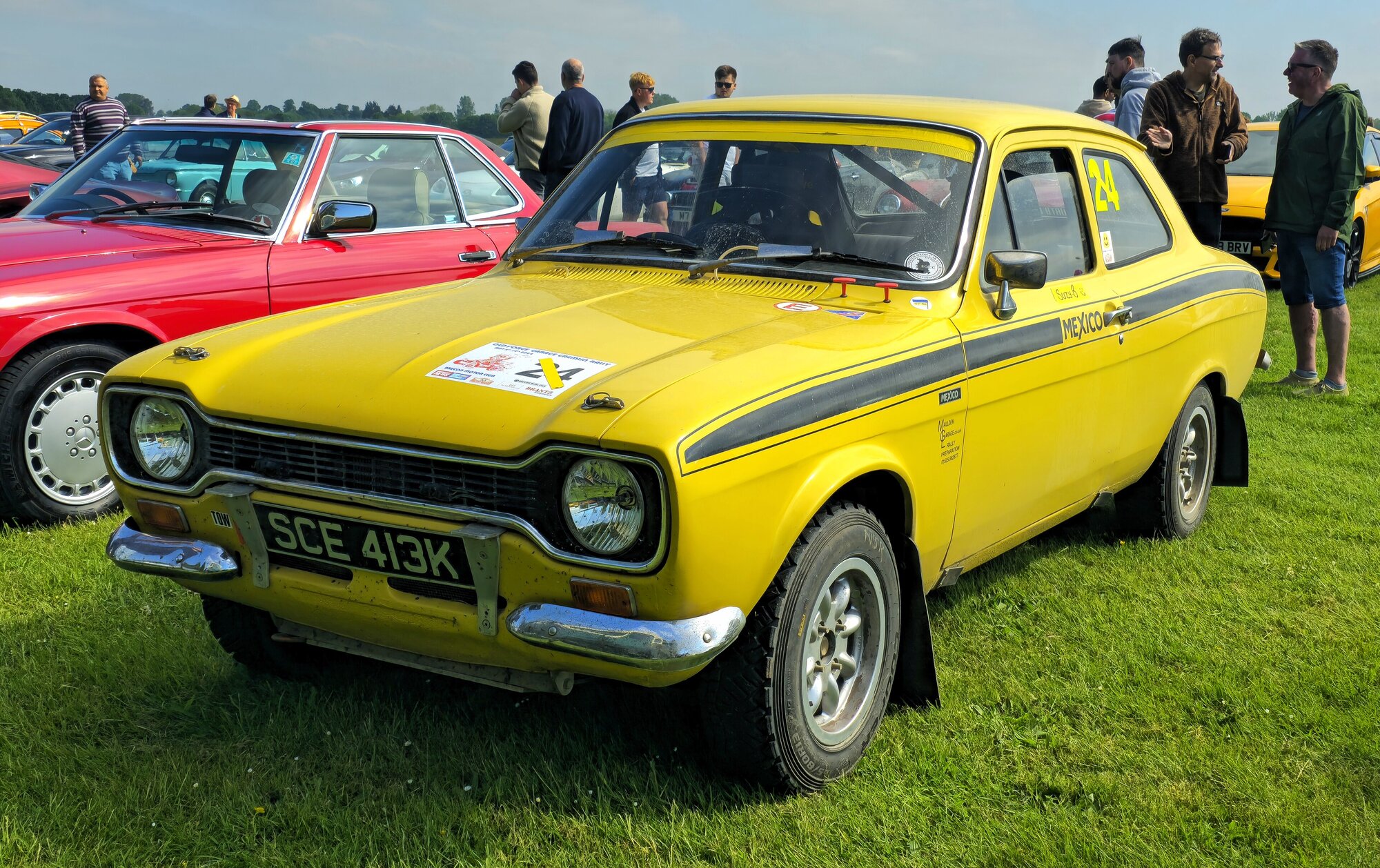
Mk1 Mexico (1970 to 1975)
- Engine: 1601cc Kent crossflow, 86 bhp
- Production: 10,352
- Build: AVO Aveley
- Value 2026: Project £15k–£30k. Driver £35k–£55k. Concours £55k–£75k+.
- What it commemorates: Ford’s 1970 London-to-Mexico World Cup Rally win with Hannu Mikkola and Gunnar Palm, in a Ford Escort 1850 GT.
Mk2 Mexico (1975 to 1978)
- Engine: 1593cc Pinto, 95 bhp
- Production: approximately 2,300
- Build: Saarlouis, Germany (production began after AVO Aveley closed)
- Value 2026: Project £18k–£35k. Driver £40k–£60k. Concours £65k+.
The Mexico is the most-faked Escort there is. Authentication isn’t optional — see my Mexico Mk1 vs Mk2 buyer’s guide for the full AVO plate check, chassis number cross-reference and Heritage Certificate process before you spend RS money on any “Mexico” offered for sale.
Ford Escort RS1600 (1970 to 1974)
The BDA-engined homologation special. Twin-cam 16-valve, 120 bhp standard from a 1601cc Cosworth-developed block, race tunes pushing 240+ bhp. The rarest Mk1 RS by some margin — and the one where authenticity matters most, because most “RS1600s” you see today are Mexico shells with BDA conversions.
- Engine: 1601cc Cosworth BDA, 120 bhp (a small late-production run from late 1972 used a Brian Hart light alloy block — fewer than 150 of these built)
- Production: approximately 1,140
- Build: AVO Aveley (first car emerged early November 1970)
- Value 2026: Genuine matching-numbers RS1600 £75k–£150k+. Tribute £25k–£40k.
Ford Escort RS2000 Mk1 (1973 to 1974)
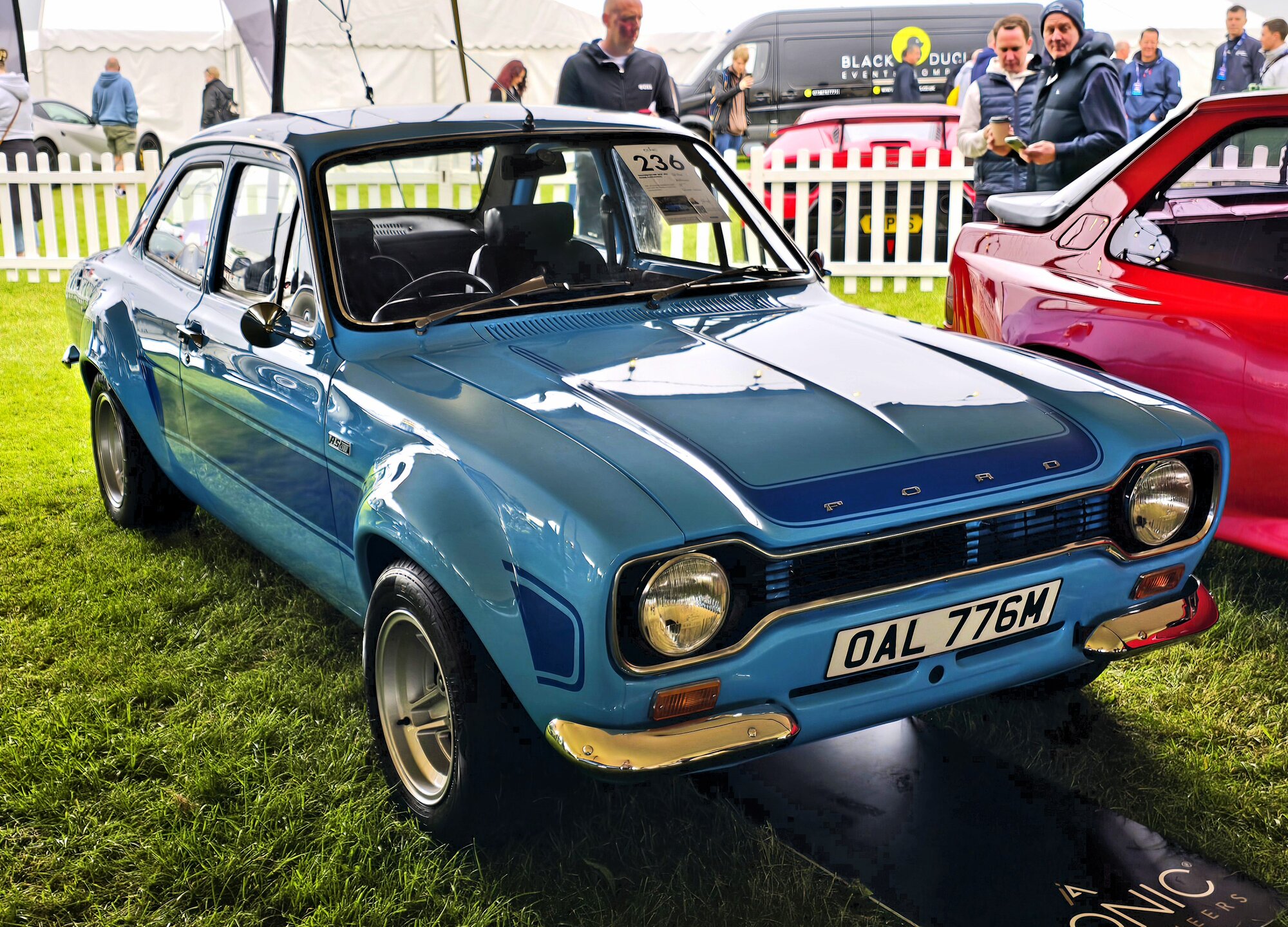
- Engine: 1993cc Pinto, around 100 bhp (99 bhp on the showroom figures)
- Production: approximately 3,500
- Build: AVO Aveley
- Value 2026: Project £12k–£20k. Driver £25k–£40k. Concours £45k–£60k.
The “I want an RS but want to drive it daily” choice then and now. Pinto-engined, simpler than the BDA, far cheaper to live with. The most usable Mk1 RS.
Ford Escort RS2000 Mk2 (1975 to 1980)
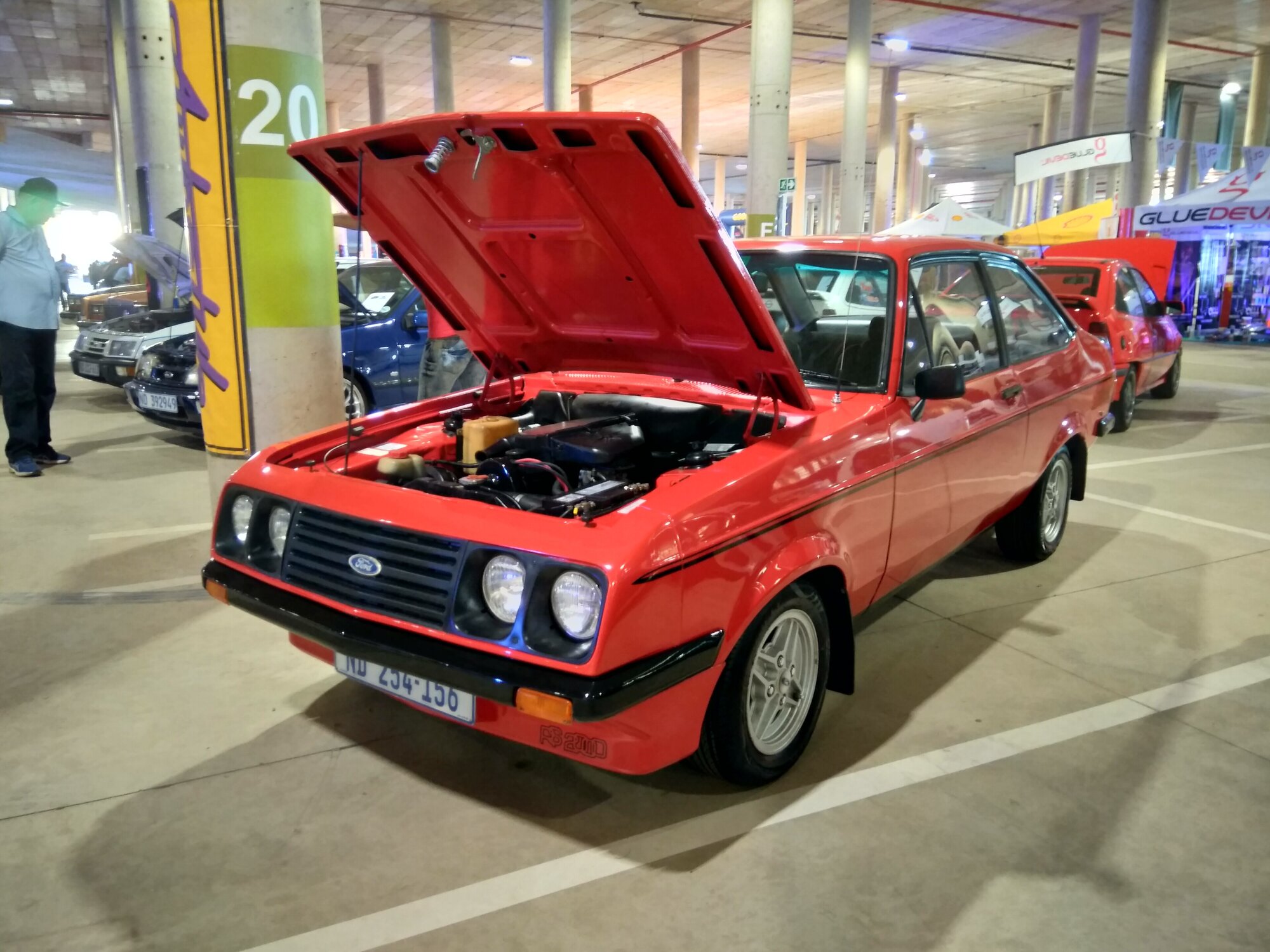
- Engine: 1993cc Pinto, 110 bhp
- Production: approximately 25,000 (including Custom Pack)
- Build: Saarlouis, Germany — plus international assembly at Homebush (Australia) and Port Elizabeth (South Africa), which is partly why global production totals vary so much between sources
- Value 2026: Project £8k–£15k. Driver £18k–£32k. Concours Custom Pack £40k–£55k.
The most accessible RS by production volume — which means more good ones still around, and the most realistic entry point into Mk2 RS ownership. Custom Pack with chequered seats, leather steering wheel and full-instrumentation dash carries a 30 to 50% premium. Worth knowing that the difference between a Mk2 RS2000 and a Mk2 2.0 Ghia is significant — droop-snoot, quad lights, bonnet bulge, specific dash and trim.
Ford Escort RS1800 (1975 to 1977)
The Mk2 BDA car — the ultimate Mk2 collector piece, and the rarest production Escort RS Ford ever built. The BDA was uprated to 1834cc for homologation reasons. The road cars were almost incidental to the racing programme that produced four World Rally Championship wins.
- Engine: 1834cc Cosworth BDA (more precisely 1,833cc), 115 bhp at 6000 rpm
- Production: 109 road cars (one of the rarest fast Fords ever)
- Build: AVO Aveley (final AVO cars, March 1975 to September 1977)
- Value 2026: Genuine matching-numbers RS1800 £90k–£200k+. Documented racing provenance significantly higher.
There are more “RS1800s” registered in the UK than were built. Authentication is critical, and any car offered without an AVO build plate, a Heritage Certificate, and provenance paperwork should be assumed to be a tribute until proven otherwise.
Ford Escort RS1600i (1982 to 1983)
The fuel-injected Mk3 homologation special. Bosch K-Jetronic injection, 115 bhp, distinctive 9-spoke alloys, and the front anti-roll bar geometry that gave it Group A homologation. The car that bridged the rally era and the hot-hatch era.
- Engine: 1597cc CVH with K-Jet injection, 115 bhp
- Production: 8,659
- Build: Saarlouis / Halewood
- Value 2026: Project £4k–£8k. Driver £12k–£20k. Concours £25k–£35k.
Often overlooked — but as Mk3 RS Turbo prices have climbed, the RS1600i is being noticed again. Currently undervalued for what it is.
Ford Escort RS1700T — The RS That Never Was (1980 to 1983)
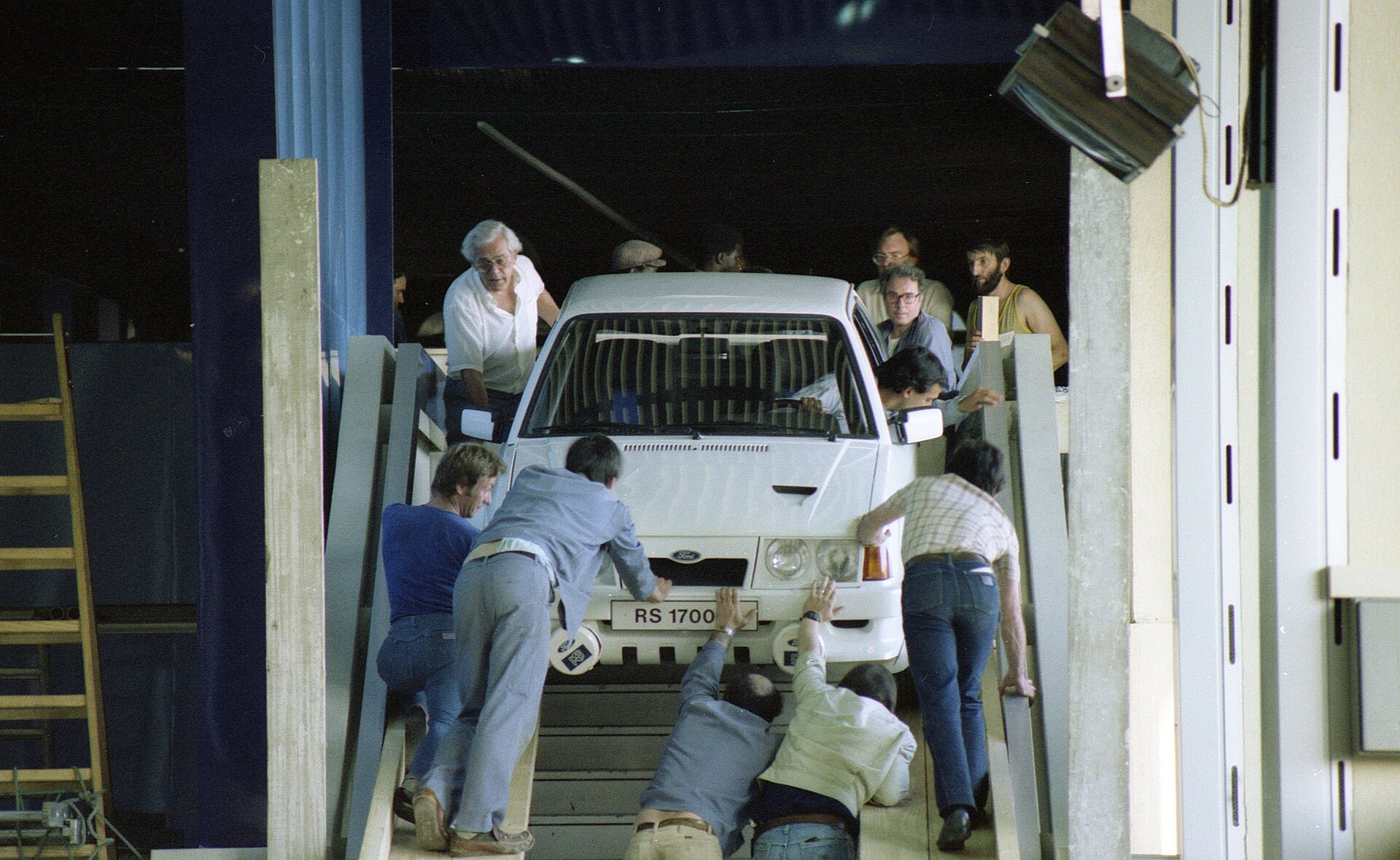
The RS that never reached a showroom. The RS1700T was Ford’s Group B rally homologation project — based on the Mk3 Escort shell but radically re-engineered to rear-wheel drive, with a turbocharged 1778cc BDT engine (a Cosworth BD derivative) mounted longitudinally, producing around 200 bhp in road trim and far more in rally tune. Group B rules required 200 road cars to be built to homologate it.
- Engine: 1778cc Cosworth BDT turbo, around 200 bhp (road spec), rear-wheel drive
- Production: never homologated — only around 18 prototypes built (four of them road-legal), and more than half were later scrapped
- Status: cancelled in March 1983 by Stuart Turner, days after he returned as Ford’s European motorsport boss — he judged it already outclassed by four-wheel-drive Group B rivals like the Peugeot 205 T16
Ford pivoted to the mid-engined, four-wheel-drive RS200 instead — which inherited the RS1700T’s BDT engine. You can’t buy an RS1700T; the handful of survivors are museum and private-collection pieces. It’s here because no honest “complete guide” to the Escort RS can leave it out — the rear-drive homologation special that Ford built, then walked away from.
Ford Escort RS Turbo Series 1 (1984 to 1986)
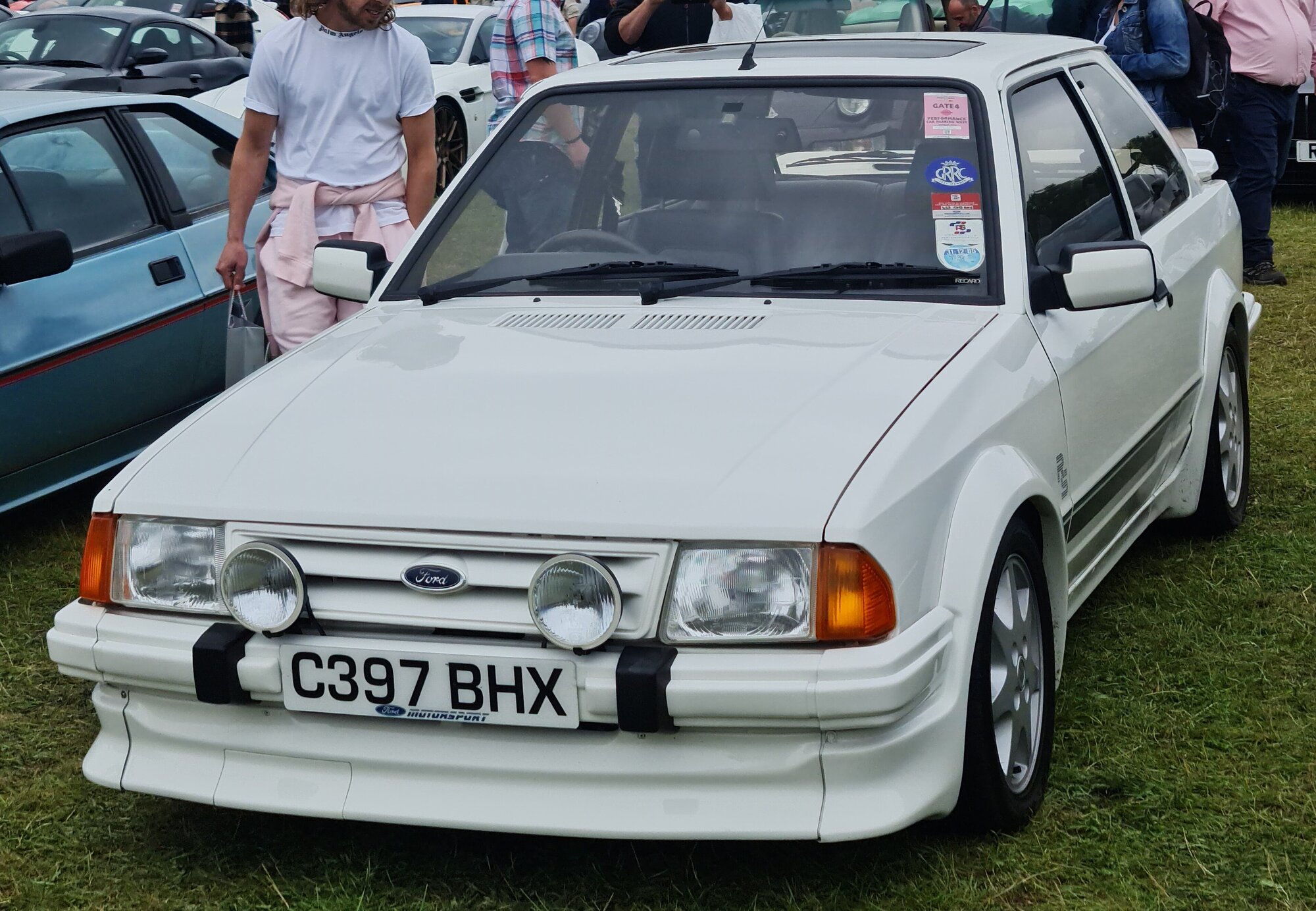
- Engine: 1597cc CVH turbo, 132 bhp
- Production: 8,604 (including Custom Pack)
- Colours: Diamond White only (officially) — Princess Diana’s was Panther Black, see Princess Diana’s RS Turbo story
- Build: Saarlouis
- Value 2026: Project £8k–£15k. Driver £20k–£35k. Concours Custom Pack £40k–£60k+.
The S1 vs S2 question is the single most-asked Escort RS Turbo buying decision — and I’ve broken it down properly in the S1 vs S2 buyer’s guide.
Ford Escort RS Turbo Series 2 (1986 to 1990)
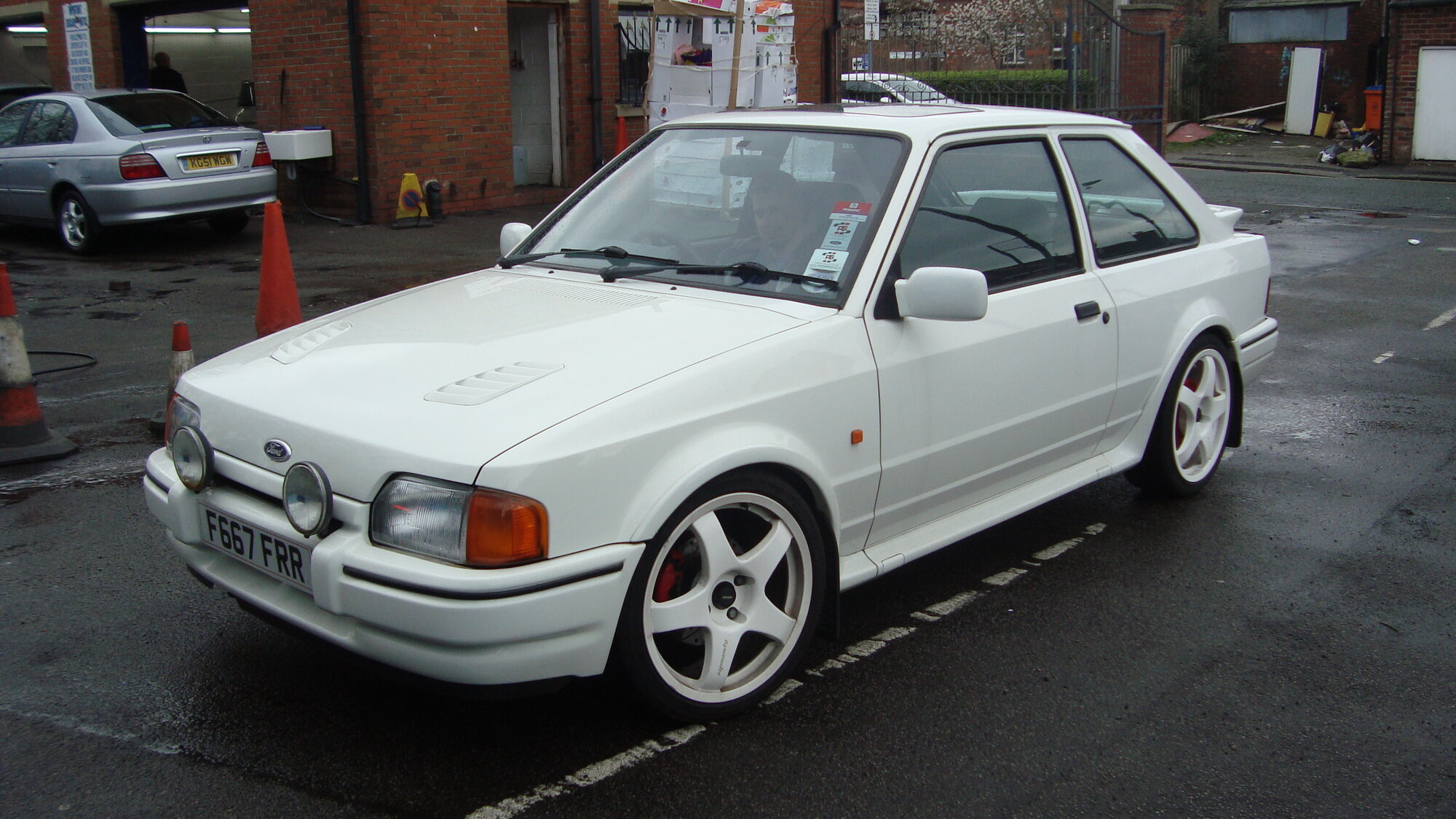
- Engine: 1597cc CVH turbo, 132 bhp
- Production: approximately 25,000
- Colours: all standard Ford palette available
- Build: Saarlouis
- Value 2026: Project £4k–£8k. Driver £10k–£18k. Concours £20k–£28k.
The more civilised RS Turbo. Refined boost, anti-lock brakes from 1989, much higher build numbers and significantly lower values than the S1. Purists prefer the S1; the S2 is the smart money entry point.
Ford Escort RS Cosworth (1992 to 1996)
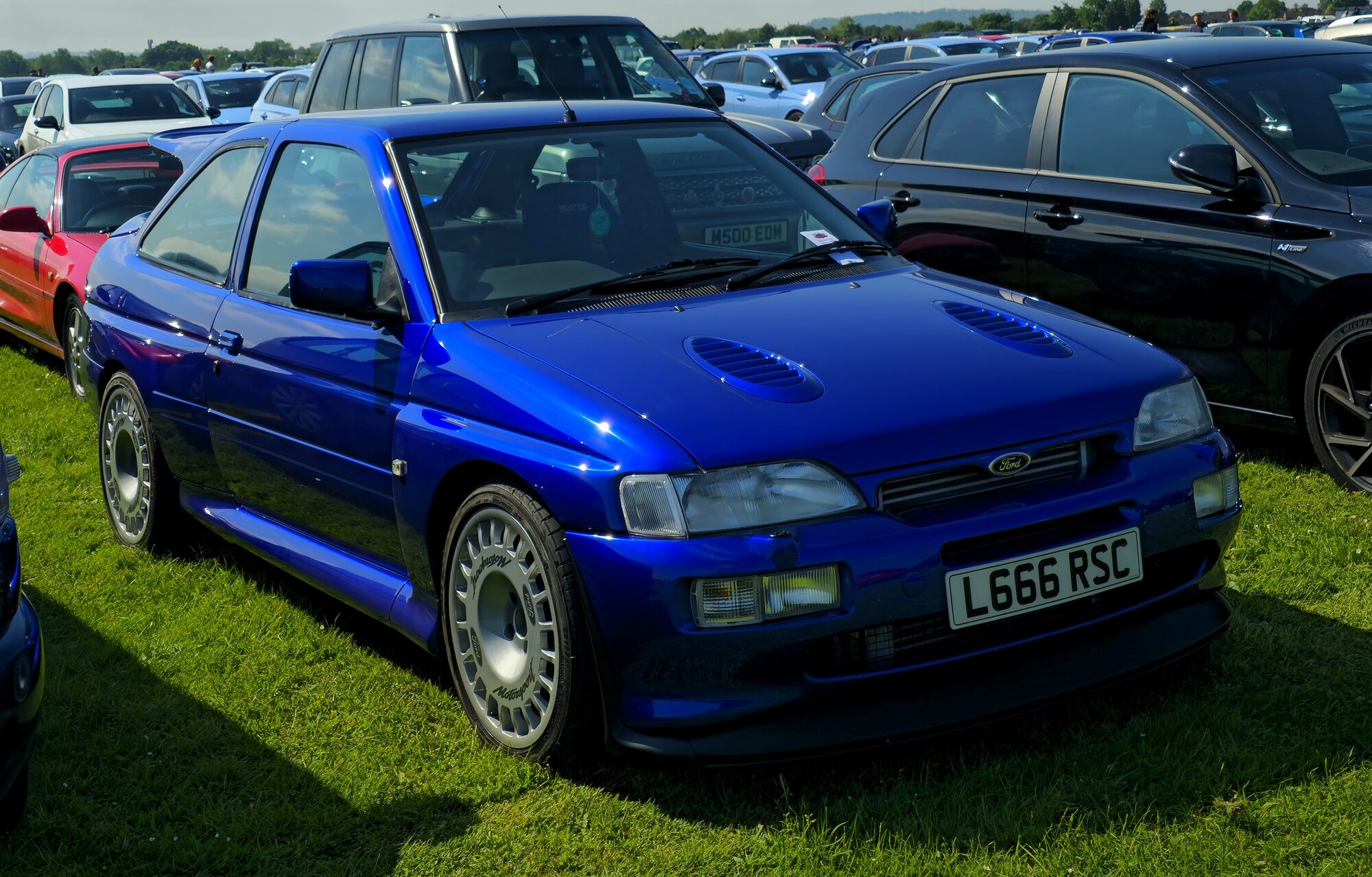
- Engine: 1993cc Cosworth YB turbo, 227 PS (224 bhp / 167 kW)
- Production: 7,145 in total. First 2,500 homologation cars used the larger Garrett T3/T04B turbo; from June 1994 the second-generation used the smaller Garrett T25. “Lux” was a trim level, not a separate production run.
- Notable specs: Monte Carlo edition (around 200 cars), commemorating the 1994 Monte Carlo Rally win. Monte Carlo colours: Ash Black, Mallard Green, and Jewel Violet (Monte Carlo only).
- Build: Karmann (Germany)
- Value 2026: Project £25k–£40k. Driver £45k–£70k. Concours £80k–£100k+. Mallard Green or Monte Carlo can pass £120k.
The YB-engined four-wheel-drive monster that homologated the Group A rally Escort. Underneath, the Cosworth is a Sierra Cosworth 4×4 — the Sierra’s floorpan, chassis and 34/66 front-rear viscous-coupling 4WD system. Only the doors and roof carry over from a standard Mk5 Escort; the rest of the bodywork is bespoke to fit the Sierra mechanicals. Built by Karmann in Germany, finished by Ford. The big-wing era. The car that defined the 90s for fast-Ford enthusiasts.
For most enthusiasts the Cosworth has moved out of reach. The Mk6 GTI sits in the same era and shares the family looks (though the Cosworth is a Sierra-floorpan special underneath) for a fraction of the money — see why I built a Mk6 GTI instead of buying a Cosworth for the honest case. And my own 1998 Ford Escort GTI case study walks through the build.
Ford Escort RS2000 Mk5 & Mk6 (1991 to 1996)
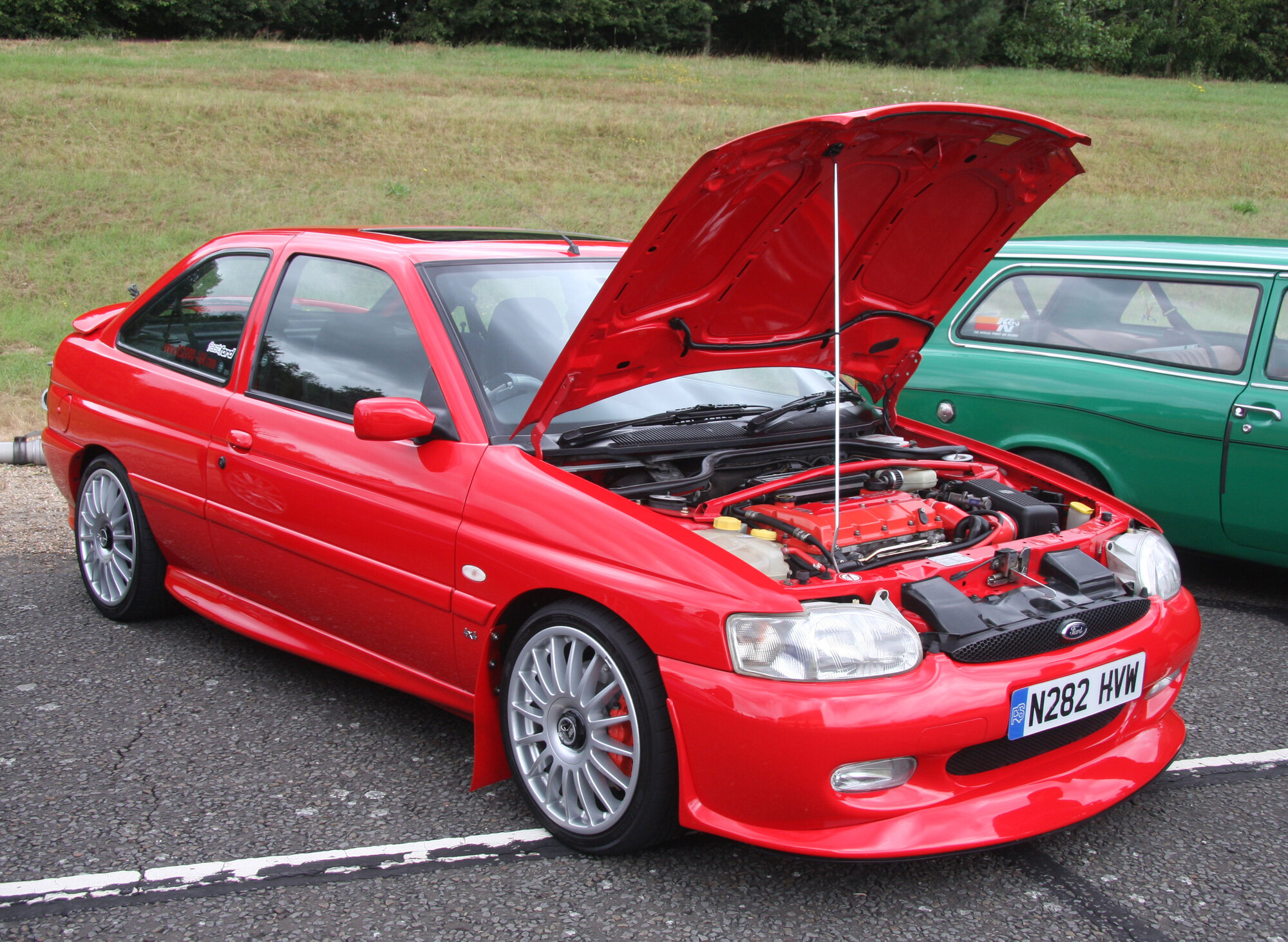
- Engine: 1998cc 2.0 16v DOHC (the iron-block “I4” unit — not the alloy Zetec), 150 bhp
- Generations: Mk5 from 1991, facelifted Mk6 from January 1995 — production ran to June 1996
- Drivetrain: front-wheel drive (the volume seller); 4×4 added in 1994, around 500 built
- Build: Saarlouis
- Value 2026: Project £3k–£6k. Driver £8k–£14k. Concours £15k–£22k. Rising fast.
The forgotten RS. The RS2000 launched on the Mk5 shell in 1991 and carried straight through the Mk6 facelift in January 1995, running until June 1996 — which makes it the last Escort ever to wear the RS badge (the next RS Ford was the 2002 Focus RS). Most were front-wheel drive; the 4×4 added in 1994 is the rare one, with only around 500 built. 150 bhp, properly developed chassis, RS badge — and currently priced like a base car because nobody talks about it. Buy now while the market hasn’t caught up.
What “RS” Means Today — And Why Originality Is Everything
The Escort RS market has a replica problem. There are more “RS1800s” registered than were built. Mexico tributes outnumber genuine Mexicos. Every market has cars wearing badges they weren’t born with.
What to check before any RS purchase:
- AVO build plate — riveted to the inner wing on AVO Aveley cars (Mk1 Mexico, RS1600, Mk1 RS2000; Mk2 RS1800). Should match the chassis number stamped elsewhere on the shell.
- Heritage Certificate — Ford Heritage will sell you a Certificate of Authenticity for around £100. Confirms factory build date, colour, spec, dealer.
- Chassis numbers — on every Escort there’s a stamped number that must match the V5 and the build plate. Tampering shows.
- Spec correctness — Recaros, trim, dash, dials, wheels. Wrong-spec parts on an “RS” are red flags.
- Provenance paperwork — old MOTs, service records, period photographs. The longer the paper trail the better.
Which Ford Escort RS Should You Actually Buy?
| Intended use | Best RS choice |
|---|---|
| Investment / collector | RS1800, RS1600, Mk1 Mexico (AVO-built) — values still climbing |
| Show car / weekend toy | Mk2 RS2000 Custom Pack, RS Turbo S1 Custom Pack |
| Usable classic / daily-able | Mk2 RS2000, RS Turbo Series 2 |
| Smart money / undervalued | RS1600i, RS2000 4×4, RS Turbo S2 |
| Maximum performance | RS Cosworth — but be ready for £45k+ entry |
| “I can’t afford a Cosworth” | Mk6 GTI build (see GTI case study) |
We’ve Worked On These. Here’s What We’ve Learned.
The Escort RS family is the most rewarding line of fast Fords to restore and own. Each car has its own personality, its own quirks, and its own community. Rally pedigree runs through every one — even the most usable Mk2 RS2000 carries the DNA of the cars that won Monte Carlo, the Acropolis and the RAC.
If you’re looking at an RS Escort and want a specialist opinion before you buy, I’ll happily check one over. I see them through the workshop regularly and I know exactly where to point the torch. Bodywork is the single biggest hidden cost on these cars — see Where Ford Escorts rust for the spot-by-spot checklist, and the restoration cost guide for what fixing them costs.
Send me a few photos on WhatsApp and I’ll tell you straight what you’re looking at. Or see the classic Ford specialists page for everything else.