Alloy Wheel Spraying — Is It Worth It, and What Are Your Options?
Alex from Top Touch Coachworks near Milton Keynes answers the big alloy wheel questions — is spraying worth it, can you do it with tyres on, and what colours can you go for?
This is one of the most common things people ask me — “is it worth getting my alloys sprayed, or should I just buy a new set?” Honestly, nine times out of ten, spraying your existing wheels is the better option. Let me explain why, and I’ll cover a few other wheel-spraying questions I get asked all the time at my workshop near Milton Keynes.
Is Alloy Wheel Spraying Worth It?
Short answer: yes, almost always. Here’s the thing — a decent set of aftermarket alloys will set you back anywhere from £400 to well over a grand, depending on the size and brand. Getting your current wheels professionally sprayed? That’s a fraction of the cost, and you end up with wheels that look brand new — or better than new if you’re going for a custom colour.
There are a few situations where spraying makes particularly good sense:
- Kerbed or scuffed wheels — those ugly silver scrapes on diamond-cut or painted alloys. A proper prep and respray sorts them right out
- Corroded or flaking alloys — when the lacquer breaks down and they go that cloudy, pitted look. Very common on wheels over 5 years old
- You want a colour change — maybe you’ve changed the colour of the car and the wheels don’t match anymore, or you just fancy something different
- OEM wheels you want to keep — if they’re the original wheels for your car and you want to keep it matching, spraying is the obvious choice
The only time I’d say it’s not worth it is if the wheels are physically damaged — cracked, buckled, or badly bent. No amount of paint will fix a structural problem. But cosmetically? Spraying beats buying new every time.
What Does the Process Actually Involve?
I’ll walk you through what I do here at the workshop, because I think a lot of people imagine it’s just a quick rattle-can job. It’s not — if you want it to last, there’s a proper process.
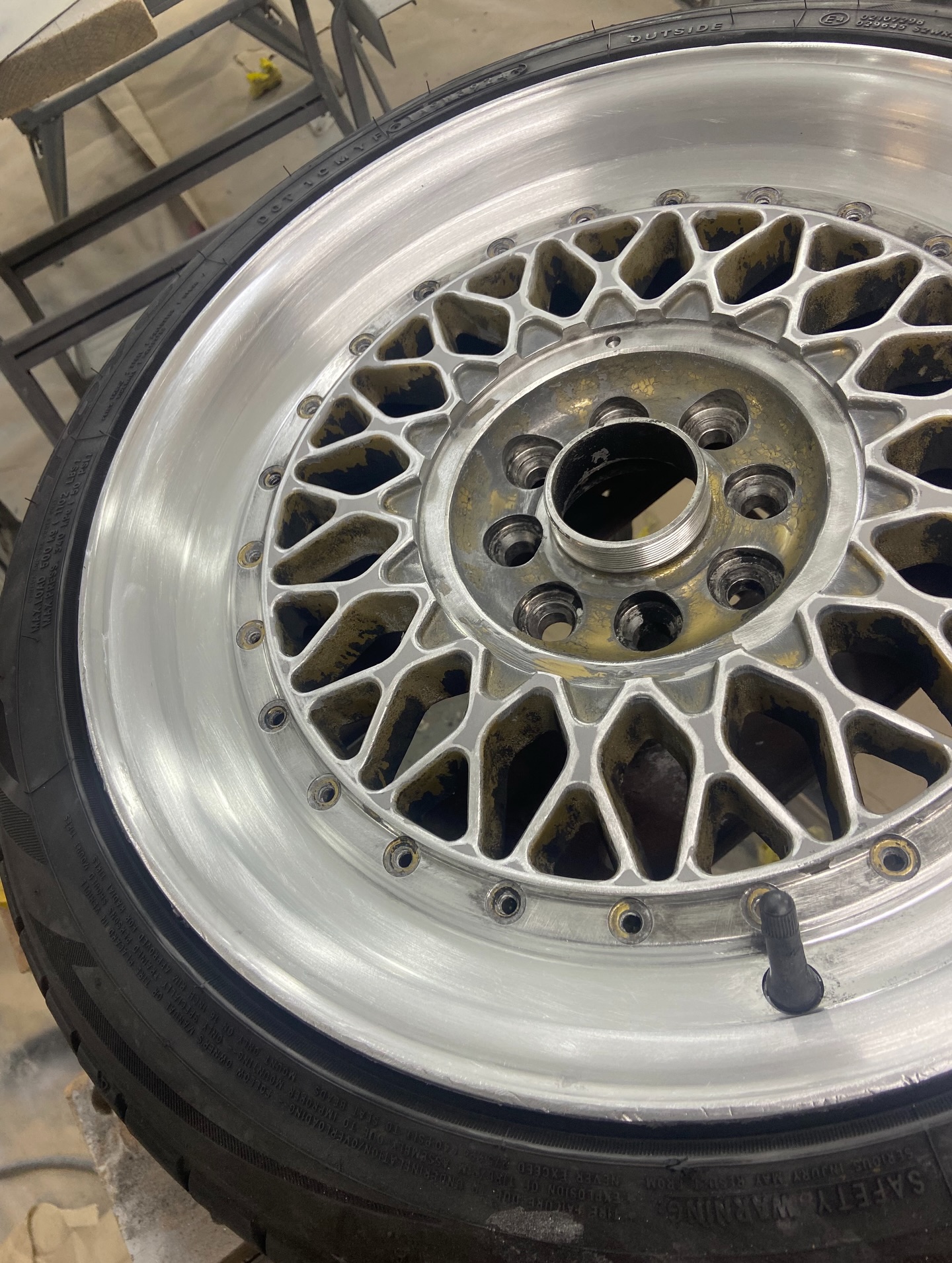
First, the wheels get stripped back. Depending on the condition, that might mean chemically stripping the old paint and lacquer, or blasting them to get back to clean metal. Any corrosion or flaking lacquer gets dealt with at this stage — there’s no point painting over problems because they’ll just come back through.
Once they’re clean, they get an etch primer to key into the aluminium, then a proper primer coat, then the colour coats, and finally a clear lacquer to protect everything. Each stage needs to cure properly before the next one goes on. It’s not a rush job.
Can You Spray Alloys Without Removing the Tyres?
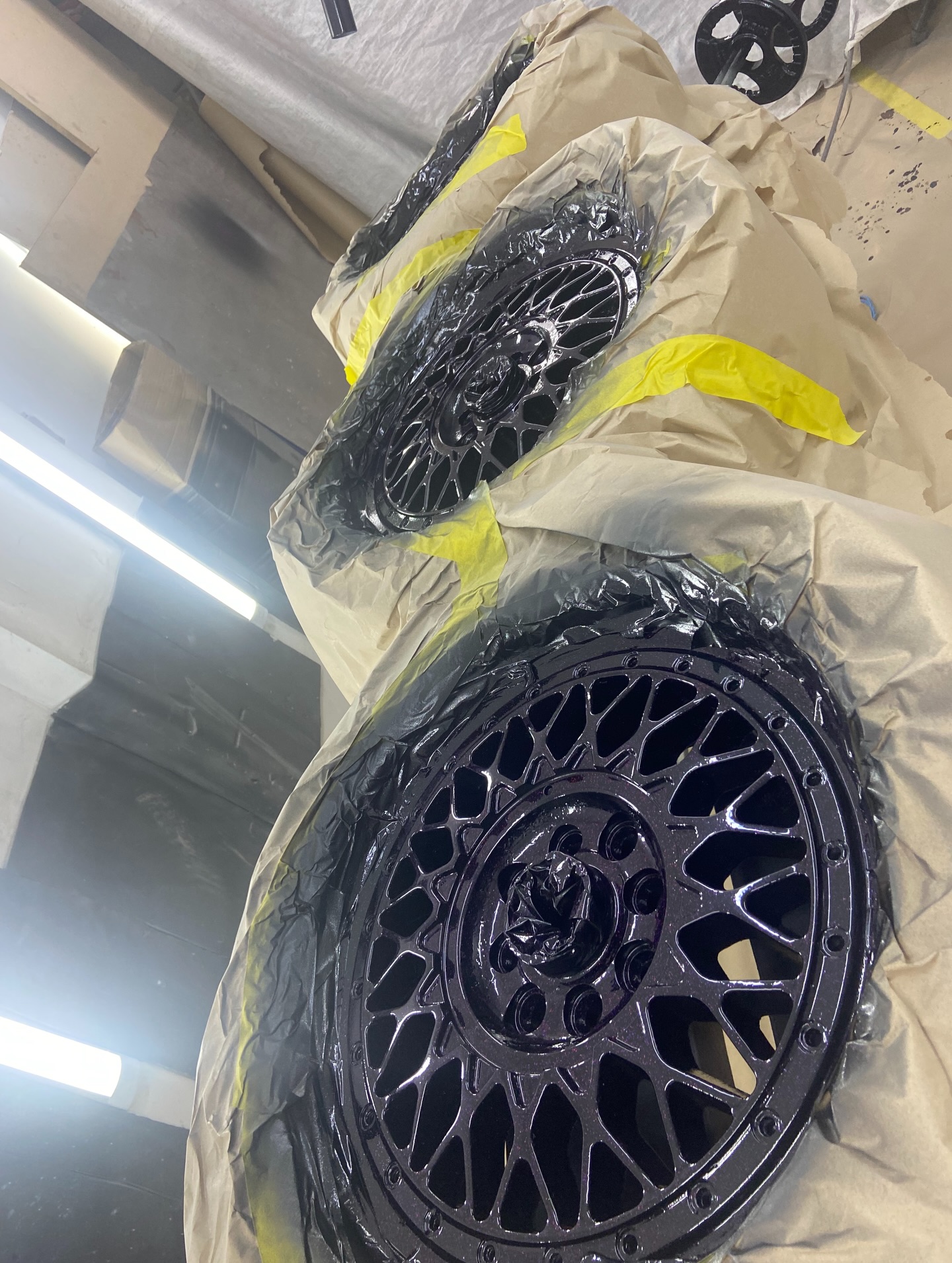
You can, and I often do. It depends on the wheel design and what finish you’re after. For a lot of jobs — especially single-colour sprays on simple spoke designs — the tyres stay on and get masked off. I use masking tape and paper to protect the tyre and the valve, and the wheel gets sprayed on a turntable in the booth.
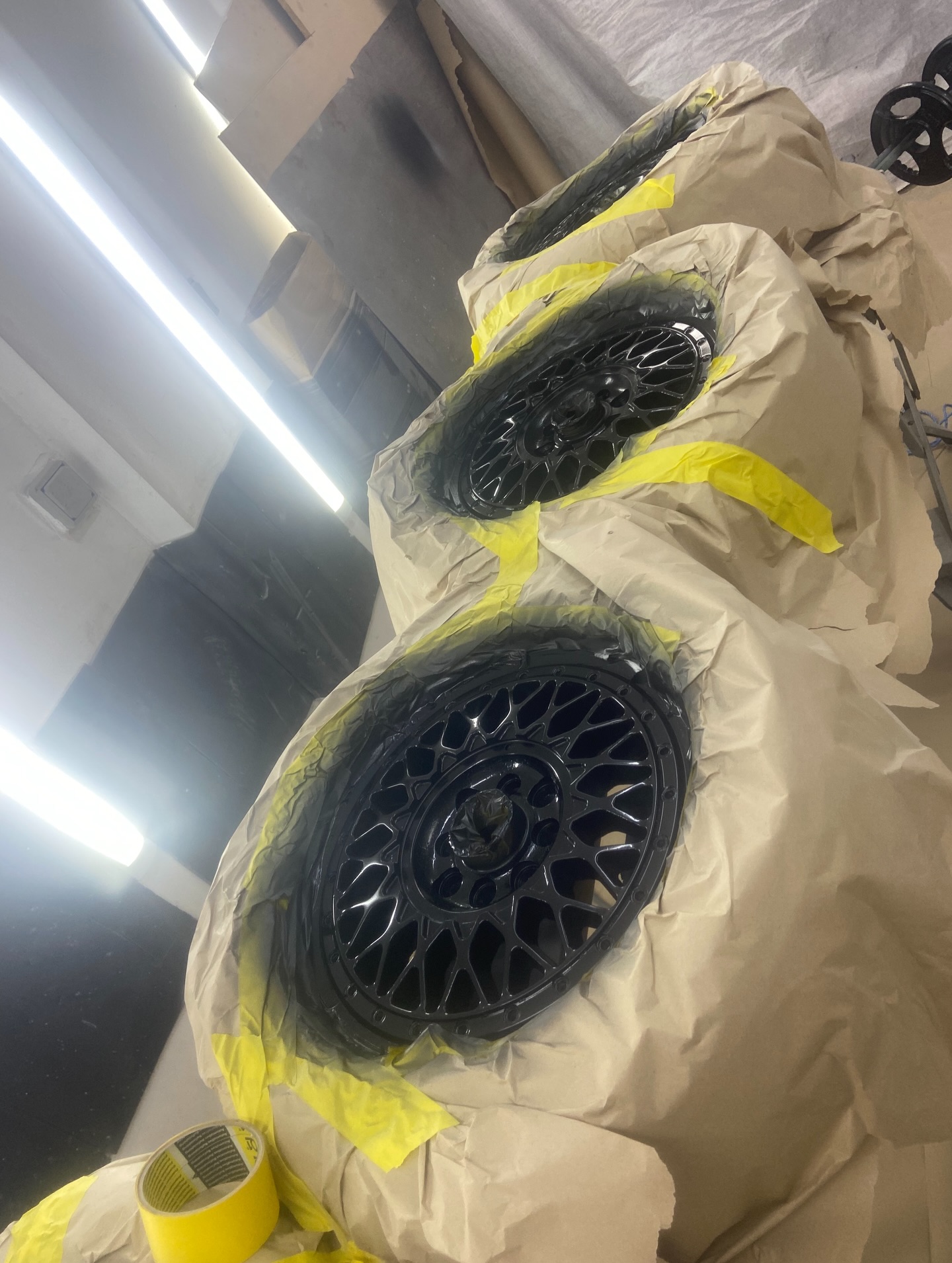
That said, there are times when the tyres do need to come off:
- If the wheel needs blasting or heavy stripping — the chemicals and media would damage the tyre
- Multi-piece wheels — like split-rim BBS where you want to do the centres and lips separately
- If you want the inner barrel done too — for that fully finished look, especially on deep-dish wheels
- Diamond-cut style finishes — where the wheel face gets machined on a lathe
For most people though — a straightforward colour change or refresh — the tyres stay on. It saves you the cost of removal and refitting, and there’s no risk of damaging the tyre beads.
Can You Change the Colour of Your Alloys?
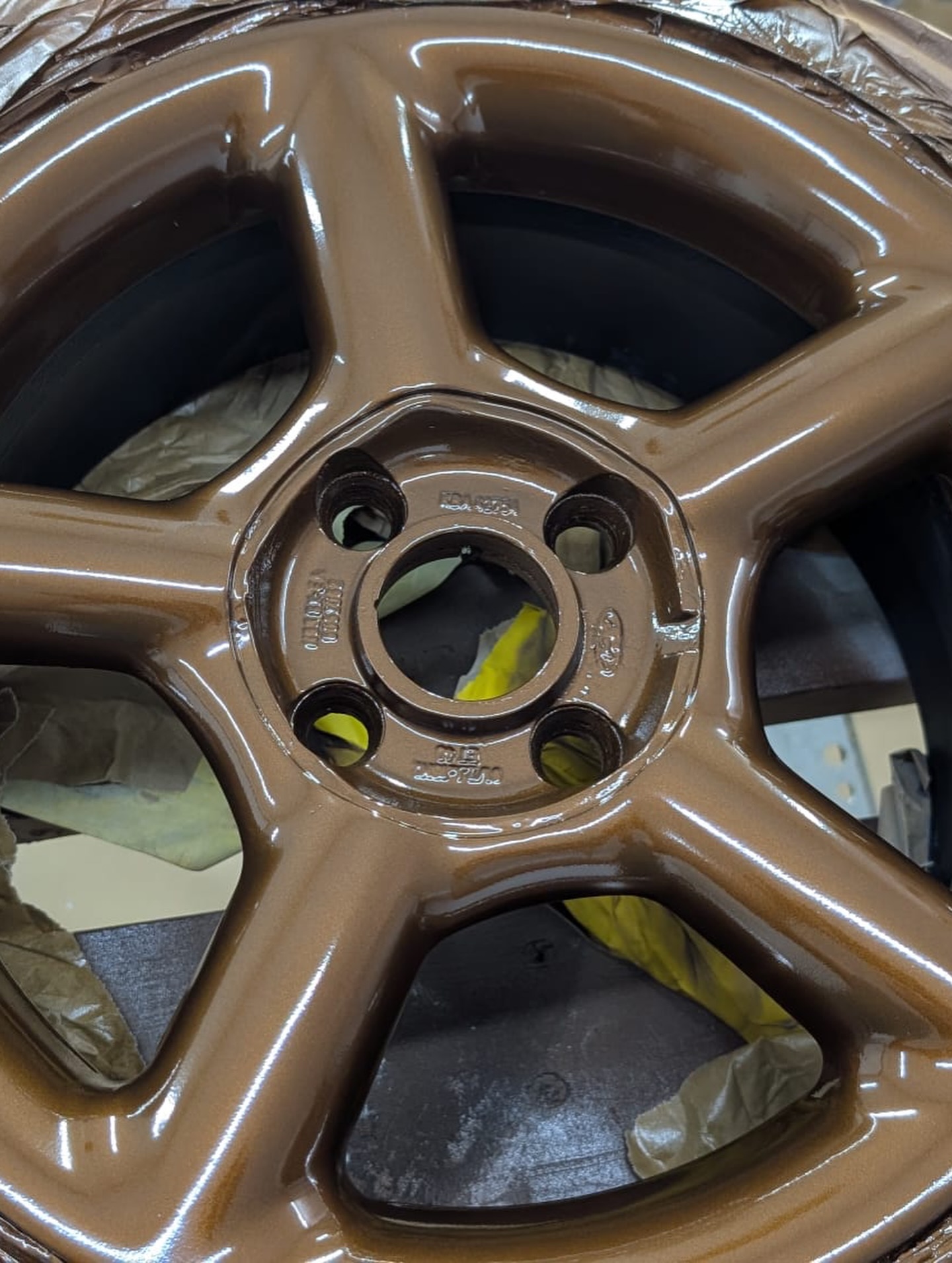
Absolutely, and this is one of my favourite jobs to do. It makes such a massive difference to how a car looks. I recently did a set of Mondeo wheels in a bronze metallic — they came to me in standard silver and left looking like a completely different wheel.
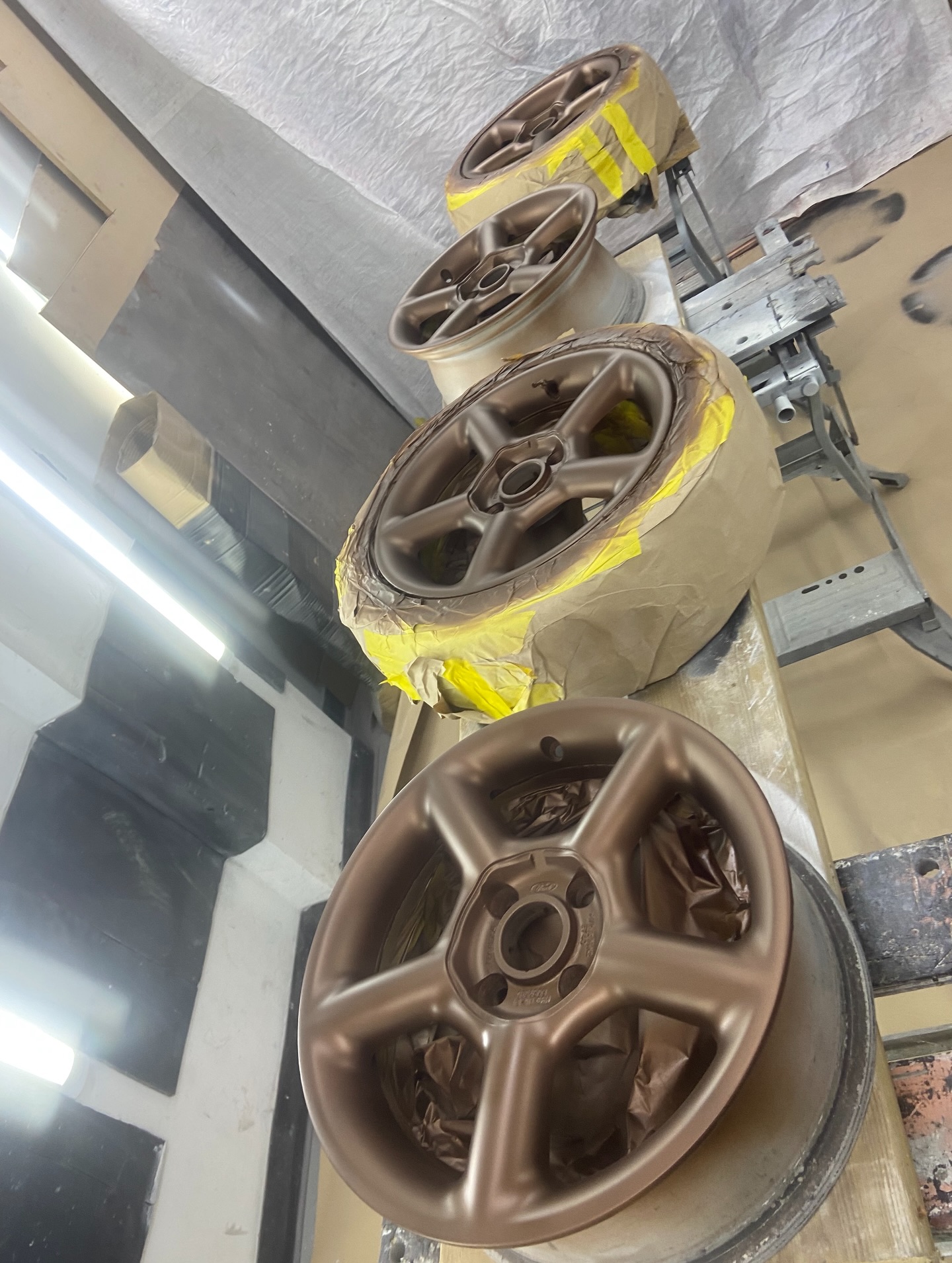
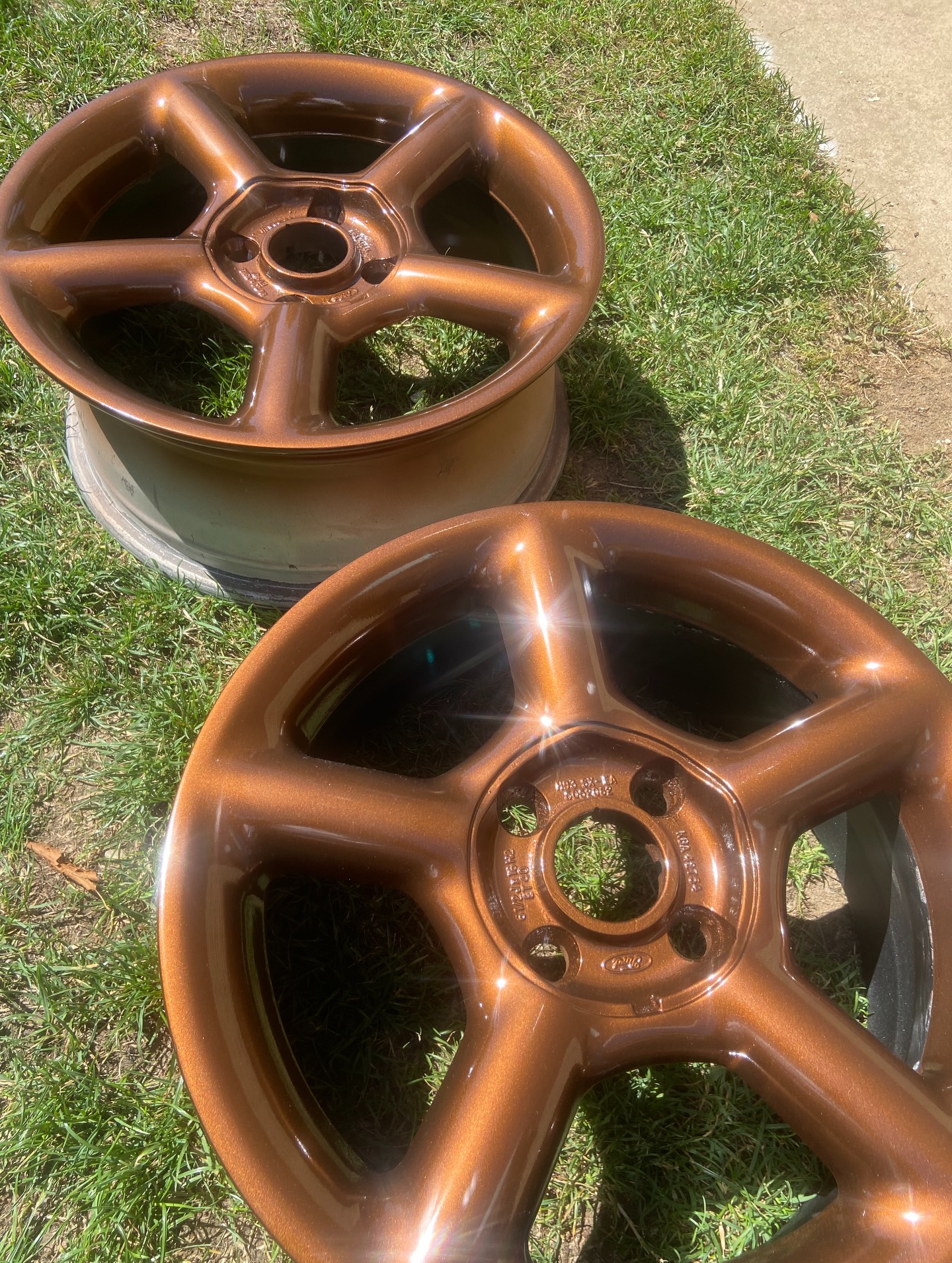
When it comes to colour options, you can go pretty much anywhere. Gloss black is the most popular request I get, followed by satin black, gunmetal grey, and then the more adventurous colours — bronze, gold, custom colours matched to the car. As long as it can be mixed as a proper automotive paint, I can spray it.
A few colour change tips:
- Going darker is easier than going lighter — dark colours cover well and hide minor imperfections. Going from black to silver needs more prep because any tiny flaw shows up
- Metallic and pearlescent finishes look incredible on wheels — they catch the light differently as the wheel turns. Worth the small extra cost
- Think about contrast with your car’s colour — black wheels on a white car, bronze on dark blue or grey, gunmetal on red. The right combo makes a huge difference
- Satin vs gloss is personal preference — satin is easier to maintain day-to-day, gloss looks sharper when clean
How Long Does a Wheel Spray Last?
If it’s done properly — and I mean properly prepped, primed, and lacquered in a spray booth, not rattled out of a can in someone’s garage — you’re looking at years. I use the same 2K clear coat on wheels as I use on panel resprays, which gives a hard, chemical-resistant finish that stands up to brake dust, road salt, and jet wash.
The main thing that kills a wheel spray prematurely is kerbing. Catching a kerb will chip through any finish, and once moisture gets under the paint, it’ll start lifting. But that’s the same whether the wheels are factory finished or custom sprayed — it’s just physics.
DIY vs Professional — Is It Worth Doing Yourself?
I’ll be honest with you. Can you spray your own wheels with rattle cans from Halfords? Yes. Will it look as good or last as long? No. The finish from an aerosol can’t match what you get from a proper spray gun in a booth. The paint is thinner, the coverage is less even, and there’s no proper primer or 2K lacquer to protect it.
If it’s a set of winter wheels or you’re just trying to make them presentable for a car sale, a rattle can job might do the trick. But if you actually want them to look good and stay looking good, get them done properly. The cost difference isn’t as much as people think, and the result is night and day.
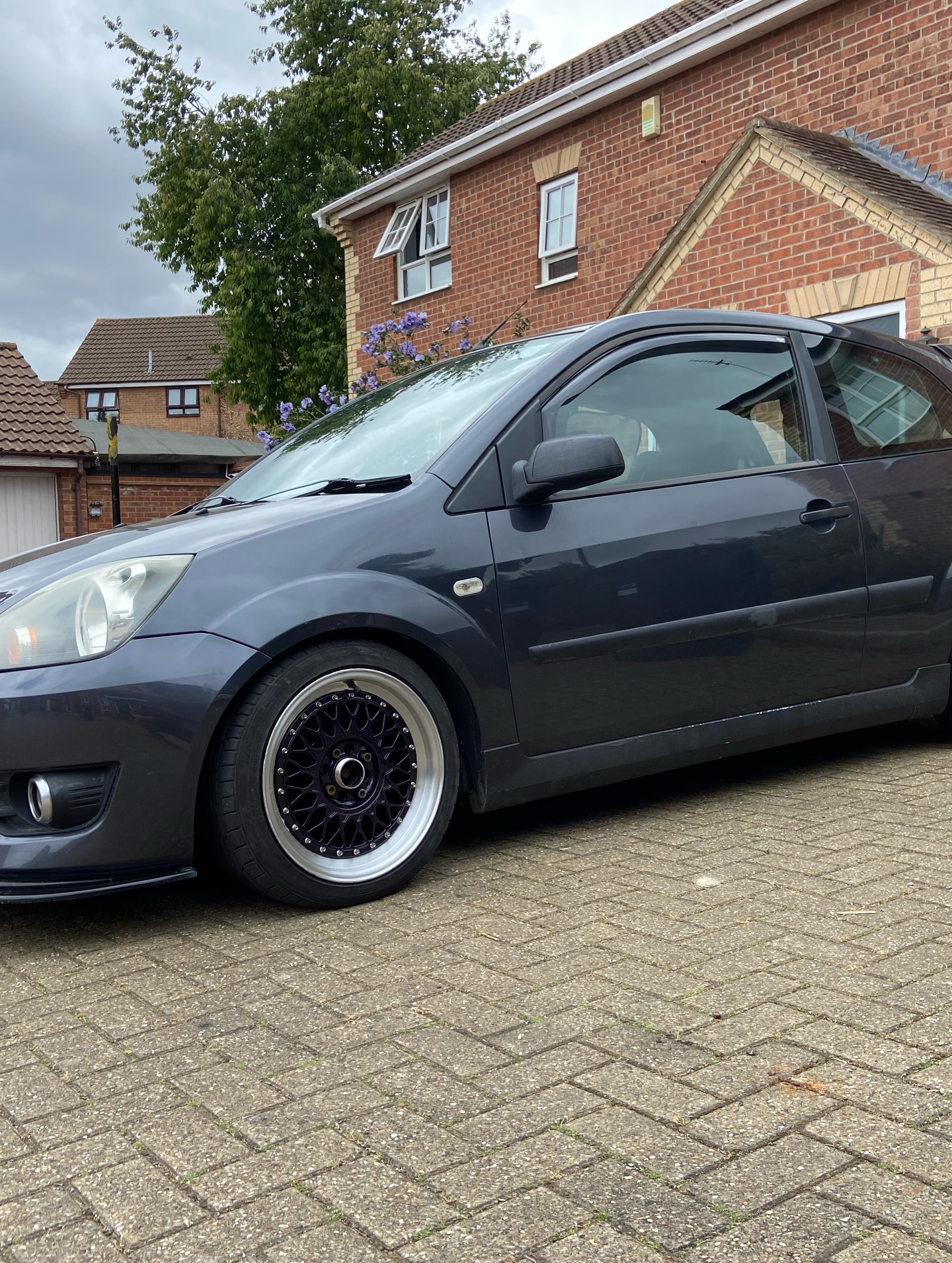
I’ll tell you straight — a fresh set of sprayed alloys is one of the cheapest ways to make your car look completely different. It’s up there with a good paint correction in terms of bang for your buck.
If you’re thinking about getting your alloys done and you’re around Milton Keynes, Buckingham, Northampton, or anywhere nearby, drop me a message on WhatsApp with a photo of your wheels and what colour you’re after. I’ll give you an honest price and we can go from there. I’m based just outside Milton Keynes in Wicken — most wheel jobs are turned around within a couple of days at my workshop.