Common Paintwork Problems on Classic Cars (And How to Fix Them)
Rust, lacquer peel, orange peel, fading – classic cars pick up all sorts of paintwork issues over the years. Alex at Top Touch Coachworks near Milton Keynes breaks down the most common problems and what it actually takes to fix each one.
If you’ve got a classic car – or you’re thinking about buying one – the paintwork is usually one of the first things you’ll notice. And nine times out of ten, there’s something going on under the surface that’s worth knowing about before you commit to any cosmetic work.
I see all of these problems regularly at my workshop near Milton Keynes. Some are quick fixes, some need serious work. Here’s what to look out for and what it actually takes to sort each one.
1. Rust and Corrosion
This is the big one. Rust is the number one killer of classic car bodywork and it’s the reason most older cars end up needing serious panel work before they can be resprayed. It usually starts in the places you can’t easily see – inside sills, around window frames, underneath arches, and along the bottom edges of doors.
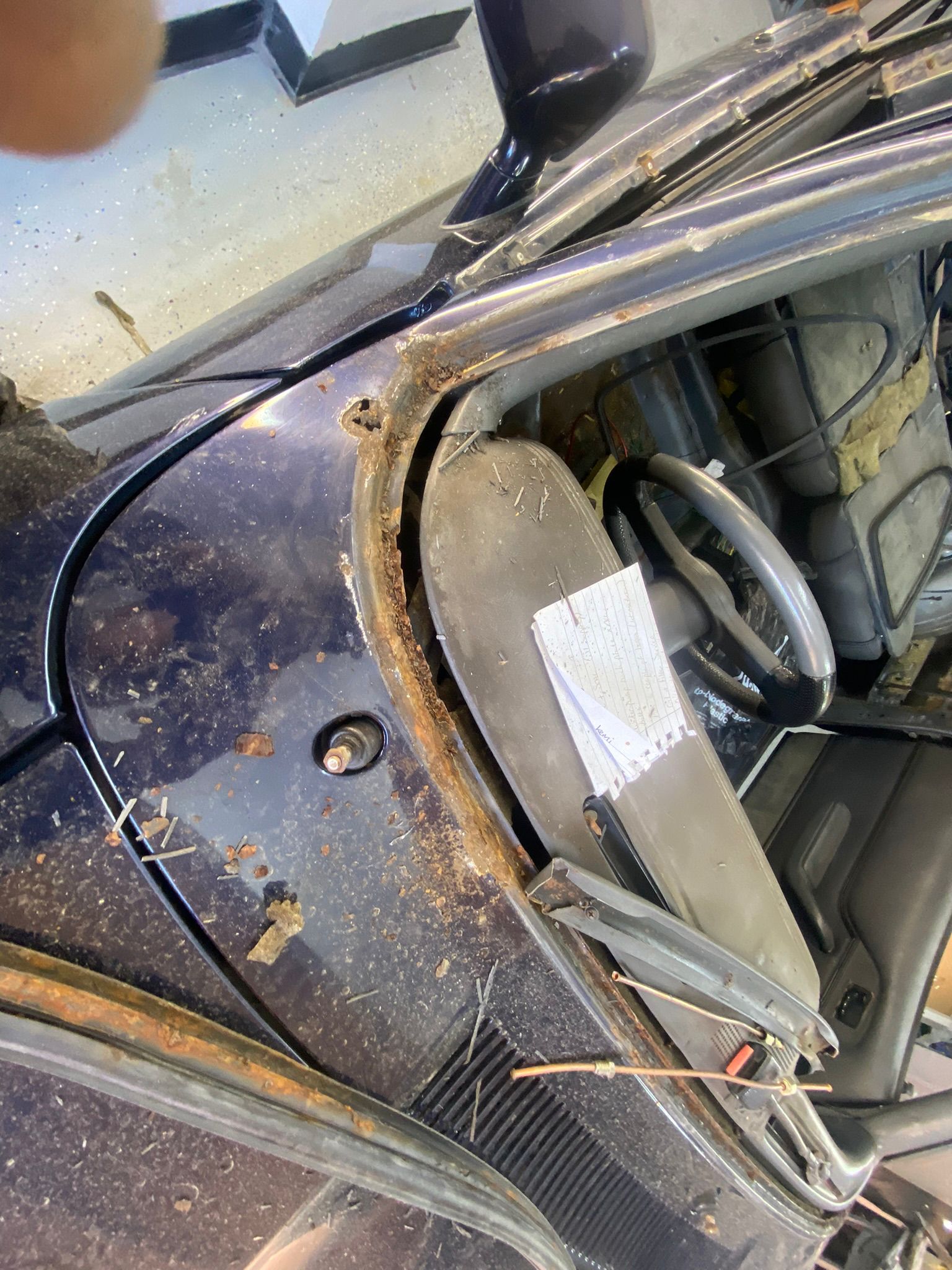
By the time you can see bubbling or flaking on the outside, it’s usually been going at the metal from the inside for a while. Surface rust on its own isn’t the end of the world – you can sand it back, treat it, and prime over it. But once it’s eaten through the metal, you’re looking at cutting the rotten sections out and welding in new metal.
How to fix it: For surface rust, strip back to clean metal, treat with a rust converter or etch primer, then build back up with primer and paint. For structural rust that’s gone through the panel, the damaged metal needs cutting out and replacing – either with pattern parts or hand-fabricated panels. There’s no bodging this one. If the metal’s gone, it’s gone.
The Ford Capri 2.8i Brooklands I restored had exactly this – rust around the window frames and structural areas that needed cutting out and rebuilding from scratch before any paint could go on.
2. Lacquer Peel (Clear Coat Failure)
This is probably the most common one I see on cars from the ’80s and ’90s, but it hits older classics too – especially ones that have been resprayed at some point. The clear coat starts lifting away from the base coat in patches, and you get that milky, flaky look that no amount of polishing will fix.
It happens because the lacquer breaks down over time from UV exposure, or because the original respray wasn’t prepped properly and the layers didn’t bond like they should have. Once it starts peeling, it spreads – it’s not something that stays in one spot.
How to fix it: You can’t patch lacquer peel. The affected panels need stripping back and respraying properly – that means sanding down past the failed layers, priming, and laying fresh base coat and clear coat. If it’s only on one or two panels, a localised respray might be enough. If it’s all over, you’re looking at a full respray. I wrote a separate guide on knowing when you need a respray vs paint correction that covers this in more detail.
3. Fading and Oxidation
Classic cars that have spent a lot of time outside – or even just sat in a garage for years without any protection – often develop a chalky, faded look to the paint. Reds go pink, blacks go grey, and metallics lose all their depth.
This is oxidation. The top layer of paint has broken down from UV and weather exposure. It’s not the same as lacquer peel – the paint isn’t flaking off, it’s just lost its colour and gloss.
How to fix it: This is one of the few problems that can often be fixed without a respray. A good machine polish (paint correction) can cut through the dead layer and bring the colour back. On single-stage paints – which a lot of older classics have – this works especially well because the colour goes all the way through. If the oxidation has gone too deep though, correction won’t be enough and the panel will need respraying. The Ford Fiesta Mk2 I resprayed is a good example — its roof had faded and oxidised badly, so once the bodywork was sorted it went back to its original red and was flatted and polished to a mirror shine.
4. Orange Peel
Orange peel is that bumpy, textured finish that looks like – well – the skin of an orange. It happens when paint hasn’t been laid down properly, or when it hasn’t been flatted and polished after spraying.
You see it a lot on cars that have had cheap resprays. Someone’s blown the paint on too thick, too fast, at the wrong temperature, or without enough coats to build a smooth finish. It’s not always immediately obvious, but once you notice it, you can’t unsee it.
How to fix it: Mild orange peel can be wet-sanded flat and then machine-polished to a smooth finish. That’s part of what I do at the end of every respray – flatting and polishing is what turns a sprayed surface into a proper mirror finish. If the orange peel is severe or the paint is too thin to sand back, the panel needs respraying.
5. Stone Chips and Road Rash
Every car that’s been driven on UK roads has stone chips. On a daily driver you might not think much of them, but on a classic car they’re a problem – partly because they look rough, and partly because every chip is an entry point for moisture and rust.
The front end usually gets it worst – bonnet, front wings, bumper area. But wheel arches, sills, and the lower edges of doors all cop it too.
How to fix it: Individual chips can be touched up with matched paint and a fine brush, but if we’re being honest, touch-ups are never invisible. They’re good enough to protect the metal and stop rust spreading, but they won’t look factory-fresh. For a proper finish on a car you really care about, the panel needs sanding back, filling any chips, priming, and respraying. It’s the only way to get a clean, chip-free surface. I’ve gone deeper into when a chip or scratch is a DIY job and when it’s worth getting done properly in my guide to stone chips and scratches.
6. Bubbling and Blistering
If you can see bubbles under the paint, that’s almost always moisture trapped between layers. It could be rust pushing up from underneath, or it could be a sign that a previous respray was done over a surface that wasn’t properly cleaned or dried. Sometimes you also see it when filler has absorbed moisture and started reacting under the paint.
How to fix it: There’s no way around this – the area needs stripping back to find out what’s causing it. If it’s rust, you deal with the rust first. If it’s bad filler, it gets cut out and done properly. If it’s moisture between paint layers, everything comes off and you start again. This is one of those problems where a quick fix will only make things worse.
7. Crazing and Cracking
Crazing shows up as a web of fine cracks across the paint surface – almost like crazy paving. It happens when the paint has become brittle over time, or when incompatible products have been layered on top of each other (like putting new paint over old cellulose without the right preparation).
It’s common on classics that have been through multiple resprays over the decades, each one adding another layer without properly addressing what was underneath.
How to fix it: The crazed paint needs stripping right back – usually to bare metal – so you can start with a clean surface. There’s no way to repair crazing in place. If the car’s had several layers of paint built up over the years, stripping back to metal also gives you a chance to check for hidden bodywork problems like rust or dodgy filler before you build the paint back up again.
Prevention Is Cheaper Than a Respray
Most of these problems come down to the same few causes: age, weather, moisture, UV damage, and bad previous work. You can’t stop time, but you can slow things down:
- Keep it dry – a garage or at least a breathable cover makes a massive difference
- Wax or seal it regularly – a decent wax twice a year protects the clear coat from UV and moisture
- Deal with chips quickly – a touch-up now is better than rust later
- Don’t ignore bubbling – if something’s pushing through, it’s only going to get worse
- Wash it properly – two-bucket method, decent mitt, no cheap sponges that grind dirt into the paint
Not Sure What Your Car Needs?
If you’ve got a classic car with any of these issues and you’re not sure where to start, just get in touch. I work on classics and modern cars at my workshop just outside Milton Keynes in Wicken – people bring cars over from Buckingham, Towcester, Northampton, and all across the area.
I’ll have a look, tell you what’s actually going on, and give you an honest idea of what it’ll take to sort it. Whether it’s a quick dent and scratch repair, a panel respray, or a full restoration – I’d rather you know what you’re dealing with before spending any money.
Drop me a message on WhatsApp with a few photos and I’ll tell you what I think. No pressure, just honest advice from someone who does this every day.