Full Respray vs Paint Correction – Which One Do You Actually Need?
Not sure if your car needs a full respray or just a paint correction? Alex at Top Touch Coachworks near Milton Keynes breaks down the difference, what each one costs, and how to avoid spending money on the wrong fix.
Your car’s paint looks rough. Maybe it’s gone dull, maybe it’s covered in swirl marks from dodgy car washes, or maybe it’s just not got that shine it used to have. So you start looking into it – and you end up stuck between two options: paint correction or a full respray.
Both will make your car look better. But they’re completely different jobs. Pick the wrong one and you’re either wasting money on something that won’t last, or spending way more than you actually need to.
I get asked about this all the time at my workshop near Milton Keynes, so here’s how I’d break it down.
What Is Paint Correction?
Paint correction is basically machine-polishing your car’s existing paint to get rid of surface defects. Swirl marks, light scratches, water spots, oxidation – all that stuff that builds up over the years from washing, weather, and general life.
You’re not adding new paint. You’re working with what’s already there – cutting back a tiny bit of clear coat to level things out and bring the gloss back. Done properly, it can make a car look absolutely mint.
It’s done in stages with different compounds and pads, getting finer each time. Depending on how bad things are, it might be a quick single-stage polish or a full multi-stage job that takes a day or more.
Paint correction is probably what you need if:
- The paint underneath is still solid – no peeling, no rust, no deep chips
- The colour is still good, it’s just gone a bit flat or hazy
- You’ve got swirl marks, light scratches, or that chalky oxidation look
- You want it looking sharp again without repainting the whole thing
- You’re thinking about ceramic coating or PPF and want it prepped properly
What Is a Full Respray?
A full respray means stripping the car back – sometimes right down to bare metal – and starting again with fresh primer, base coat, and clear coat (or direct gloss, depending on the finish you’re after). It’s basically a complete reset.
And I’m not talking about a quick blow-over on top of what’s already there. A proper respray involves sanding, filling, priming, multiple coats of paint, then flatting and polishing the finished surface. It can take anywhere from a few days to a few weeks depending on how much prep work the car needs.
If you want to see what a full bare-metal respray actually looks like start to finish, have a look at the 1951 Chevrolet 3100 case study – that one went from stripped shell to show-quality direct gloss black with gold accents.
You probably need a respray if:
- The paint is peeling, flaking, or bubbling
- There’s rust underneath that needs sorting with welding or fabrication work before anything cosmetic happens
- You’ve got deep stone chips, scratches down to the primer, or bare metal showing through
- Someone’s done a bad job before – orange peel, runs, colour that doesn’t match
- You want to change the colour completely
- You’re restoring a classic and want it looking factory-fresh (or better)
The Simple Way to Think About It
Paint correction polishes what’s there. A respray replaces what’s there.
If the paint is fundamentally sound – just a bit tired – correction is the way to go. It’s quicker, way cheaper, and a good correction can genuinely make a car look like it just left the factory.
But if the damage goes deeper than the surface – rust, paint that’s actually failing, previous bodge jobs – no amount of polishing is going to sort it. You need fresh paint on a properly prepared surface. That usually means bodywork repairs first, then primer, then paint. There’s no shortcut around that.
I see it more than you’d think – someone’s tried to polish out a problem that really needed a respray. By the time the car gets to me, they’ve burned through the clear coat trying to fix something that was never going to buff out. Save yourself the headache and get it looked at first.
What About Cost?
There’s a pretty big gap between the two, so it’s worth knowing what you’re looking at:
- Paint correction – anywhere from a couple of hundred quid for a single-stage polish up to £500–800+ for a full multi-stage correction on a bigger car.
- A full respray – starts around £2,000–3,000 for a solid colour on a standard car. If you’re talking a bare-metal classic car restoration with custom finishes, it can go well into five figures.
The right answer isn’t always the cheapest one – but it’s always the one that matches what the paint actually needs. Spending £500 on a correction when you really need a respray just kicks the problem down the road. And spending three grand on a respray when a polish would’ve done the job? That’s money you didn’t need to part with.
What Usually Comes With a Respray
Most cars that come into my workshop near Milton Keynes for a respray need more than just paint. There’s usually dent and scratch removal to deal with first, sometimes welding and fabrication if there’s rust that’s eaten through panels, and almost always a fair bit of filler and prep work before any paint goes on.
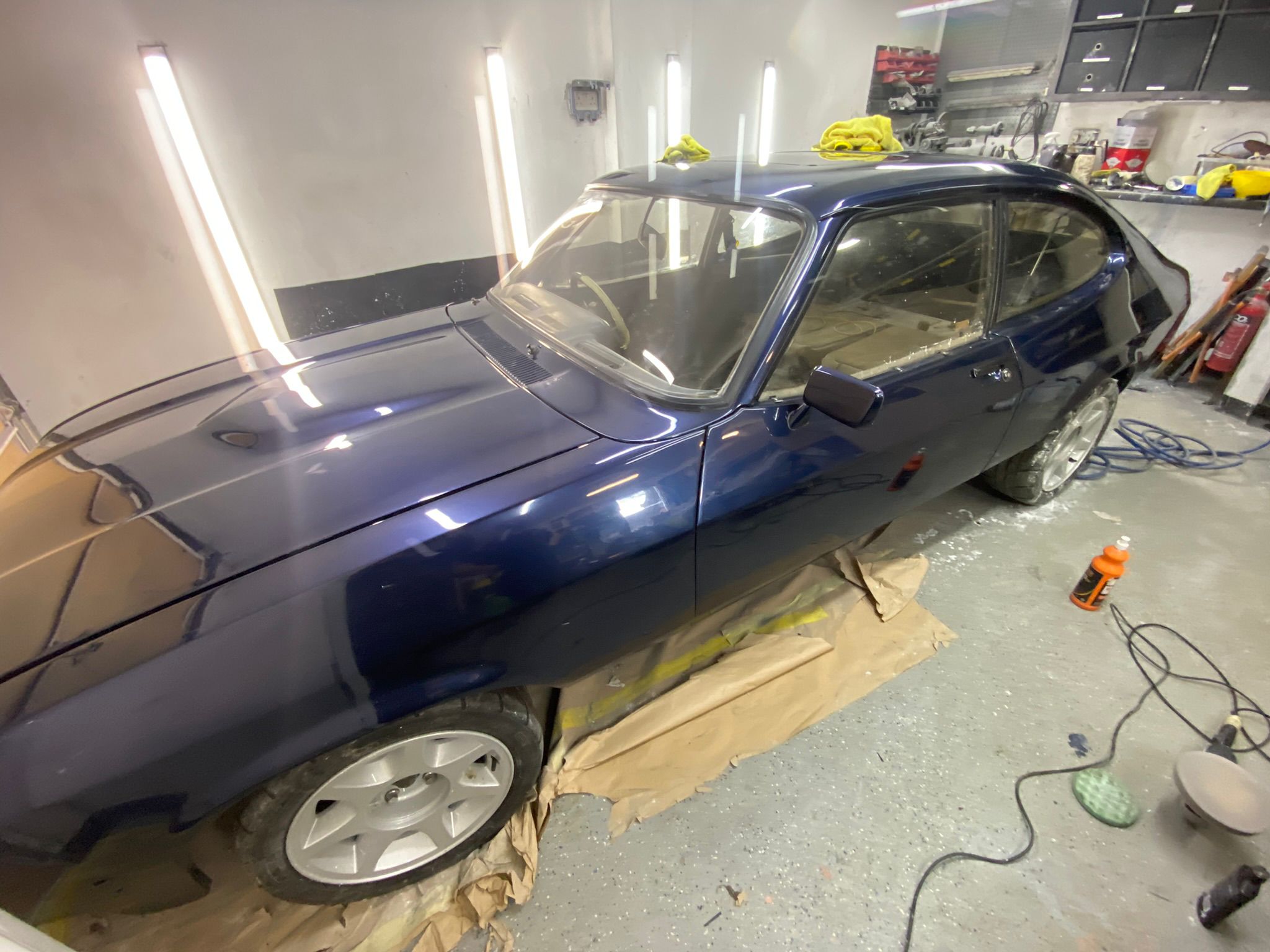
That’s the stuff that makes or breaks the finished result. A respray is only as good as the surface underneath it – which is why I spend more time prepping than painting. The Ford Capri 2.8i Brooklands build is a good example of that – hand-fabricated replacement panels, structural rust repair, and bare-metal prep before a single drop of paint went on.
How I’d Help You Decide
When a car comes into the workshop, the first thing I do is have a proper look at the paint. I’ll check the thickness, see what’s going on underneath, whether there’s any rust or filler hiding under the surface, and chat about what you actually want from the car.
Sometimes it’s obvious – the car needs a full strip and respray, no two ways about it. Other times, I’ll suggest trying a correction first to see how far it gets. There’s no point respraying a car that just needed a decent polish.
I’ll always give you an honest answer. I’d rather tell you what you need to hear than sell you something you don’t need. I get people coming from across Milton Keynes, Buckingham, Towcester, Northampton, and further out – and they come back because I’m straight with them.
Quick Summary
Go with paint correction if: the paint is original, structurally intact, and just looks a bit tired. Swirls, light scratches, oxidation – all fixable with a machine polish.
Go with a full respray if: the paint is failing, there’s rust or deep damage underneath, or you want a completely different colour. No amount of polishing is going to save it – you need fresh paint.
Not sure which one your car needs? Send me a few photos on WhatsApp and I’ll tell you straight. The workshop is based just outside Milton Keynes in Wicken – easy to find if you’d rather bring the car over for a look in person.